
Quick Summary
| Key Insight | What You Need to Know |
|---|---|
| "Keep up the great | "Keep up the great work." |
| The Reality of Automated Instagram Comments | Let's paint a picture. You’ve just shared a photo you're really proud of. Almost instantly, a comment pops up: “Great feed!” It feels good for a... |
| A Field Guide to Instagram Comment Bots | Not all bots are created equal. Just like different tools have different jobs, the bots cluttering your Instagram comments have their own unique goals... |
| How Bots Hurt Your Analytics and Brand Trust | The real problem with bot activity isn't just that it's annoying. A stray "Nice post!" might seem harmless, but when your posts are flooded with them,... |
| How to Spot Bots in Your Comment Section | Getting good at spotting bots is a skill, and it's easier to develop than you might think. Once you know what to look for, the automated noise in your... |
| Your Action Plan for Managing Bot Comments | Knowing how to spot bots is half the battle; the other half is actually doing something about them. Reclaiming your comment section requires a smart s... |
Ever get a generic “Nice pic!” comment just seconds after you post? You’ve probably run into an Instagram comment bot. Think of them as the social media equivalent of telemarketers—automated scripts programmed to leave comments based on triggers like hashtags or recent activity.
The Reality of Automated Instagram Comments
Let's paint a picture. You’ve just shared a photo you're really proud of. Almost instantly, a comment pops up: “Great feed!” It feels good for a second, but then you see the same comment from different accounts on other people's posts. That’s a bot in action, a tool designed to fake human interaction for a specific purpose.
These automated accounts are a real double-edged sword. Some people use them for so-called "growth hacking," hoping to get more eyes on their profile by auto-commenting on hundreds of posts using a certain hashtag. It's a shortcut to visibility. On the flip side, they're a primary tool for spam, cluttering up comment sections with ads, scams, and totally irrelevant messages.
The Scale of the Bot Problem
This isn't just a minor annoyance; bots are a massive part of the Instagram ecosystem. With the pressure to stay active, many businesses and influencers resort to automation. It's a tempting shortcut—some data shows that accounts using automation tools can see follower growth jump by 58% compared to those doing it all by hand. When you're competing for attention among 1.4 billion active users, it's easy to see the appeal. You can learn more about how automation impacts growth and how the platform is fighting back.
But Instagram isn't taking this sitting down. The platform is in a constant battle against inauthentic activity to protect the user experience. They once removed over one billion fake accounts in a single year, which shows just how serious they are. This ongoing cleanup highlights the clash between building a real community and taking automated shortcuts.
For any creator or brand serious about building a genuine presence, understanding this bot phenomenon is the first step. It provides the essential context needed to distinguish real, valuable engagement from the hollow metrics created by automated scripts.
Why It Matters to Your Brand
All this bot activity forces us to ask a tough question: what does engagement really mean? Does a high comment count matter if a huge chunk of it comes from non-human accounts? For brands that rely on authentic connections to build loyalty and drive sales, the answer is a hard no.
Knowing how to spot the difference is crucial. It’s the first step toward building a stronger, more genuine community that's built on real conversations, not just automated noise.
A Field Guide to Instagram Comment Bots
Not all bots are created equal. Just like different tools have different jobs, the bots cluttering your Instagram comments have their own unique goals and behaviors. Learning to tell them apart is the first real step toward cleaning up your comment section and protecting your brand.
Think of it like being a gardener. At first, everything green looks like a plant, but soon you learn to spot the weeds from the flowers. Bot-spotting is a similar skill—once you know the signs, the patterns become glaringly obvious.
Most bots fall into two main camps: those trying to grow an account and those trying to push spam. This simple distinction drives almost all of their behavior.
As you can see, a bot is either trying to inflate its own visibility or exploit your audience. Understanding that motive is the key to identifying them.
Here’s a quick field guide to help you identify the common types of bots you'll encounter in the wild.
A Field Guide to Instagram Comment Bots
Learn to identify common Instagram comment bots by their behavior, goals, and the risk they pose to your brand.
| Bot Type | Primary Goal | Example Comment | Risk Level to Brand |
|---|---|---|---|
| Growth Bot | Gain followers for its own profile by sparking curiosity. | "Love this! 🔥" or "Great post!" | Low |
| Spam Bot | Drive traffic to scams, phishing sites, or shady product pages. | "DM us to be a brand ambassador!" | High |
| Giveaway Bot | Flood contests and giveaways to maximize its chances of winning. | Tagging several other bot-like accounts. | Medium |
| Scam Bot | Trick users into sending money or personal information. | "I made $5000 from home, DM me to find out how." | Very High |
Each of these bot types requires a slightly different approach. While some are just a nuisance, others can actively harm your community and reputation.
The Growth Bot
The most common bot you’ll run into is the Growth Bot. Its mission is simple: get you to notice its profile. These bots play a high-volume numbers game, dropping generic, usually positive, comments on thousands of posts that use certain hashtags.
Their comments are intentionally vague so they can fit almost any context.
- "Great post!"
- "Keep up the great work."
- "Love this! 🔥"
- "So inspiring."
These bots aren't trying to sell you anything directly. They're just fishing for attention. By leaving thousands of comments, they hope a tiny fraction of people will get curious, click back to their profile, and maybe even drop a follow. They’re annoying, but mostly harmless.
The Spam Bot
Next up is the far more malicious Spam Bot. Unlike the Growth Bot, this one has a clear and often deceptive agenda. Its goal is to funnel your followers to external websites, promote scams, or sell sketchy products. Think of them as the digital equivalent of junk mail.
You can usually spot their comments a mile away because they’re aggressive and direct.
- "Want to get 10k followers cheap? Check the link in my bio!"
- "I made $5000 this week from home, DM me to find out how."
- "Hey, we want to collab! DM our main page @SuperShadyBrand."
- Comments with suspicious links or promises of a "free gift."
Spam bots are a real threat to your brand's credibility. Their presence makes your comment section look messy and unmanaged, and worse, they can expose your legitimate followers to phishing attacks and financial scams.
The Giveaway Bot
A more specialized pest is the Giveaway Bot. These are accounts programmed to automatically enter contests by tagging other bots or performing whatever simple action your rules require. Their only purpose is to flood the entry pool and maximize their odds of winning.
While they might not seem harmful, they completely devalue your marketing efforts. A giveaway that was supposed to engage your true fans just becomes a lottery for automated scripts. This frustrates your real followers and completely skews your campaign metrics. If you see hundreds of entries from accounts with zero posts and generic usernames, you've been hit by Giveaway Bots.
How Bots Hurt Your Analytics and Brand Trust
The real problem with bot activity isn't just that it's annoying. A stray "Nice post!" might seem harmless, but when your posts are flooded with them, they start to silently poison your entire Instagram strategy. This digital noise messes with two of your most important assets: your performance data and the trust you've built with your audience.
On the surface, a high comment count seems like a win. It's a signal to the algorithm and other users that your content is resonating. The catch is, when a huge chunk of those comments are from bots commenting on instagram, you're left with hollow, completely misleading numbers.
The Vanity Metrics Trap
This is what marketers call falling into the vanity metrics trap. These are the numbers—like your comment or like count—that look great but offer zero real insight into what's actually working. A post with 100 comments feels like a success, right? But if 80 of those are from bots, you’ve only really connected with 20 people.
This creates a dangerous illusion. You might see the high numbers and think a certain content pillar is a home run, so you double down and make more of it. Meanwhile, your real audience couldn't care less. You end up making big strategic decisions based on faulty data from automated scripts instead of genuine human feedback.
It’s like trying to find your way with a broken compass. You feel like you're moving forward, but you have no clue if it's in the right direction. Your data is lying to you, making it almost impossible to figure out what your audience truly wants.
And this isn't a small problem. Bots are a massive part of Instagram's ecosystem. Some estimates suggest that as many as 95 million accounts on the platform could be automated. This fake activity costs marketers around $1.3 billion every year as they pay to reach what they think are real people. This widespread bot presence completely warps engagement metrics, making it incredibly hard for brands to measure their actual return on investment. You can see the bigger picture of platform trends in these Instagram statistics.
Damaging Your Brand's Credibility and Trust
Beyond messing with your analytics, bot comments actively chip away at the trust you've worked so hard to build. When your comment section is a minefield of spam, scams, and generic fluff, it sends a clear message to your real followers—and it's not a good one.
It can make your brand look:
- Unprofessional: A clean, moderated comment section signals you're on top of things. A spam-filled one looks like you've abandoned your own community space.
- Inauthentic: If your posts are magnets for fake comments, people start to wonder if your followers and engagement are also bought and paid for.
- A Little Desperate: Some users might just assume you're buying fake engagement to look more popular, which can seriously hurt your credibility.
- Unsafe: Even worse, spam and scam bots can expose your real followers to phishing links and bogus offers, turning your comments into a risky place to be.
This isn't just a hypothetical problem. When real people see a comment section overrun by bots, they simply check out. Why would they leave a thoughtful comment if it’s just going to get buried under a mountain of "DM to collab!" spam?
This slow erosion of trust pushes your genuine fans away, silencing the very people you need to hear from. It undermines the community you’ve invested so much in, turning a potential hub for connection into a ghost town filled with automated noise. In the end, bots don't just clutter your posts; they cheapen your brand and alienate your most valuable asset: your audience.
How to Spot Bots in Your Comment Section
Getting good at spotting bots is a skill, and it's easier to develop than you might think. Once you know what to look for, the automated noise in your comment section becomes almost comically obvious. It's less about needing a special tool and more about training your eye to see the patterns that just don't feel human.
Think of it like trying to find a tourist in a busy city. They don't wear a sign, but the brand-new map, giant camera, and constant upward gaze are dead giveaways. Bots have their own set of "tells" that expose them as outsiders in a real conversation.
Unmasking the Bot Profile
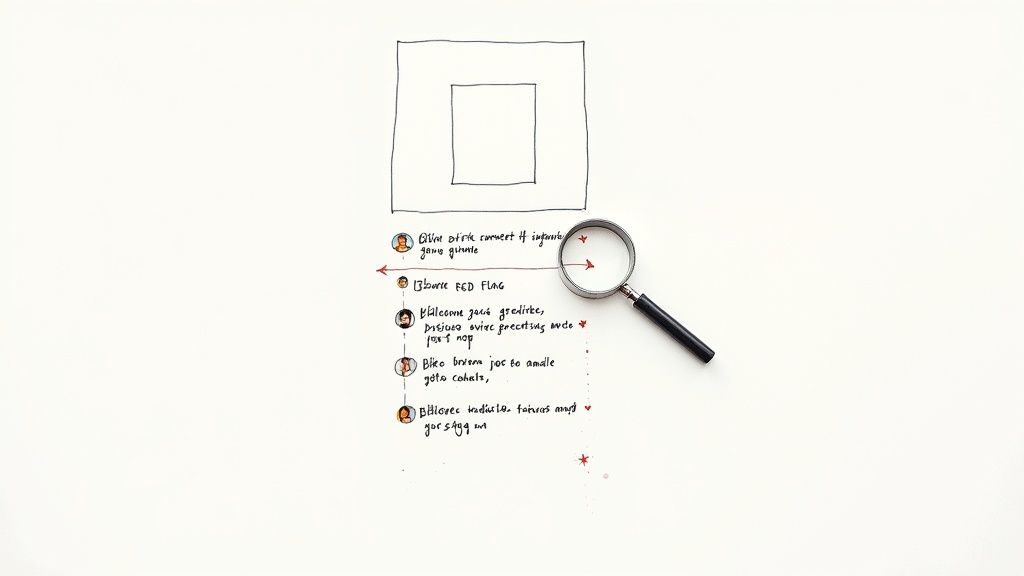
Often, the first clue isn't the comment itself, but the profile that left it. Before you even break down what they said, a quick tap on their username can tell you almost everything you need to know. Real user profiles look lived-in; bot profiles look like a flimsy stage set thrown together in a hurry.
Here are the key red flags to look for on the profile itself:
- A Nonsensical Username: Be wary of usernames that are just a jumble of letters and numbers, like
user8675309_xyz, or a generic name followed by a long string of digits. - A Blank or Stolen Profile Picture: Many bots stick with the default Instagram avatar or use a grainy, low-quality stock photo. Some go a step further and steal pictures from other people's profiles.
- An Empty or Spammy Bio: A bot's bio is often completely empty, features a shady-looking link, or has a generic, buzzword-stuffed phrase like "Crypto Enthusiast | Entrepreneur | DM for Collabs."
- No Posts or Low-Quality Content: Most bot accounts have zero posts. If they do have any content, it’s usually just a handful of stolen or random images with no context or real engagement.
Decoding Bot Behavior and Comments
After checking out the profile, the comment is your next piece of evidence. The global spread of bots commenting on Instagram carries real risks, so learning their patterns is key. Indicators often include generic, repeated comments and accounts with completely lopsided follower-to-following ratios. These fake interactions can seriously hurt a brand's reputation because real users see right through them.
Keep an eye out for these specific comment and behavior patterns:
- Overly Generic Praise: Comments like "Nice pic!," "Great feed!," or "Keep it up!" are classic bot moves. They're vague enough to fit any post, which is exactly what makes them so easy to automate.
- Irrelevant Emoji Storms: A long string of random emojis (e.g., 🔥🙌💯🚀💰) that has nothing to do with the tone or subject of your post is another huge red flag.
- Instantaneous Comments: Did a comment pop up the exact second you hit "Share"? No human is that fast. This is a strong sign that an automated script was triggered the moment you posted.
- Suspicious Follower-to-Following Ratio: A tell-tale sign of a bot is an account that follows thousands of people—often 5,000+—but only has a tiny number of followers in return. This is a common strategy for "growth" bots trying to farm follow-backs.
A genuine comment usually references something specific in your photo, caption, or video. It might ask a thoughtful question, share a personal story, or tag a friend who'd be interested. A bot comment is just an empty compliment, built for scale, not connection. For a deeper dive into the anatomy of these profiles, check out our guide on what a spam account really is.
Your Action Plan for Managing Bot Comments
Knowing how to spot bots is half the battle; the other half is actually doing something about them. Reclaiming your comment section requires a smart strategy, one that blends Instagram's own built-in tools with more powerful automated solutions when you need to bring in the big guns.
Think of this as your playbook for turning a noisy, spam-filled space back into a clean, engaging hub for your community.
The first move is always to master the free features Instagram already gives you. These tools are your frontline defense, letting you set a baseline for who can comment and what they can say. It’s like setting up the basic security system for your digital storefront before you install the advanced cameras.
Starting with Instagram's Native Moderation Tools
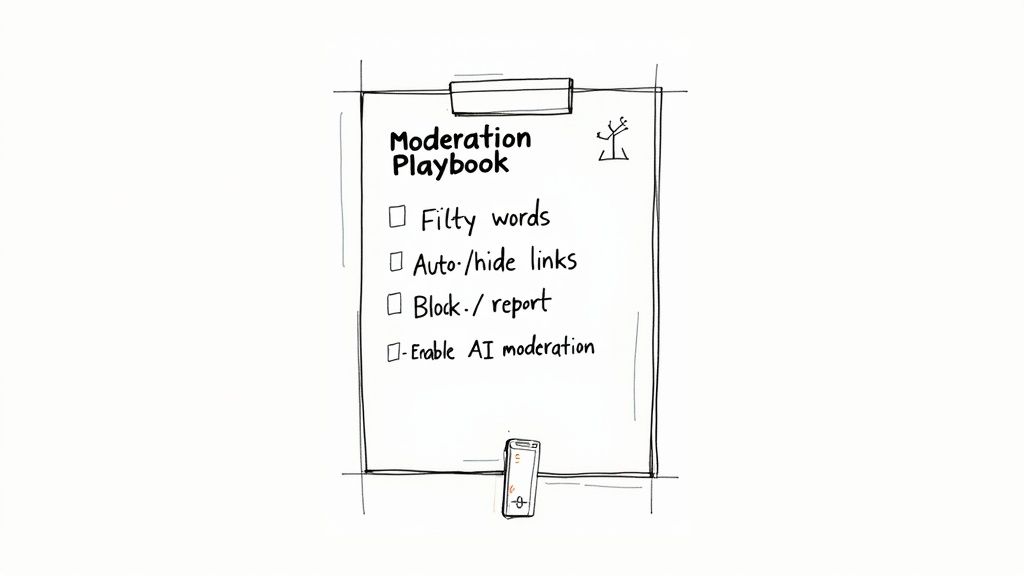
Instagram puts a surprising amount of control right at your fingertips, and using these features well can weed out a ton of bot activity. The most powerful of these is the Hidden Words feature, which is essentially a custom filter for your entire account.
Think of it as your own personal "do not enter" list for spammy phrases. You just compile a list of terms you don't want to see, and Instagram will automatically hide any comments that contain them.
- Create Your Hidden Words List: Just head to your settings (
Settings and privacy > Hidden Words > Manage custom words and phrases). This is where you can add all the words, phrases, and even emojis commonly used by bots commenting on Instagram. - Common Words to Add: A great starting point includes obvious spam triggers like "DM for collab," "brand ambassador," "free followers," and "crypto." Get creative and add any repetitive, annoying phrases you see popping up.
This manual approach is actually pretty effective for catching low-effort bots. For a complete walkthrough of these settings, check out this deep dive into the full suite of Instagram moderation tools and how to get the most out of them.
And don't forget the basics: block and report. When you spot a clear bot account, blocking it ensures it can never interact with you again. Reporting it helps train Instagram's algorithm to spot similar spam accounts across the platform.
When to Upgrade to Automated Moderation
Manual moderation is a great start, but let's be real—it has its limits. For accounts with high engagement, trying to review every single comment, block users, and constantly update a hidden words list can easily become a full-time job. It just doesn't scale.
This is where automated, AI-powered tools come into the picture. They act as a 24/7 moderator for your account, detecting and zapping harmful comments in real time. This frees you up to focus on what actually matters: creating great content and talking to your real audience.
Automated moderation isn't about replacing human connection; it's about removing the noise so that human connection can flourish. It handles the repetitive, low-value task of spam removal, freeing you up for high-value community engagement.
Practical Use Cases for Automated Rules
A powerful tool like FeedGuardians lets you move way beyond simple keyword filtering. You can set up intelligent rules based on a comment's intent and a user's behavior, which is a much more nuanced and effective way to manage your comments.
Here are a few real-world examples of rules you could set up in minutes:
- Auto-Hide Comments with Links: One of the biggest red flags for spam is a comment containing an external URL. You can set a rule to instantly hide any comment with a link, protecting your followers from shady websites.
- Filter Out Aggressive Sales Pitches: AI is smart enough to detect the intent behind a comment. You can create rules to automatically hide comments with aggressive sales language or those trying to poach your audience, like "Check my page for better deals!"
- Manage Repetitive Emoji Spam: A few emojis are great. A comment with ten fire emojis and nothing else? Almost certainly a bot. An automated rule can easily hide comments that consist solely of excessive or repetitive emojis.
Choosing Your Comment Moderation Strategy
Deciding between going it alone with Instagram's tools or investing in an automated solution comes down to a trade-off between your time, budget, and desired effectiveness. Here’s a quick breakdown to help you compare.
| Feature | Manual Moderation (Instagram Tools) | Automated Moderation Tools |
|---|---|---|
| Time Investment | High; requires constant monitoring and manual action for each comment. | Low; set up rules once and the tool runs 24/7 in the background. |
| Scalability | Poor; becomes unmanageable as your account and comment volume grow. | Excellent; easily handles hundreds or thousands of comments per day. |
| Detection Accuracy | Basic; relies on exact keyword matching and manual profile checks. | Advanced; uses AI to understand context, intent, and user behavior. |
| Real-Time Action | Delayed; action only happens when you are actively moderating. | Instant; harmful comments are hidden the moment they are posted. |
| Cost | Free to use, but costs you significant time and effort. | Typically a subscription-based service, saving you valuable time. |
Ultimately, the right strategy depends on your account's size and goals. But as you grow, integrating an automated solution becomes less of a luxury and more of a necessity for maintaining a healthy and authentic community.
Building a Bot-Resistant Instagram Community
The best defense against automated noise isn't just a bigger digital wall; it's building a community so vibrant that bots can't find a foothold. While moderation tools are crucial for playing defense, your best strategy is always a proactive one. When you foster authentic engagement, those generic, automated comments stick out like a sore thumb and get drowned out by real conversations.
Think of your comment section like a garden. You could spend all your time pulling out weeds (the bots), or you could cultivate such dense, healthy plants (real engagement) that the weeds simply have no room to sprout. The goal is to make your account infertile ground for spam.
This approach flips the script from just deleting bad comments to actively encouraging great ones. When genuine interaction is the standard, your community starts to police itself, and your account becomes a far less appealing target for the low-effort tactics of bots commenting on Instagram.
Sparking Meaningful Conversations
To build this kind of bot-proof space, you have to intentionally create opportunities for human connection. Generic posts get generic responses—and that’s the exact environment where bots thrive. Instead, your content needs to invite a specific, thoughtful reply.
Here are a few proven ways to get the ball rolling:
- Ask Open-Ended Questions: Ditch the simple "yes or no" queries. Instead of asking, "Do you like this outfit?" try something like, "Where would you wear this outfit and why?" This prompts a story, not just a one-word answer.
- Use Interactive Story Features: Polls, quizzes, and question stickers in your Stories are engagement gold. They give your audience a low-pressure way to interact with you, building a connection that often carries over to your feed comments.
- Share Vulnerable or Relatable Content: People connect with people, not perfectly polished brand accounts. Sharing a behind-the-scenes moment, a personal story, or even a small failure makes you more human and invites genuine, empathetic responses.
The core idea is simple: be the kind of account you'd want to follow and talk to. When your content has personality and depth, it naturally attracts people who want to do more than just drop a fire emoji.
The Power of Thoughtful Replies
Your work isn’t done when you hit "Publish." How you respond to the real comments you get is just as important as creating the post in the first place. A thoughtful reply shows you’re actually listening and that you value your community's input, which encourages others to jump into the conversation.
Try to avoid one-word replies like "Thanks!" Instead, acknowledge what they said and maybe ask a follow-up question. This simple step can turn a single comment into a whole thread, signaling to both your audience and the algorithm that a real discussion is happening.
While manual replies are powerful, you can explore the benefits of AI comment moderation tools in 2025 to help manage the volume without losing that personal touch. At the end of the day, a smaller, highly-engaged audience built on real talk is infinitely more valuable than a massive one inflated by fake activity.
Got Questions About Instagram Bots? We Have Answers.
If you're trying to figure out the wild world of Instagram bots, you're not alone. It's a confusing space. Let's clear up some of the most common questions brands and creators ask about all this automated nonsense.
Does Instagram Punish You for Bot Comments on Your Posts?
Short answer: no, you won't get directly penalized just because bots are spamming your posts. Instagram knows you can't control who comments.
But there's a catch. The algorithm is smart enough to spot fake engagement, and a flood of spam can make your post look low-quality. This can hurt your post's reach, showing it to fewer of your real followers. The real danger, though, isn't an algorithm slap on the wrist—it's the damage to your brand's credibility. When your audience sees a comment section overflowing with junk, it screams "inauthentic" and erodes their trust.
Can Buying Followers or Likes Attract More Comment Bots?
Yes, 100%. Buying fake followers is like putting out a welcome mat for every spam bot on the internet. These follower-selling services are all part of massive bot networks, and once you pay them, you've essentially flagged your account as an easy target.
It’s a nasty cycle. You buy followers, and then your account gets bombarded with automated comments, spammy DMs, and fake likes. Getting your account’s health back on track after that is a serious uphill battle.
Are All Instagram Automation Tools Bad?
Definitely not. This is a super important distinction to make. There's a world of difference between a shady spam bot and a legitimate tool designed to make your life easier.
It all comes down to what the tool does.
- Harmful Automation (The Bad Stuff): These are the tools that violate Instagram's rules by faking engagement for you. Think auto-commenting on random posts, auto-following thousands of accounts, or auto-liking everything with a certain hashtag. This is the kind of activity Instagram actively cracks down on.
- Helpful Automation (The Good Stuff): These tools are your allies. They work within the rules to help you manage your own account. We're talking about post schedulers, analytics platforms, and comment moderation tools that automatically filter spam from your own posts.
Here’s the simplest way to tell them apart: If a tool automates your actions on other people’s content to get attention, it’s probably trouble. If it helps you manage your own content and community, it’s likely a safe and valuable tool.
Ready to stop wasting time deleting spam and start protecting your brand's reputation? FeedGuardians uses AI to automatically hide harmful comments, filter out spam, and keep your comment section clean 24/7. Reclaim your comment section and foster real engagement today.
Tired of manually moderating comments?
FeedGuardians automates spam filtering, responds to customers, and protects your brand — setup in 3 minutes.