
Quick Summary
| Key Insight | What You Need to Know |
|---|---|
| The Hidden Costs of Instagram Spam | Picture this: you just launched your biggest campaign of the year. The engagement numbers are soaring, but when you take a closer look, you realize yo... |
| How Spam Silently Sabotages Your Brand | Think of Instagram spam as more than just an annoyance that clutters up your comments. It’s a silent saboteur, quietly undoing all the hard work you... |
| Proactive Strategies to Spam-Proof Your Account | The best way to fight Instagram spam isn't just playing whack-a-mole with comments as they pop up. It’s about making your account a place where spam... |
| Answering Your Top Questions About Instagram Spam | Even with a solid moderation plan in place, some situations will inevitably pop up that make even seasoned social media managers pause. Let's tackle s... |
So, what exactly is Instagram spam? Think of it as any unwanted, repetitive, or just plain irrelevant junk that clogs up your feed and comment sections. It’s a wide spectrum, covering everything from those fake "You've won!" giveaway comments and bot followers to malicious phishing DMs. At its core, spam is designed to game the system or exploit users for someone else's gain. This digital noise isn't just a minor annoyance—it's a real threat to your brand's reputation and the safety of your community.
The Hidden Costs of Instagram Spam
Picture this: you just launched your biggest campaign of the year. The engagement numbers are soaring, but when you take a closer look, you realize your comment section is a minefield of spam. This isn't just frustrating; it's a direct assault on the trust you've built with your audience.
When your followers see posts flooded with sketchy links or generic "Great post!" comments from obvious bots, their confidence in your brand starts to crumble. An unmoderated, messy comment section screams neglect. It can make your business look unprofessional or, worse, like you don't care about the scams targeting your community. This drives away the real, loyal followers you worked so hard to earn.
Why Instagram Is a Prime Target
The platform's sheer size is a huge part of the problem. With over 2.6 billion monthly active users globally and more than 70% of them under 35, Instagram is a goldmine for spammers. That massive reach and young audience create the perfect storm for anyone looking to exploit a huge number of people with very little effort. If you dig into the latest Instagram statistics, you'll see just how big that target is.
Spam doesn't just make your page look messy. It actively degrades the user experience, pushing away potential customers and devaluing the community you're trying to build. Every spam comment left unchecked is a missed opportunity for genuine connection.
The Ripple Effect on Your Business
The damage from spam on Instagram goes way beyond just looking bad. It triggers a harmful ripple effect that can quietly sabotage your marketing efforts from multiple angles.
- Wasted Marketing Budget: You're paying to reach real people, not an army of bots. When spam accounts interact with your ads and posts, they poison your analytics, making it impossible to know how your campaigns are actually performing and what your true ROI is.
- Reduced Organic Reach: The Instagram algorithm is designed to reward meaningful interactions. A flood of low-quality, spammy engagement sends a signal that your content isn't valuable, which can lead to the algorithm burying your posts in your real followers' feeds.
- Security Risks for Your Audience: The worst kind of spam involves phishing links and scam offers that put your followers' personal data at risk. When you let these threats linger on your page, you risk a massive breach of trust that can be nearly impossible to repair.
Ignoring Instagram spam is a costly mistake. But understanding its true impact is the first step toward building a solid defense and protecting the community you’ve worked so hard to grow.
Decoding the Different Types of Spam
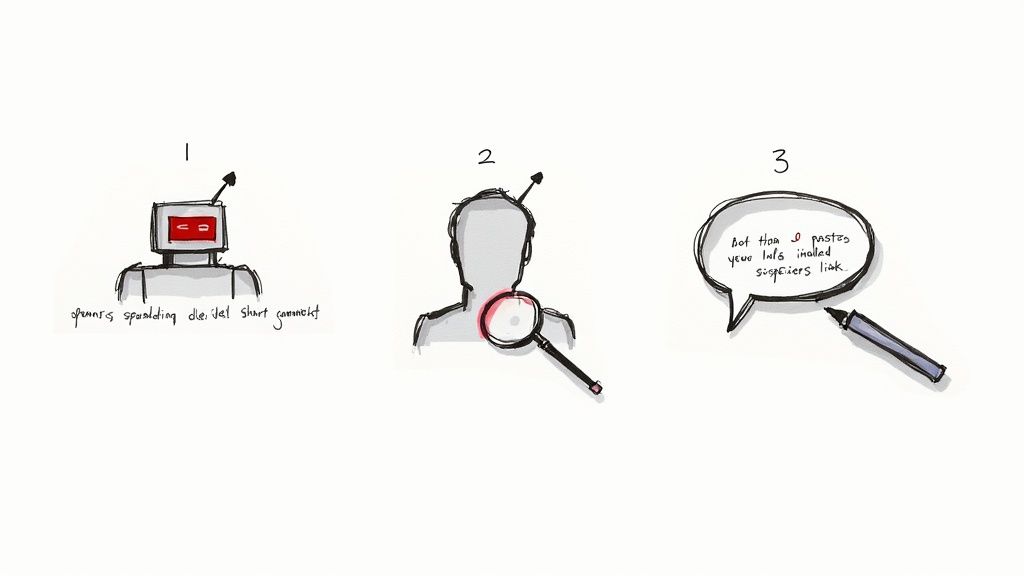
Before you can fight back against spam on Instagram, you have to know what you’re up against. Spam isn’t just one thing; it’s a whole collection of different tactics, each with a specific—and usually shady—goal. If you can learn to think like a spammer, you'll get much better at spotting their game and shutting it down before it causes real problems.
Think of your brand's Instagram page as your digital storefront. Each type of spam is a different kind of pest. Some are just a nuisance, like graffiti on the walls, while others are more like sophisticated scammers trying to swindle your customers right at the front door. Learning to tell them apart is the first step to building a solid defense.
The Most Common Spam Attacks
Spammers have a whole bag of tricks they use to clutter up your page and take advantage of your audience. Some attacks are painfully obvious, but the more clever ones are designed to look like genuine engagement, making them a lot harder to catch.
- Comment Spam: This is the one you see most often. It can be anything from vague, emoji-heavy praise ("🔥🔥🔥 Great pic!") to straight-up ads and links that lead to sketchy websites.
- Fake Followers: These are bot accounts or inactive profiles people buy to make their follower count look bigger. A high number might seem impressive at first glance, but these accounts offer zero engagement and can actually hurt your standing with the Instagram algorithm.
- Phishing DMs: These are direct messages crafted to fool people into giving up sensitive info, like passwords or credit card numbers. They often try to create a sense of urgency, telling you you've won a prize or that your account is in danger of being shut down.
- Viral Comment Spam: This happens when a specific phrase or meme gets copied and pasted across thousands of totally unrelated posts. It might seem harmless (like the "Nice Try Diddy" trend), but it floods comment sections and buries real conversations.
Knowing what a spam account looks like is half the battle.
Spotting Spam in the Wild
It’s one thing to know the types of spam exist, but it’s another to actually pick them out of a busy comment section in real time. The good news is that spammers usually leave behind some pretty clear digital footprints if you know what to look for. Their profiles, comment patterns, and a general lack of authentic activity are all huge red flags.
The goal of a spammer is almost always deception. They aim to impersonate genuine interest to sell a product, steal information, or simply cause chaos. Your job is to spot the cracks in their disguise.
It helps to think of yourself as a digital detective. A real follower has a history, a personality, and a genuine reason for interacting with your content. A spam bot is just a hollow shell built for one single purpose.
To help you get better at identifying these threats on the fly, I've put together a quick cheat sheet. It breaks down the most common types of Instagram spam and what to watch out for.
Common Instagram Spam Types and Their Red Flags
This table breaks down the most prevalent forms of Instagram spam, outlining their primary objectives and the key warning signs for quick identification.
| Spam Type | Primary Goal | Key Red Flags to Spot |
|---|---|---|
| Comment Spam | Drive traffic to scam sites or promote products. | Generic comments, overuse of emojis, suspicious links, tagging random accounts. |
| Fake Followers | Artificially inflate follower counts. | Empty profiles, no posts, stolen photos, nonsensical usernames with numbers. |
| Phishing DMs | Steal personal data or account credentials. | Urgent language, requests for private information, links to fake login pages. |
| Mention Spam | Get your attention by tagging you in irrelevant posts. | Being tagged in giveaway posts or images you have no connection to. |
Once you start recognizing these patterns, you can shift from just reacting to problems to proactively managing your community. The goal is to stop spammers in their tracks before they have a chance to bother your real followers.
How Spam Silently Sabotages Your Brand
Think of Instagram spam as more than just an annoyance that clutters up your comments. It’s a silent saboteur, quietly undoing all the hard work you’ve poured into building your brand. Every spam comment, fake follower, or phishing DM chips away at your business in ways you might not see at first—but the long-term damage is serious.
Ignoring the problem is like letting graffiti cover your storefront. It screams that you aren’t paying attention, and that message can be devastating for your reputation. Understanding these hidden costs is the first step toward realizing why proactive moderation isn't just a "nice-to-have," but a core part of any smart social media strategy.
It Erodes Brand Trust and Credibility
Trust is everything in a customer relationship, and spam is a wrecking ball. When someone new finds your brand on Instagram, they see your entire profile as a reflection of your business. If your posts are swamped with scam links, bot comments, and shady giveaway offers, it instantly makes your brand look unprofessional and, even worse, untrustworthy.
Picture a new follower seeing your latest product launch. They're excited, but then they see the top comments are "DM for a crypto deal" or "Get 5000 followers for $5." It immediately plants a seed of doubt. Do you care about your community? Are you even a legitimate business? This perception of neglect can scare off interested customers before they ever think about buying.
A brand's comment section is its digital community hall. When it's filled with spam, it signals that the doors are unlocked and no one is watching, making genuine followers feel unsafe and unwelcome.
This erosion of trust hits your bottom line directly. People are far less likely to hand over their credit card details or personal information to a brand that seems careless about online security and community management.
Spam Pollutes Community Engagement
You put time and money into creating content that sparks real conversations and builds a loyal following. Spam actively works against that by drowning out those genuine interactions. When your actual fans leave thoughtful comments or ask questions, their messages get buried under a pile of irrelevant, automated garbage.
This is incredibly frustrating for your audience. Why would they bother engaging if their comment is just going to get lost in a sea of noise? Over time, it discourages them from participating at all, and your authentic engagement plummets. Your comment section goes from a lively discussion forum to a desolate wasteland of bots talking to each other, pushing away the very people you want to connect with.
It Skews Your Analytics and Wastes Ad Spend
Good marketing runs on good data. You need to know which content is hitting the mark, who your audience really is, and how your campaigns are performing. Spam completely messes with that data, making your analytics unreliable and flat-out misleading.
Here’s how spam on Instagram sabotages your metrics:
- Inflated Engagement: Bots liking and commenting on your posts create false positives. You might think a campaign is a huge success when, in reality, it's just reaching other bots.
- Inaccurate Follower Demographics: A follower count padded with fakes distorts your audience insights, making it impossible to understand your true customer base.
- Wasted Ad Budget: If your paid campaigns attract spam accounts, you're literally paying to advertise to robots. That’s marketing spend flushed right down the drain, destroying your return on investment (ROI).
Relying on bad data leads to bad decisions. You could end up pouring more money into strategies that aren't actually resonating with real people. Cleaning up your data has to start with cleaning up your account.
Spam Creates Security Risks for Your Followers
Beyond just hurting your reputation, some types of spam are a direct threat to your audience. Phishing scams, malicious links, and fake offers are all designed to steal personal information, passwords, and financial data from people who trust you.
The sheer scale of Instagram makes it a perfect hunting ground for this stuff. The platform is the third most popular social network on the planet, with 2 billion monthly active users. This massive user base, which is over a third of all mobile users worldwide, is a prime target for scammers, especially in huge markets like India, the United States, and Brazil. You can find more insights on Instagram’s global user base on Backlinko.com.
When these dangerous links pop up in your comments, you become an unwilling accomplice. By not removing them, you're inadvertently exposing your loyal followers to real harm. A single security incident traced back to your page can do irreparable damage to your brand and shatter the trust you've spent years building.
Building Your Instagram Moderation Playbook
Switching from a reactive, fire-fighting approach to spam to proactively managing it requires a solid game plan. A well-defined moderation playbook is that plan. It transforms the chaotic chore of comment cleanup into a structured, efficient process that actually protects your brand and community.
This isn't about working harder; it's about working smarter. By setting up a system, your social media team knows exactly what to do when they see spam on Instagram. This consistency is the secret to maintaining a healthy, engaging space where your real followers feel seen and safe.
Establish Clear Community Guidelines
Your first line of defense is a simple one: set clear expectations. You need to create a public set of community guidelines that spells out what’s okay and what’s not on your page. Think of them as the house rules for your corner of the internet.
These guidelines should be easy to find—link them in your bio or create a saved Story Highlight. Be direct and state that you will remove comments that include:
- Hate speech or personal attacks
- Spam, scams, or sketchy links
- Irrelevant promotional content
- Anything that violates Instagram's own terms of service
Having these rules publicly available gives you the authority to moderate with confidence. When you remove a comment, you aren't just making an arbitrary call; you're simply enforcing the standards you’ve already communicated to everyone.
Configure Instagram's Native Filters
Instagram gives you some surprisingly powerful built-in tools to automatically fend off unwanted comments. Taking a few minutes to set these up can dramatically cut down on the manual work your team has to do.
First, dive into the Hidden Words feature. This lets you build a custom list of words, phrases, and even emojis you want automatically hidden. If your brand gets hit with the same spammy phrases over and over (like "crypto," "DM for a collab," or specific emojis), add them here.
Don't just block obvious profanity. Think like a spammer in your niche. A well-curated hidden words list acts as a silent, 24/7 moderator, catching the common junk before anyone else sees it.
Next, make sure you've enabled the option to hide comments that may be offensive. Instagram’s AI will automatically filter out comments it flags as bullying or harassment. It's an extra layer of protection that runs in the background, no effort required.
This flowchart shows just how unchecked spam can poison your brand's most important assets, from community trust all the way to account security.
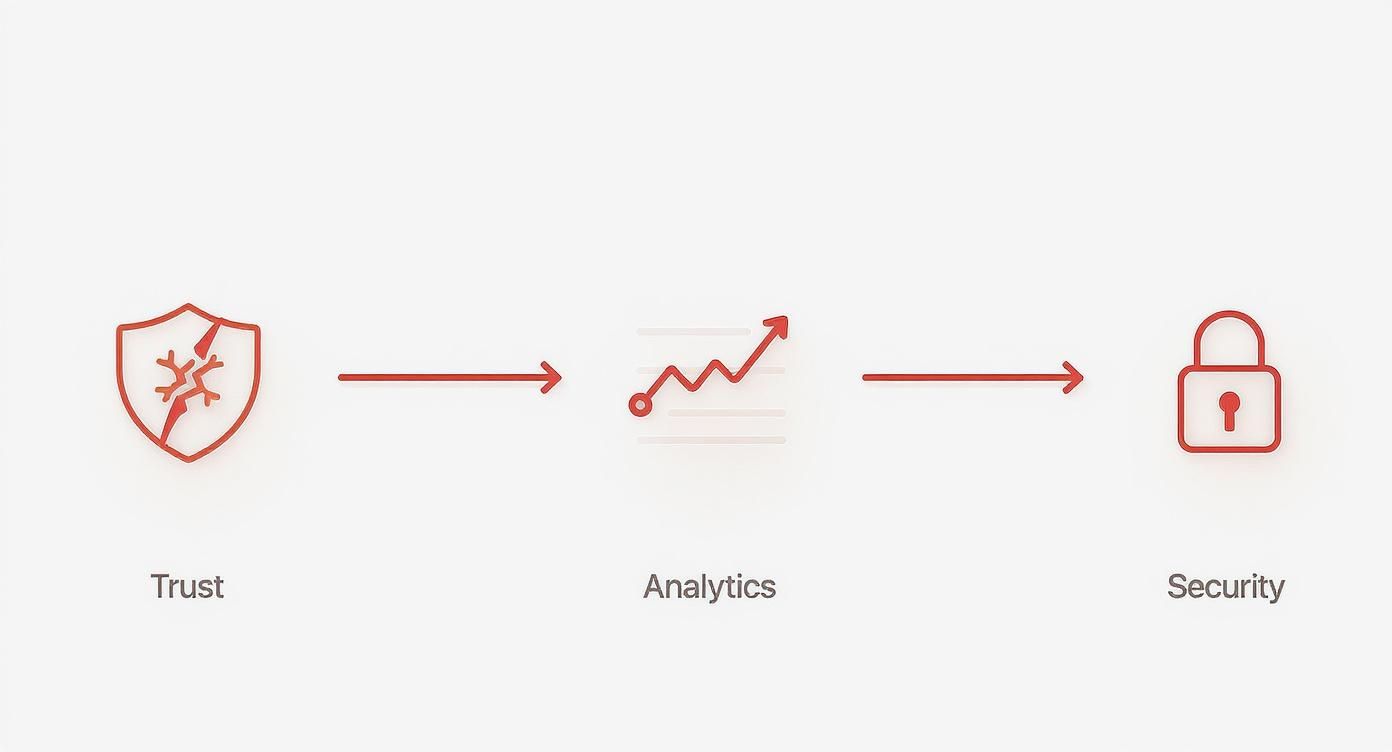
As you can see, the damage isn't contained to just one bad comment. It creates a domino effect that erodes trust, pollutes your analytics, and ultimately puts your followers at risk.
Create a Daily Moderation Workflow
With your automated filters doing the heavy lifting, the next step is building a consistent daily routine. Manual moderation is still crucial for catching the clever stuff that sneaks past the bots. A simple, structured workflow makes sure nothing falls through the cracks.
- Schedule Check-Ins: Don't wait for spam to pile up. Dedicate a few specific times each day for moderation. Three quick 15-minute sweeps—morning, midday, and end-of-day—are often far more effective than one marathon session.
- Review Hidden Comments: Make it a habit to check the "Hidden" comments folder. Sometimes, Instagram's filter is a little too aggressive and catches legitimate comments. Approving these ensures you aren't accidentally silencing real customers.
- Report and Block: When you find a spam account, don't just delete the comment. Take the extra two seconds to report the comment and block the account. This helps train Instagram's algorithm and stops that specific user from ever bothering you again.
- Know When to Escalate: Have a clear protocol for the really serious stuff. If a comment contains a threat or illegal content, your team needs to know exactly who to notify and what steps to take, no hesitation.
For brands managing a high volume of comments, exploring dedicated Instagram moderation tools can be a game-changer. These platforms often offer more sophisticated filtering and automation to make life even easier. By creating this playbook, you give your team the power to handle spam confidently, ensuring your Instagram remains a valuable—and positive—asset for your business.
Using AI Tools for Smarter Spam Detection
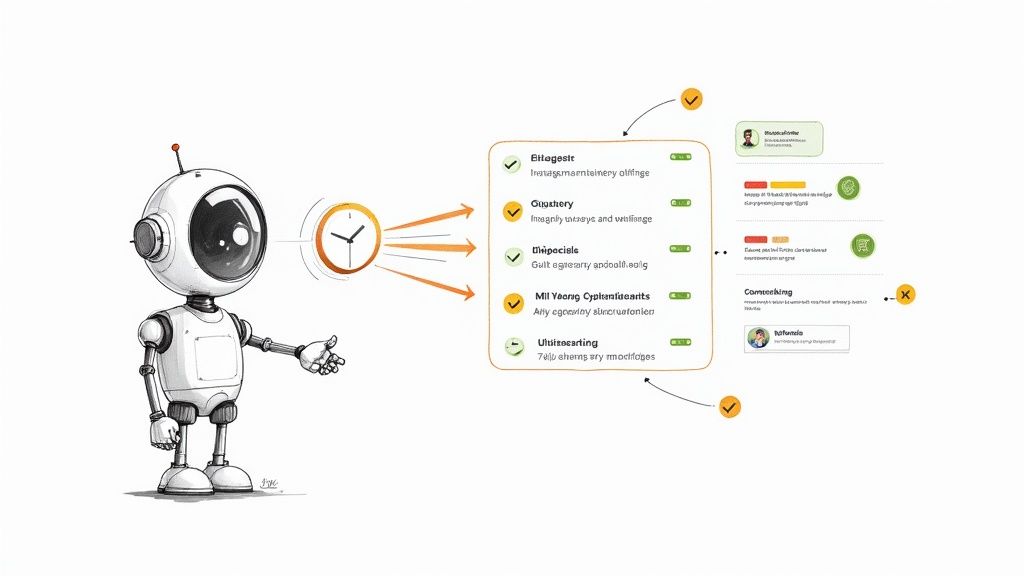
As your brand’s Instagram account grows, the trickle of comments and DMs inevitably turns into a flood. Manual moderation, which might have worked when you were smaller, just can't keep up. This is where technology becomes your greatest ally in the fight against spam on Instagram.
Think of AI-powered moderation tools as a tireless, 24/7 security guard for your comment section. Instead of your team manually sifting through hundreds of comments, these systems automatically spot and block threats in real time. They learn the subtle patterns of spam, recognizing malicious links, bot-like language, and harmful content long before your community ever sees it.
This kind of automation brings some serious advantages. It gives you around-the-clock monitoring that no human team could ever match, keeping your page clean even when you’re signed off. More importantly, it scales effortlessly. Whether you get ten comments an hour or ten thousand, a good AI tool handles the volume without breaking a sweat, freeing up your team to focus on genuine engagement.
The Power of Automated Moderation
Modern AI doesn't just scan for a list of banned keywords; it analyzes context, sentiment, and user behavior to make much smarter calls. It's a huge step up from basic filters. An AI can tell the difference between a genuinely excited customer dropping a dozen emojis and a spam bot using a similar pattern to push a crypto scam.
This contextual understanding is what makes AI so effective. It can learn your brand's unique voice and community norms, fine-tuning its filters to protect your specific audience. This is crucial because spam tactics aren't one-size-fits-all—they change based on who the spammers are targeting.
For example, spammers tailor their attacks based on demographics. In the United States, where users aged 25 to 34 make up a 28.3% share of a slightly female-skewed audience, the scams will look different than those targeting India. India has a massive 360 million user base that's over 70% male. A smart AI can help detect these nuanced threats. You can dig into more global Instagram demographics on byradiant.com to see just how diverse the user base is.
Balancing Automation with Brand Safety
While the benefits are clear, a common worry is brand safety. What if the AI is too aggressive and hides a legitimate customer complaint? Or what if it flags a positive comment from a real fan? It’s a valid concern—overly zealous automation can easily damage the very community you’re trying to protect.
The key is finding a tool that balances aggressive spam fighting with nuanced control. The best AI moderation platforms aren't black boxes; they give you transparency and the ability to customize.
A smart AI tool shouldn't just be a wall; it should be a smart filter. It needs to know the difference between a threat and a valuable, albeit negative, customer comment. Your goal is to eliminate spam, not silence your audience.
This means you should always look for a tool that lets you:
- Set custom rules based on your brand's specific guidelines.
- Review the AI's actions and easily override its decisions when you need to.
- Create whitelists for trusted users to ensure their comments are never hidden.
Choosing the Right Level of Automation
Instagram’s built-in moderation features are a decent starting point, but third-party AI solutions offer a much deeper level of protection and control. Instagram’s native tools are good at catching the most obvious spam, but they often miss more subtle or rapidly evolving threats.
Dedicated solutions, on the other hand, are built specifically for this job. They provide advanced analytics, intent detection (like identifying sales leads), and more sophisticated filtering that can adapt to new spam trends almost instantly. To make the best choice, look for tools that can grow with your brand. You can explore a detailed breakdown of the top AI comment moderation tools for 2025 to see what advanced features are out there.
Ultimately, the right tool transforms moderation from a defensive chore into a proactive strategy that keeps your community healthy and even helps you hit your business goals.
Proactive Strategies to Spam-Proof Your Account
The best way to fight Instagram spam isn't just playing whack-a-mole with comments as they pop up. It’s about making your account a place where spammers don’t even want to hang out. When you shift your thinking from reactive to proactive, you start building a community that’s naturally resistant to junk.
Think of it like tending a garden. A healthy, well-tended garden has strong plants and rich soil, which naturally keeps weeds at bay. It's the same with Instagram. An account with a vibrant, engaged community makes it incredibly difficult for the "weeds" of spam to find room to grow. This sends a clear message to spammers—and to Instagram's algorithm—that your page is high-quality and actively monitored.
Cultivate Genuine Engagement
One of the most effective ways to drown out spam is to fill your comment section with authentic conversation. When your posts are buzzing with real people talking to each other, spam comments get buried and lose their power. You need to actively invite meaningful replies.
- Ask Open-Ended Questions: Don't just ask yes-or-no questions. Ask your audience about their experiences, their opinions, or what they think about your latest product. Get them talking.
- Use Interactive Features: Take full advantage of Instagram Stories. Polls, quizzes, and question stickers are low-effort ways for your audience to engage and show the algorithm that your content is connecting.
- Respond Thoughtfully: When a real person leaves a comment, reply to them! A genuine response builds a relationship with that follower and shows everyone else that there’s a real human behind the account.
An account filled with genuine, back-and-forth conversations is like a crowded, well-lit street—it’s an inherently less appealing place for shady characters to operate. Spammers thrive in neglected, quiet spaces.
Manage Your Followers Proactively
The health of your community starts with who's in it. A massive follower count doesn't mean much if it's full of bots and inactive accounts. In fact, that can actually attract more spam and tank your organic reach.
Take some time every so often to audit your followers. Look for the obvious fakes—profiles with zero posts, gibberish usernames loaded with numbers, or generic profile pictures. Removing these accounts cleans up your analytics and tells Instagram you're serious about building a real community. It’s a bit of digital housekeeping that pays off.
Temporarily Adjust Settings During High-Risk Events
Some things are just spam magnets. Giveaways, contests, or a post that unexpectedly goes viral can open the floodgates. When you know you're heading into one of these high-risk periods, it’s smart to temporarily tighten your security.
For example, you can limit comments to only accounts that follow you. This one simple change can slash the amount of drive-by spam from bots that just scrape popular hashtags. Once the contest is over or the viral buzz dies down, you can switch your settings right back. It's a tactical move that gives you control during a spam surge without permanently closing off your community.
Answering Your Top Questions About Instagram Spam
Even with a solid moderation plan in place, some situations will inevitably pop up that make even seasoned social media managers pause. Let's tackle some of the most common questions and tricky scenarios brands face when dealing with spam on Instagram.
What Actually Happens When I Report Spam?
When you hit that report button on a comment or an account, you're essentially flagging it for Instagram's review team. They'll take a look and see if it breaks their Community Guidelines. If it does, the consequences can range from simply removing that one piece of content to shutting down the spammer's entire account for good.
It might feel like your report just vanishes into the ether, but every single one is valuable. Each report helps train Instagram's own detection systems. By consistently flagging spam, you’re helping make the platform's automated filters smarter for everyone, making them better at catching similar stuff on their own down the road.
Should I Buy Followers to Improve My Follower-to-Spam Ratio?
In a word: no. It's tempting to think buying followers will give your account a quick boost, but it's a classic case of a shortcut leading you off a cliff. The followers you buy are almost always bots or ghost accounts. They don't engage, they don't buy, and they can seriously damage your account's reputation with the algorithm.
Think of it this way: You wouldn't fill your retail store with mannequins just to make it look busy. Fake followers do the same thing for your digital presence—they create a flimsy illusion of popularity while providing zero real value and often attracting even more spam.
Instead of watering down your audience with fakes, pour that energy into clearing out spam accounts. Focus on building a smaller, more authentic community. A high engagement rate with a modest following is infinitely more valuable than a huge follower count with crickets in the comments.
Can Spam Comments Hurt My SEO on Instagram?
While Instagram posts aren't indexed by search engines like Google the way a blog post is, spam can absolutely hurt your visibility on the platform itself. The Instagram algorithm is designed to push content that sparks meaningful engagement—real conversations, shares, and saves.
When your comment section is a wasteland of spam, it sends all the wrong signals. It tells the algorithm that the interactions on your post are low-quality, which can throttle your reach, even among your own followers. Keeping your comments section clean is about more than just aesthetics; it’s about making sure your content actually gets seen by the people you want to see it.
Ready to stop wasting time on manual moderation and protect your brand 24/7? FeedGuardians uses advanced AI to automatically hide spam, reply to customers, and identify sales leads in your comments. See how FeedGuardians can clean up your comments and boost your conversions.
Tired of manually moderating comments?
FeedGuardians automates spam filtering, responds to customers, and protects your brand — setup in 3 minutes.