
Quick Summary
| Key Insight | What You Need to Know |
|---|---|
| The Real Trade-Off | Engagement vs. Efficiency |
| Building Social Media Brand | Building Social Media Brand Voice Guidelines That Scale |
| AI Social Media Comment Replies | How to Maintain Authenticity |
| Responding to Negative Comments | Responding to Negative Comments on Social Media |
| Social Media Comment Response | Social Media Comment Response Templates and Automation |
| Measuring Impact | KPIs That Actually Matter |
Table of Contents
- The Real Trade-Off: Engagement vs. Efficiency
- Building Social Media Brand Voice Guidelines That Scale
- AI Social Media Comment Replies: How to Maintain Authenticity
- Responding to Negative Comments on Social Media
- Social Media Comment Response Templates and Automation
- Measuring Impact: KPIs That Actually Matter
- Which Strategy Wins for Your Brand
- Frequently Asked Questions
Last Updated: October 20, 2026
The Real Trade-Off: Engagement vs. Efficiency
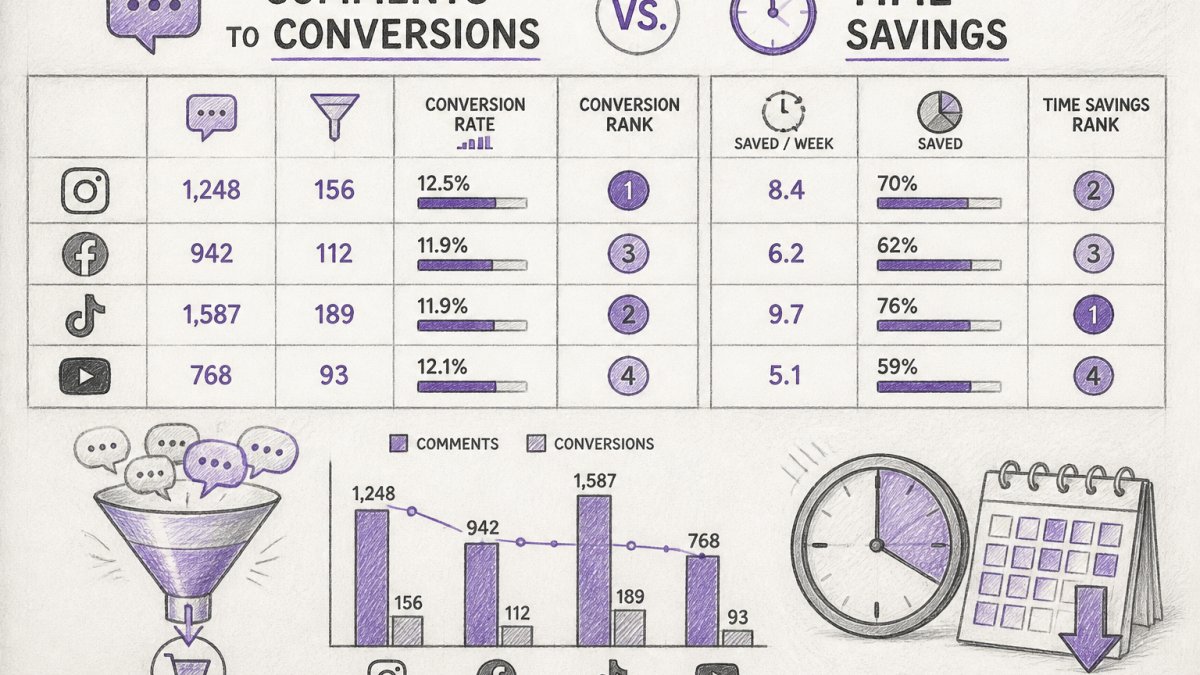
The choice between optimizing comments to conversions versus saving hours every day through brand voice standardization isn't actually a choice at all. It's a false binary that misses what's really happening on social media.
Most brands think they have to pick one: either spend time replying thoughtfully to every comment and build real relationships, or automate everything and lose authenticity. The truth is messier and more interesting. At FeedGuardians, we work with social media managers drowning in comment volume across Instagram, Facebook, TikTok, and YouTube. What we've learned is that the best brands do both simultaneously. They use AI-powered replies in their brand voice to handle the volume, but they strategically escalate high-value conversations to humans. They standardize responses to common questions while keeping room for genuine engagement on posts that matter most.
The real trade-off isn't engagement versus efficiency. It's whether you're intentional about how you allocate your limited time and attention.
Building Social Media Brand Voice Guidelines That Scale
Your brand voice is the personality behind every reply, comment, and message. It's not just tone, it's the specific words you use, the jokes you make, the way you handle frustration, and what you refuse to say even when it would be funny.
The challenge is that brand voice guidelines are useless if they live in a Google Doc that nobody reads. Effective guidelines are living documents that get tested, refined, and embedded into your actual workflows. Start by analyzing your best-performing comments and replies. What language patterns show up? Do you use contractions or formal phrasing? Do you lead with empathy or humor? Do you acknowledge problems directly or soften them? Extract 5-10 specific examples that capture your voice at its best.
Then document the constraints. What topics are off-limits? When do you escalate to a human? What competitor mentions do you ignore versus address? These guardrails prevent your AI from wandering into brand-damaging territory. The goal isn't a 50-page style guide. It's a 2-3 page reference that your team actually uses and that your AI system can learn from.
Social media comment response templates work best when they're flexible templates, not rigid scripts. Create 8-12 templates for common scenarios: thanking customers for positive feedback, addressing shipping delays, responding to product questions, handling complaints, defending against negative reviews. Each template should have 2-3 variations so replies don't feel robotic. The template for a first-time customer should feel different from the one for a repeat buyer.
AI Social Media Comment Replies: How to Maintain Authenticity
The fear that AI replies will sound generic is legitimate. Most AI-generated content does sound like it was written by a committee that's never talked to a real human. The difference between a reply that feels authentic and one that feels like a bot is usually just a few words.
Generic: "Thank you for your feedback! We appreciate your business and look forward to serving you again."
Authentic: "Thanks for this. We genuinely appreciate it, and we'll make sure it ships faster next time."
The second one is shorter, uses a contraction, and acknowledges a specific problem. It doesn't sound like it was generated by a language model because it wasn't written to sound like everything else.
The way to prevent AI replies from drifting into corporate jargon is to feed your AI system examples of your actual brand voice. Don't just tell it to "be friendly", show it 20 real replies you've written and let it learn the patterns. What words do you actually use? Where do you use punctuation? Do you use emojis? How do you handle sarcasm or humor? The AI learns from examples far better than from instructions.
FeedGuardians handles this by letting you train the system on your existing content. The more examples you provide, the better it learns your specific voice. It's not about replacing human judgment, it's about giving your AI the guardrails and examples it needs to sound like your brand, not like a generic chatbot.
Human escalation is critical here. Not every comment needs an AI reply. Comments that are angry, confused, or asking for something complex should go to a human who can actually solve the problem. The best approach is to set escalation rules: if a comment contains certain keywords, if the sentiment score is below a threshold, or if it's asking for a refund, route it to your team. Let AI handle the easy stuff. Save your people for conversations that actually need them.
Responding to Negative Comments on Social Media
Negative comments are where most brands panic and either ignore them or respond defensively. Both approaches are wrong. Negative comments are actually opportunities, they're public signals that someone cared enough to engage.
The first rule is speed. Respond to negative comments faster than you respond to positive ones. This signals that you take criticism seriously. If a customer complains about a product issue on Monday and you reply on Friday, they've already told their friends the story. You've lost the narrative.
The second rule is acknowledgment without excuses. Don't explain why the problem happened or why it's not your fault. Just acknowledge it happened and what you're going to do about it. "We messed up on that shipment. DM us your order number and we'll get it right" is infinitely better than "Our carrier had delays due to weather conditions in the Midwest."
Negative comments that are actually spam or harassment should be hidden, not replied to. This is where moderation matters. Spam, hate speech, and competitor links need to be removed from public view because they damage your brand reputation and suppress your ad performance. FeedGuardians detects and hides these automatically with 98.7% accuracy, which means you're not wasting time manually reviewing every toxic comment.
Social Media Comment Response Templates and Automation
Templates are scaffolding, not straitjackets. The goal is to give your team (and your AI) a starting point so they're not writing from scratch every time.
Here's a template structure that works across most scenarios:
For Product Questions: "Great question. [Specific answer]. If you need more details, [link or escalation path]."
For Complaints About Shipping: "That's frustrating. We typically ship within [X days], but let me check on yours. Can you DM your order number?"
For Positive Feedback: "[Acknowledge the specific thing they mentioned]. Thanks for being a customer."
For Competitor Comparisons: "We're different in [specific way]. Happy to explain more if you're curious."
The automation layer sits on top of these templates. Your system should route incoming comments to the right template based on intent. Is this a question, complaint, compliment, or attack? Is it about pricing, shipping, product quality, or something else? Once categorized, the template activates and an AI reply is generated. If the confidence score is high, it posts automatically. If it's uncertain, it flags for human review.
This workflow saves hours every day because you're not manually typing the same response 50 times. But it also maintains quality because templates are built on your actual brand voice, and humans review anything the system isn't confident about.
The escalation layer is equally important. Set rules for what always goes to a human: refund requests, legal threats, detailed product troubleshooting, or comments from your biggest customers. These conversations are too valuable to automate.
Measuring Impact: KPIs That Actually Matter
Most brands measure social media success by vanity metrics: likes, followers, shares. These don't tell you whether comments to conversions are actually happening. Here's what actually matters.
Response Time: How long between a comment and your reply? Faster is better. Track this by platform because TikTok comments move faster than Instagram comments.
Escalation Rate: What percentage of comments go to humans versus AI?
Sentiment Shift: Are negative comments getting resolved? Track comments that start negative and see if they shift positive after your reply.
Conversion Rate from Comments: This is the one that matters most. How many people who engage in the comments actually buy? Track UTM parameters or customer IDs to see if comment interactions correlate with purchases.
Ad Performance Impact: Comments and replies directly affect your ad performance. When ads have lots of comments and your replies are fast and helpful, this can lead to better ad performance. Track whether your comment response rate correlates with your ad cost-per-result.
Which Strategy Wins for Your Brand
The answer depends on your situation, and it's worth being honest about what you actually need.
If you have a small team managing a handful of accounts with moderate comment volume, you might optimize for engagement. Spend time in the comments. Reply thoughtfully. Build relationships. Your response time can be slower because you're not drowning in volume. Your brand voice is consistent because it's just you (or a small team) talking to customers.
If you're managing multiple accounts across multiple platforms, or if you're an agency managing 10+ client accounts, you need standardization and automation. You don't have time to reply thoughtfully to every comment. You need systems that scale.
Most brands are somewhere in the middle. You have enough volume that manual responses are unsustainable, but you also have enough high-value customers that you don't want to automate everything. The solution is hybrid: use AI and templates to handle the volume and maintain consistency, but escalate the conversations that matter to humans.
The real differentiator is whether you're intentional about the trade-off. If you choose automation because you're overwhelmed, you'll feel like you're losing authenticity. If you choose automation because it lets you focus your human time on the conversations that actually drive business results, you've made a strategic decision. That mindset shift changes everything.
The tension between engagement and efficiency isn't a problem to solve, it's a spectrum to navigate. Brands that win on social media aren't choosing one or the other. They're using automation to handle the volume, standardizing voice and responses to maintain consistency, and protecting their time for conversations that actually matter.
Frequently Asked Questions
How can brands turn social media comments into conversions?
Turning comments into conversions requires three elements: fast response times (AI reduces delays from hours to seconds), authentic brand voice (replies that feel human, not robotic), and strategic escalation (flagging high-intent questions for sales teams). Real-time engagement signals to algorithms that your content drives conversation, boosting ad performance. FeedGuardians customers report that AI-powered replies in brand voice consistently convert more browsers into buyers because responses feel personal, not automated. The key is pairing speed with authenticity, generic replies lose the sale.
Can AI reply to social media comments in a brand's voice?
Yes, but only if the AI is trained on your specific tone, terminology, and guidelines. Generic AI sounds corporate and generic. FeedGuardians learns your brand voice by analyzing your existing content, emails, past replies, product descriptions, to identify your phrasing patterns, humor style, and values. The system then applies those patterns consistently across replies. Your brand voice guidelines document your tone (formal, casual, witty), vocabulary (jargon you use vs. avoid), and values (sustainability focus, humor boundaries). Without this training, AI replies will sound like every other brand.
How do you maintain brand voice consistency across channels?
Document your voice guidelines first: define your tone, create example phrases, list words to avoid, specify response templates for common scenarios. Then enforce those guidelines through your AI tool and human review process. FeedGuardians applies your guidelines across Instagram, Facebook, TikTok, and YouTube simultaneously, so replies stay consistent whether a customer comments on a product post or a video. Consistency builds trust, customers recognize your brand immediately. Inconsistency (formal on one platform, casual on another) confuses audiences and dilutes brand identity. Regular audits of AI replies catch drift before it damages reputation.
How long does it take to set up AI-powered comment replies?
Setup involves connecting your social accounts, uploading brand guidelines, reviewing AI-generated sample replies, and adjusting guardrails. For agencies managing multiple clients, FeedGuardians scales efficiently. The real time investment is documenting your voice guidelines upfront, which pays off immediately through consistent, faster replies. Most teams see their first automated replies live within 24 hours of signup.
Tired of manually moderating comments?
FeedGuardians automates spam filtering, responds to customers, and protects your brand — setup in 3 minutes.
Frequently Asked Questions
How can brands turn social media comments into conversions?
Turning comments into conversions requires three elements: fast response times (AI reduces delays from hours to seconds), authentic brand voice (replies that feel human, not robotic), and strategic escalation (flagging high-intent questions for sales teams). Real-time engagement signals to algorithms that your content drives conversation, boosting ad performance. FeedGuardians customers report that AI-powered replies in brand voice consistently convert more browsers into buyers because responses feel personal, not automated. The key is pairing speed with authenticity—generic replies lose the sale.
Can AI reply to social media comments in a brand's voice?
Yes, but only if the AI is trained on your specific tone, terminology, and guidelines. Generic AI sounds corporate and generic. FeedGuardians learns your brand voice by analyzing your existing content—emails, past replies, product descriptions—to identify your phrasing patterns, humor style, and values. The system then applies those patterns consistently across replies. Your brand voice guidelines document your tone (formal, casual, witty), vocabulary (jargon you use vs. avoid), and values (sustainability focus, humor boundaries). Without this training, AI replies will sound like every other brand.
How do you maintain brand voice consistency across channels?
Document your voice guidelines first: define your tone, create example phrases, list words to avoid, specify response templates for common scenarios. Then enforce those guidelines through your AI tool and human review process. FeedGuardians applies your guidelines across Instagram, Facebook, TikTok, and YouTube simultaneously, so replies stay consistent whether a customer comments on a product post or a video. Consistency builds trust—customers recognize your brand immediately. Inconsistency (formal on one platform, casual on another) confuses audiences and dilutes brand identity. Regular audits of AI replies catch drift before it damages reputation.
How long does it take to set up AI-powered comment replies?
Setup involves connecting your social accounts, uploading brand guidelines, reviewing AI-generated sample replies, and adjusting guardrails. For agencies managing multiple clients, FeedGuardians scales efficiently. The real time investment is documenting your voice guidelines upfront, which pays off immediately through consistent, faster replies. Most teams see their first automated replies live within 24 hours of signup.