
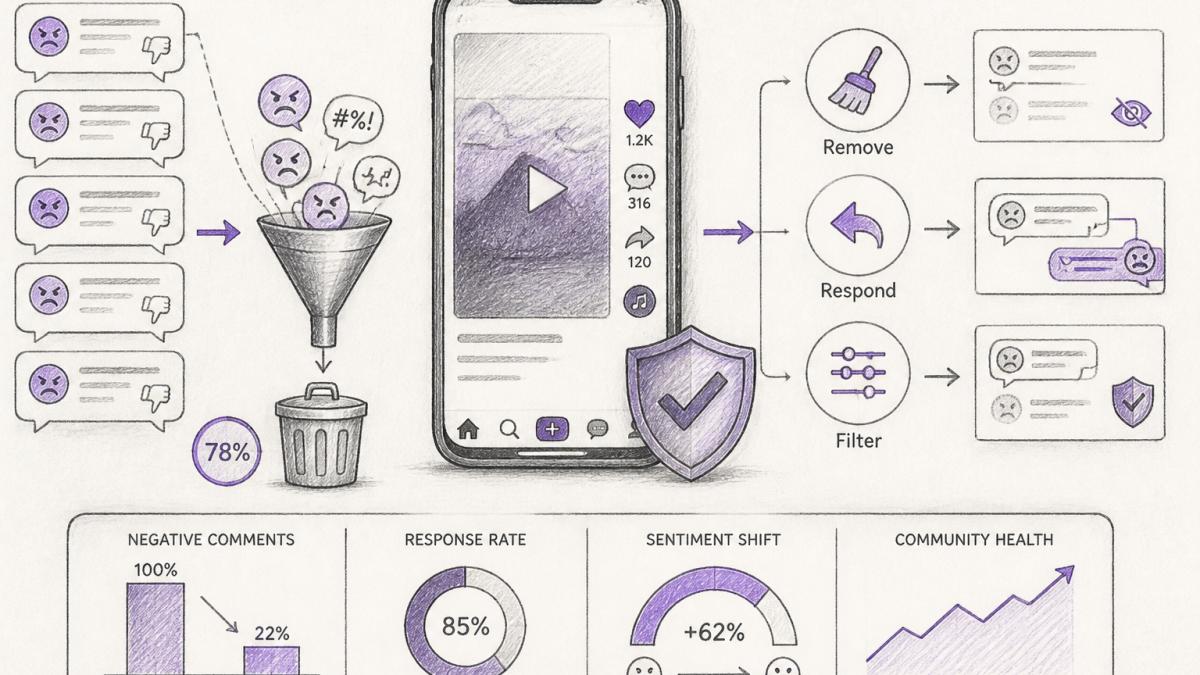
Quick Summary
| Key Insight | What You Need to Know |
|---|---|
| Why Negative Feedback on | Why Negative Feedback on TikTok Matters for Your Brand |
| Understanding the Nature of | Understanding the Nature of Negative Comments |
| Building a TikTok Comment | Building a TikTok Comment Moderation StrategySetting Community GuidelinesEstablishing Response Priorities |
| Setting Community Guidelines | Setting Community Guidelines |
| Establishing Response Priorities | Establishing Response Priorities |
| Customer Service Response Templates | Customer Service Response Templates for Social MediaTemplates for Common ComplaintsDe-escalation Scripts |
Table of Contents
- Why Negative Feedback on TikTok Matters for Your Brand
- Understanding the Nature of Negative Comments
- Building a TikTok Comment Moderation Strategy
- Customer Service Response Templates for Social Media
- Automated Comment Moderation Tools and Workflows
- Responding to Negative Comments Professionally
- Turning Negative Feedback Into Opportunities
- Protecting Your Mental Health as a Creator
- Frequently Asked Questions
Last Updated: September 28, 2026
Why Negative Feedback on TikTok Matters for Your Brand
Negative comments on TikTok can feel personal. But they're not about you, they're about your brand reputation and bottom line. Every comment, positive or negative, shapes how potential customers see your business. A single harsh review can deter buyers. Worse, unanswered complaints signal that you don't care about your audience.
The real cost isn't the comment itself. It's the silence that follows. When you ignore negative feedback, you lose the chance to turn a frustrated customer into a loyal one. You also lose algorithmic visibility. TikTok's algorithm rewards engagement, including replies. Brands that respond to comments, even negative ones, see higher engagement rates and better ad performance.
Managing negative feedback on TikTok videos requires a system, not just quick reactions. Without one, you'll spend hours scrolling, missing important messages, and making emotional decisions you'll regret. The solution is to build a strategy that catches problems early, responds professionally, and protects your mental health in the process.
Understanding the Nature of Negative Comments
Not all negative comments are created equal. Some are legitimate complaints. Others are trolling. Some are constructive criticism hiding inside harsh language. Understanding the difference is your first defense.
Legitimate complaints come from real customers with real problems. They're frustrated, but they're not attacking you personally. A customer saying "Your product broke after two weeks" is giving you valuable feedback. They want a solution.
Trolling and harassment are different. These comments aim to provoke, insult, or derail the conversation. They rarely contain useful information. A comment like "Your brand is trash" or repeated personal attacks falls into this category. These need to be hidden or deleted, not engaged with.
Constructive criticism is feedback that points out a real issue and suggests improvement. It might be blunt, but it's not malicious. A comment like "Your shipping is slow, why not partner with a faster carrier?" is criticism you should take seriously, even if the tone is sharp.
The key is learning to spot the difference quickly. Most negative comments fall into the first category, real complaints from real people. Treat those as opportunities. Hide or delete the trolling. Respond thoughtfully to the rest.
Building a TikTok Comment Moderation Strategy
A moderation strategy is your playbook for handling comments before they spiral. Without one, you're reacting emotionally. With one, you're in control.
Setting Community Guidelines
Start by defining what you will and won't tolerate. Your community guidelines are the rules of the game. Make them clear so your audience knows what's acceptable.
Good guidelines cover:
- No hate speech or slurs
- No spam or self-promotion from other brands
- No harassment or threats
- No misinformation about your product
- No excessive off-topic comments
Post these guidelines in your TikTok bio or pinned comment. Be specific. "Be respectful" is too vague. "We remove comments that insult other users or promote competing products" is clear.
Establishing Response Priorities
Not every comment deserves a response. Prioritize strategically.
Tier 1, Respond immediately:
- Questions about your product or service
- Complaints from customers
- Comments from influencers or high-follower accounts
- Feedback that could affect your ad performance
Tier 2, Respond when you have time:
- General compliments
- Neutral observations
- Off-topic but harmless comments
Tier 3, Don't respond:
- Trolling and harassment
- Spam
- Competitor links
- Comments that violate your guidelines
This system saves you hours. You're not trying to respond to everything. You're responding to what matters.
Customer Service Response Templates for Social Media
Having templates ready means you're never starting from scratch. You can adapt them to fit each situation, which keeps your responses fast and consistent.
Templates for Common Complaints
For product quality issues: "Thanks for letting us know. We take quality seriously, and this doesn't meet our standard. Can you DM us your order number? We'll make it right."
For shipping delays: "We're sorry for the wait. Shipping has been slower than usual lately. Your order is [status]. If it doesn't arrive by [date], we'll refund you. Thanks for your patience."
For billing problems: "That's frustrating. We want to get this sorted fast. DM us your account email, and we'll investigate within 24 hours."
For feature requests: "Great idea. We're always listening to what our community wants. I'm forwarding this to our product team. Thanks for the feedback."
De-escalation Scripts
When a customer is angry, your tone matters more than your words. Stay calm. Acknowledge their frustration. Show you're taking action.
When a customer is upset: "I hear you. This is frustrating, and you have every right to be upset. Here's what we're doing about it: [specific action]. I'll personally follow up with you by [date]."
When a customer feels ignored: "You're right to call us out. We should have responded faster. That's on us. Let me fix this now: [action]. What else can we do?"
When a customer questions your integrity: "I understand why you'd feel that way based on what happened. We messed up. Here's how we're making sure it doesn't happen again: [specific change]."
The goal is to move from defensiveness to action. Don't argue. Don't make excuses. Acknowledge, take responsibility, and move forward.
Automated Comment Moderation Tools and Workflows
Manual moderation doesn't scale. Once you're getting dozens of comments per video, you need automation.
How Moderation Tools Protect Your Account
Modern moderation tools use AI to catch problems automatically. They scan comments for spam, hate speech, competitor links, and other violations. The best tools learn your brand's specific rules and adapt over time.
Automated moderation protects you by:
- Hiding harmful comments before customers see them
- Filtering spam without requiring human review
- Flagging comments that need your attention
- Maintaining your brand reputation in real time
- Reducing the time you spend on comment management
Tools like FeedGuardians use AI to detect and hide spam, hate speech, and competitor links with high accuracy. They work 24/7, so your brand is protected even when you're offline.
Setting Up Automated Workflows
A workflow automates your response process. Here's how to set one up:
-
Define your triggers. What types of comments should trigger an automated response? Questions about shipping? Product inquiries? Feature requests?
-
Create your response templates. Write 3-5 responses for common scenarios. Make them sound natural, not robotic.
-
Set escalation rules. Some comments should go to a human, not an automated reply. Define which ones. Comments from high-follower accounts, for example, might need a personal touch.
-
Test and refine. Run your workflow on a few videos first. See what works. Adjust based on results.
-
Monitor performance. Check which automated responses get the best engagement. Double down on what works.
Automated workflows save hours every day. You're not typing the same response fifty times. The system does it for you.
Responding to Negative Comments Professionally
When you do respond manually, professionalism is everything. A good response can turn a critic into an advocate.
Start by taking a breath. Don't respond when you're angry or defensive. Wait a few hours if you need to. Your response should be calm, specific, and solution-focused.
Use these principles:
Be specific. Don't say "We're sorry." Say "We're sorry your order arrived damaged. We're sending a replacement today."
Take responsibility. Don't blame your supplier, your team, or circumstances. Own the problem. "We should have caught this before it shipped to you."
Offer a concrete next step. Don't say "We'll help." Say "I'm DM'ing you a prepaid return label. Once we receive it, we'll refund you within 48 hours."
Keep it brief. One or two sentences per response.
Turning Negative Feedback Into Opportunities
Negative feedback is market research. It shows you what's broken, what customers hate, and where you're losing sales.
Protecting Your Mental Health as a Creator
Here's how:
Set response windows. Check comments at specific times, not constantly. Checking every five minutes will drain you. Checking once in the morning and once in the evening is sustainable.
Frequently Asked Questions
How should you handle negative comments on TikTok professionally?
Respond quickly and calmly, acknowledging the concern without being defensive. Use a template approach: thank them for feedback, explain your position briefly, and offer a solution if applicable. Keep responses public to show other viewers you address issues. Avoid arguing or deleting comments unless they violate community guidelines. Professional responses build trust and show your brand cares about customer feedback.
What's the difference between constructive criticism and trolling on TikTok?
Constructive criticism identifies a specific problem and suggests improvement, while trolling aims to provoke without genuine concern. Trolls often use inflammatory language, make personal attacks, or repeat the same complaint across multiple videos. Constructive feedback deserves a thoughtful response; trolling should be filtered or hidden using moderation tools. Your TikTok comment moderation strategy should distinguish between these to prioritize your team's time on meaningful interactions.
Can automated comment moderation tools really catch harmful comments accurately?
Modern AI-powered moderation tools detect spam, hate speech, and competitor links with high accuracy rates. They use machine learning to identify patterns and context, improving over time. However, no system catches everything, nuance, sarcasm, and context-dependent language can slip through. The best approach combines automated detection with human review for edge cases. Tools that learn your brand voice and guidelines provide better results than generic filters.
How does responding to negative feedback impact TikTok Shop performance?
Quick, professional responses to negative comments improve customer trust and can reduce refund requests. When potential buyers see you address complaints publicly, they're more confident in purchasing. Faster response times also signal account health to TikTok's algorithm, which can improve content visibility. Brands that actively manage their comment section see higher add-to-cart rates and better customer retention. This creates a direct link between your customer service response templates and conversion metrics.
Tired of manually moderating comments?
FeedGuardians automates spam filtering, responds to customers, and protects your brand — setup in 3 minutes.
Frequently Asked Questions
How should you handle negative comments on TikTok professionally?
Respond quickly and calmly, acknowledging the concern without being defensive. Use a template approach: thank them for feedback, explain your position briefly, and offer a solution if applicable. Keep responses public to show other viewers you address issues. Avoid arguing or deleting comments unless they violate community guidelines. Professional responses build trust and show your brand cares about customer feedback.
What's the difference between constructive criticism and trolling on TikTok?
Constructive criticism identifies a specific problem and suggests improvement, while trolling aims to provoke without genuine concern. Trolls often use inflammatory language, make personal attacks, or repeat the same complaint across multiple videos. Constructive feedback deserves a thoughtful response; trolling should be filtered or hidden using moderation tools. Your TikTok comment moderation strategy should distinguish between these to prioritize your team's time on meaningful interactions.
Can automated comment moderation tools really catch harmful comments accurately?
Modern AI-powered moderation tools detect spam, hate speech, and competitor links with high accuracy rates. They use machine learning to identify patterns and context, improving over time. However, no system catches everything—nuance, sarcasm, and context-dependent language can slip through. The best approach combines automated detection with human review for edge cases. Tools that learn your brand voice and guidelines provide better results than generic filters.
How does responding to negative feedback impact TikTok Shop performance?
Quick, professional responses to negative comments improve customer trust and can reduce refund requests. When potential buyers see you address complaints publicly, they're more confident in purchasing. Faster response times also signal account health to TikTok's algorithm, which can improve content visibility. Brands that actively manage their comment section see higher add-to-cart rates and better customer retention. This creates a direct link between your customer service response templates and conversion metrics.