
88% of consumers trust online reviews as much as personal recommendations, yet 53% of businesses admit they have no online reputation management strategy in place. The gap between consumer behavior and business preparedness creates massive vulnerability for brands operating in the digital age.
Your online reputation is not just about what you say about your brand. It's about what customers, critics, competitors, and the internet at large say about you across thousands of touchpoints daily. A single viral negative review, an unanswered complaint that snowballs, or coordinated attacks from trolls can cost millions in lost revenue and years of trust-building.
This guide provides a complete framework for online reputation management in 2026. You'll learn how to monitor your digital footprint, respond effectively to threats, automate protection, and build a resilient brand reputation that drives business growth.
What is Online Reputation Management?
Online reputation management (ORM) is like having a digital security team that never sleeps. Just as physical security protects your brick-and-mortar location, ORM protects your brand's most valuable asset in the digital world: trust.
ORM encompasses three core activities:
1. Monitoring
Tracking what people say about your brand across all digital channels: social media, review sites, forums, news outlets, blogs, and more. This includes brand mentions, product reviews, employee feedback, and competitor comparisons.
2. Response & Engagement
Actively engaging with feedback through strategic responses. This means acknowledging positive reviews, addressing negative complaints constructively, and correcting misinformation before it spreads.
3. Promotion & Content Strategy
Proactively creating and amplifying positive content that reflects your brand values. This includes encouraging satisfied customers to share experiences, producing thought leadership content, and optimizing search results to highlight your strengths.
According to research from BrightLocal's consumer survey, businesses lose an average of 22% of potential customers when just one negative article appears in search results. Three negative articles costs you 59% of customers.
Key Takeaway: Online reputation management combines monitoring, strategic response, and proactive content creation to protect and enhance your brand's digital presence across all online channels.
Why Online Reputation Management Matters
Think of your online reputation as your brand's credit score. Poor reputation management doesn't just hurt your image; it directly impacts your bottom line, customer acquisition costs, employee retention, and competitive positioning.
Direct Revenue Impact
Reputation drives purchase decisions. Harvard Business School research shows a one-star increase in Yelp rating leads to a 5-9% increase in revenue for restaurants. For e-commerce, the impact is even more dramatic.
Revenue Impact Statistics:
- Customer trust: 91% of 18-34 year olds trust online reviews as much as personal recommendations
- Purchase decisions: 93% of consumers say reviews influence their buying decisions
- Visibility: Businesses with positive reviews rank higher in local search results, increasing organic traffic by 70%
Customer Acquisition Cost
Poor reputation management forces you to spend more on advertising to overcome negative sentiment. Brands with strong reputations acquire customers at 50% lower cost than competitors with damaged reputations, according to research from the Reputation Institute.
Crisis Prevention vs. Damage Control
Proactive reputation management catches issues when they're small and manageable. Reactive crisis management after reputation damage spreads can cost 10-100x more in terms of time, resources, and lost business.
Key Takeaway: Online reputation directly impacts revenue, customer acquisition costs, and brand valuation. Proactive management prevents crises and builds sustainable competitive advantage.
Stop Reputation Threats Before They Spread
FeedGuardians monitors and moderates comments 24/7 with AI. Catch negative sentiment, spam, and brand threats instantly across all social platforms.
- ✓ Real-time threat detection and alerts
- ✓ Automatic spam and troll comment removal
- ✓ Sentiment analysis across all platforms
Common Online Reputation Threats
Understanding threats is like knowing the enemy in warfare. You can't defend against what you don't recognize. These are the most common reputation threats facing brands in 2026.
Negative Reviews and Ratings
The most visible threat. Negative reviews on Google, Yelp, Amazon, or industry-specific platforms directly impact purchase decisions. Worse, they often rank highly in search results, becoming the first impression potential customers see.
Social Media Backlash
Comments, posts, and viral complaints on social platforms can escalate quickly. What starts as one customer's frustration can become a trending hashtag, reaching millions and damaging your brand permanently if not addressed within hours.
Fake Reviews and Malicious Attacks
Competitors or disgruntled individuals may post fabricated negative reviews. According to research, 15-25% of all online reviews show signs of being fake, and negative fake reviews disproportionately target successful businesses.
| Threat Type | Impact Level | Response Time |
|---|---|---|
| Viral Social Media Crisis | Critical | 1-3 hours |
| Negative Review Cluster | High | 24-48 hours |
| Spam/Fake Reviews | Medium | 1-7 days |
| Negative News Coverage | Critical | Immediate |
Key Takeaway: Different threats require different response strategies. Viral crises demand immediate action within hours, while managing fake reviews requires systematic documentation and platform reporting over days or weeks.
Building Your Monitoring Strategy
Monitoring is like having radar for your brand. Without it, you're flying blind through digital airspace where threats can emerge from any direction at any moment.
What to Monitor
Comprehensive monitoring covers multiple channels where your brand appears, whether you control them or not:
🔍 Direct Mentions
Brand name, product names, executive names, and common misspellings across social media, forums, and blogs.
⭐ Review Platforms
Google Business, Yelp, Trustpilot, G2, Capterra, and industry-specific review sites relevant to your business.
💬 Social Media
Comments, posts, stories, and direct messages on Instagram, Facebook, Twitter, LinkedIn, TikTok, and YouTube.
📰 News & Media
Press coverage, industry blogs, podcasts, and video content mentioning your brand or key executives.
Monitoring Frequency
According to Sprout Social's research, customers expect responses within 4 hours on social media, but the average brand takes 10 hours to respond. This gap represents lost customer trust and escalating reputation threats.
Recommended Monitoring Schedule:
- Real-time: Social media mentions and comments (use automation)
- Daily: Review platforms, news coverage, and Google search results
- Weekly: Forum discussions, blog mentions, and competitor comparisons
Key Takeaway: Comprehensive monitoring covers direct mentions, review platforms, social media, and news. Real-time social monitoring through automation is critical to catch issues before they escalate.
Strategic Response Tactics
Responding to feedback is like playing chess, not checkers. Every move must be strategic, considering not just the immediate situation but how it will be perceived by wider audiences and affect your long-term reputation.
The Response Framework
All effective responses follow a three-step framework:
- Acknowledge: Show you heard the concern and take it seriously
- Address: Provide specific information, solutions, or next steps
- Action: Demonstrate commitment to resolution or improvement
Responding to Negative Reviews
Never ignore negative reviews. Studies show that businesses responding to negative reviews see a 33% increase in customer willingness to visit or purchase. Your response shows future customers how you handle problems, which often matters more than the complaint itself.
Example: Poor Response
"We're sorry you had a bad experience. We hope you'll give us another try!"
❌ Generic, doesn't address specific issue, puts burden back on customer
Example: Strong Response
"Thank you for bringing this to our attention, Sarah. I'm genuinely sorry the delivery was delayed and arrived damaged. I've personally ensured a replacement is being sent via overnight shipping at no charge, and we've addressed the packing issue with our fulfillment team. Your feedback helps us improve. I'll send you a tracking number within the hour."
✅ Personal, specific, provides solution, shows systemic improvement, commits to follow-up
When NOT to Respond
Some situations are traps. Responding can amplify the problem. Don't engage with: blatant trolls seeking attention, competitors posing as customers, or clearly fraudulent reviews (report to platform instead). Fighting publicly with trolls makes you look unprofessional, regardless of who started it.
Key Takeaway: Strategic responses follow the acknowledge-address-action framework. Response demonstrates customer service quality to future customers. Never feed trolls; report fraudulent content to platforms instead.
Tools & Automation for ORM
Managing reputation manually is like trying to empty an ocean with a bucket. The volume of online conversations is too massive for human monitoring alone. Automation doesn't replace human judgment but amplifies your capacity to protect your brand 24/7.
Essential Tool Categories
Social Media Monitoring & Moderation
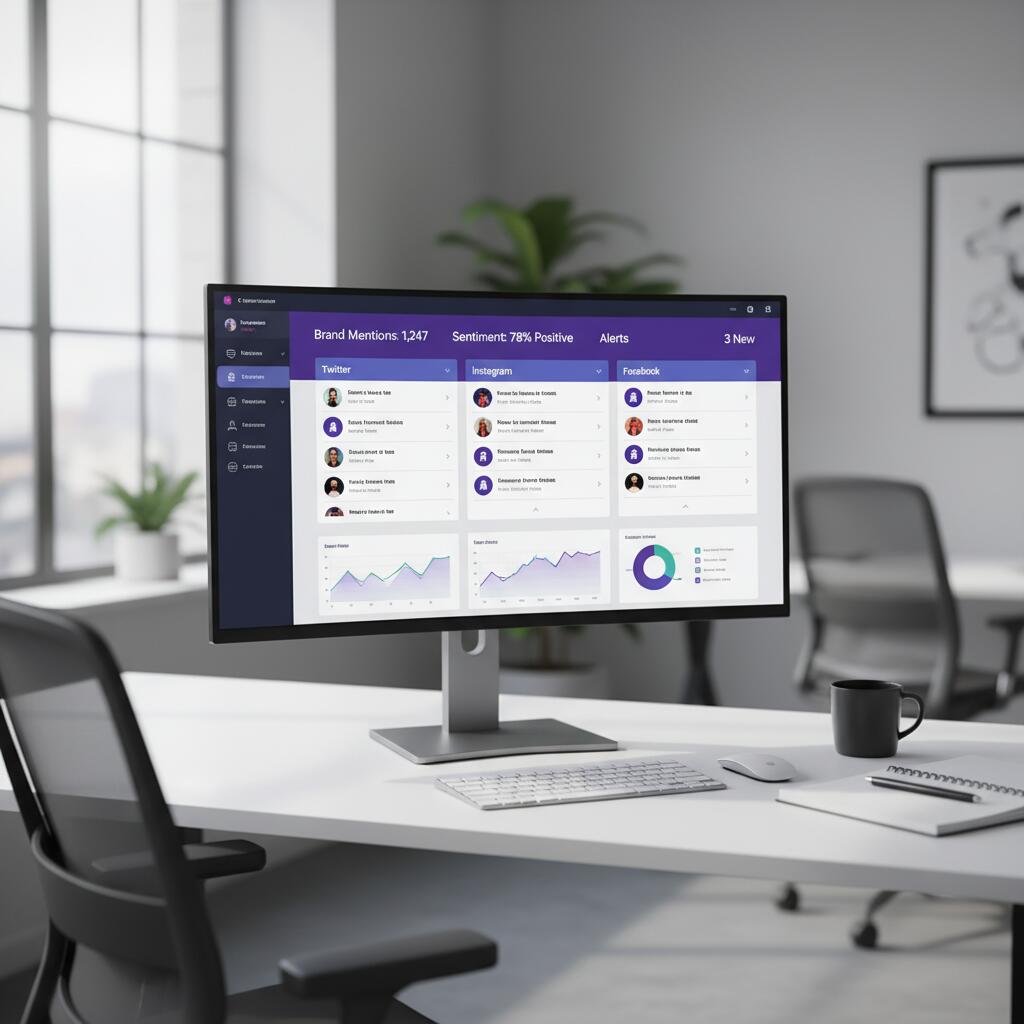
Tools like FeedGuardians monitor comments across platforms, automatically filter spam and trolls, and alert you to sentiment shifts. This category saves the most time by handling the highest volume of reputation touchpoints.
- Real-time comment monitoring across Instagram, Facebook, TikTok, YouTube
- AI-powered spam and threat detection
- Automated response suggestions based on sentiment
Review Management Platforms
Aggregate reviews from multiple platforms (Google, Yelp, industry sites) into single dashboards. Track rating trends, respond from one interface, and request reviews from satisfied customers.
Brand Mention Tracking
Monitor brand mentions across news sites, blogs, forums, and social media. Google Alerts is free but limited. Professional tools provide sentiment analysis, competitive benchmarking, and trend detection.
SEO & Search Result Management
Track what appears when people search your brand name. Promote positive content to rank higher than negative content. Monitor "brand + scam," "brand + complaint," and similar negative search variations.
Automation Best Practices
Automate detection and alerts, but keep humans in the loop for responses. AI can identify threats instantly, but complex or sensitive situations require human judgment and empathy. The goal is to use automation to surface issues fast, then apply human intelligence to resolve them appropriately.
Key Takeaway: ORM tools automate monitoring across social media, reviews, and brand mentions. Automate detection and filtering, but keep humans making final response decisions for complex situations.
Crisis Management & Recovery
A reputation crisis is like a wildfire. The first hour determines whether you contain it or watch it consume everything you've built. Speed, transparency, and decisive action separate brands that recover from those that never do.
The Crisis Response Playbook
When a crisis hits, follow this sequence:
- Assess (0-30 minutes): Understand the scope, verify facts, identify stakeholders affected
- Respond (30-60 minutes): Issue initial acknowledgment showing you're aware and taking action
- Communicate (1-6 hours): Provide detailed response with facts, actions taken, and timeline
- Monitor (ongoing): Track response, answer questions, update as situation evolves
- Review (after resolution): Analyze what happened, update processes to prevent recurrence
What NOT to Do During a Crisis
- ❌ Don't go silent. Silence fuels speculation and makes you appear guilty or incompetent.
- ❌ Don't delete negative content. Screenshots live forever and coverups backfire spectacularly.
- ❌ Don't argue or blame customers. Even if they're wrong, fighting publicly makes you look worse.
- ❌ Don't wait for perfect information. Acknowledge immediately, then update as you learn more.
Recovery and Rebuilding
After containing the immediate crisis, focus on long-term recovery. This means consistently demonstrating the changes you promised, amplifying positive customer stories, and rebuilding search results with fresh positive content. According to reputation research, it takes 6-12 months of consistent positive actions to recover from a major reputation crisis.
Key Takeaway: Crisis response must be fast (first hour critical), transparent, and action-oriented. Never go silent or delete content. Recovery requires 6-12 months of consistent positive actions and content.
Frequently Asked Questions
How much does online reputation management cost?
DIY monitoring using free tools (Google Alerts, native platform notifications) costs nothing but requires significant time. Professional ORM software ranges from $50-500/month depending on features. Agency services for crisis management or reputation repair start at $3,000-10,000/month. Most businesses find the best ROI with automation software ($100-300/month) that saves 15-20 hours of manual monitoring weekly.
How long does it take to see results from ORM?
Protection is immediate once monitoring is active. You'll catch threats within minutes instead of days. Reputation improvement (raising review ratings, pushing down negative search results) typically takes 3-6 months of consistent effort. Recovery from serious reputation damage requires 6-12 months of dedicated strategy execution.
Can I remove negative reviews?
You cannot legally remove legitimate negative reviews. However, you can report and remove reviews that violate platform policies (fake reviews, spam, profanity, competitor sabotage). Google, Yelp, and other platforms will remove policy-violating content if properly documented. Focus on generating more positive reviews to dilute the impact of legitimate negative ones.
Should I respond to every review and comment?
Yes for reviews (both positive and negative). No for every social media comment. Respond to all reviews on Google, Yelp, and industry platforms to show engagement. For social media, prioritize responding to questions, complaints, and substantive feedback. Simple "thanks" or emoji reactions are sufficient for generic positive comments. Never feed trolls.
What's the biggest ORM mistake brands make?
Waiting until there's a crisis to start reputation management. By then, you're playing defense with no preparation, no established positive content, and no monitoring infrastructure. ORM must be proactive and ongoing, not reactive. The second biggest mistake is deleting negative comments or reviews, which always backfires when discovered.
How do I track ROI from reputation management?
Track three metrics: average review rating (correlates directly with revenue), time to respond to feedback (faster = higher customer retention), and share of positive vs negative search results. More advanced: track branded search volume (grows with positive reputation), customer acquisition cost (decreases with strong reputation), and customer lifetime value (increases when retention improves).
Do I need different strategies for B2B vs B2C?
Yes. B2C focuses heavily on consumer review platforms (Google, Yelp) and social media where purchase decisions happen quickly. B2B emphasizes industry review sites (G2, Capterra), case studies, thought leadership content, and LinkedIn reputation. B2B buying cycles are longer, so reputation impacts multiple touchpoints over months. Both need monitoring and response, but channels and content strategies differ significantly.
Can automation handle all of ORM?
No, but it handles 80% of the work. Automation excels at monitoring (24/7 across all platforms), filtering (removing spam and detecting threats), and alerting (notifying you immediately). Humans are still essential for nuanced responses, crisis decisions, strategy, and building relationships with customers. The best approach combines AI monitoring with human judgment for responses.
Final Thoughts: Build Reputation That Drives Growth
Online reputation management is not optional in 2026. It's the foundation of customer trust, competitive advantage, and sustainable business growth. Brands that wait for crises to start managing reputation pay 10-100x more in damage control than those who build proactive protection from day one.
Here are your action steps to implement immediately:
- 1. Start monitoring today: Set up alerts for brand mentions, even if just using free Google Alerts initially
- 2. Claim all profiles: Own your brand presence on Google, Yelp, and industry review sites before someone else does
- 3. Respond to everything: Every review and substantive comment deserves acknowledgment within 24 hours
- 4. Automate social monitoring: Use tools like FeedGuardians to catch threats 24/7 without manual checking
- 5. Build positive content: Create case studies, testimonials, and thought leadership to dominate search results
- 6. Prepare crisis playbook: Document response procedures before you need them, not during a fire
Start with one platform where your customers are most active. Master monitoring and response there, then expand to other channels. Consistent effort beats perfect execution that never starts.
Remember: your reputation is being shaped right now, whether you're actively managing it or not. The only question is whether you'll control that narrative or let others write it for you.
Ready to Protect Your Brand 24/7?
FeedGuardians monitors and moderates social media comments automatically. Catch reputation threats instantly before they spread, with AI-powered detection and alerting.
Start Free 14-Day Trial →Setup in 2 minutes • Cancel anytime