
Quick Summary
| Key Insight | What You Need to Know |
|---|---|
| What Is a Fake | What Is a Fake Follower Check and Why It Matters Understanding audience quality and account credibility Why influencer authenticity affects your marketing ROI |
| Understanding audience quality and | Understanding audience quality and account credibility |
| Why influencer authenticity affects | Why influencer authenticity affects your marketing ROI |
| How to Spot Bot Followers | Manual Verification Techniques Check the follower-to-following ratio Review profile details and engagement patterns Identify mass followers and inactive accounts |
| Check the follower-to-following ratio | Check the follower-to-following ratio |
| Review profile details and | Review profile details and engagement patterns |
Table of Contents
- What Is a Fake Follower Check and Why It Matters
- How to Spot Bot Followers: Manual Verification Techniques
- Best Fake Follower Checker Tools for Account Audits
- How to Spot Bot Followers and Suspicious Activity
- Influencer Fraud Detection: Reading Your Audit Results
- Running Your First Fake Follower Check: Step-by-Step
- Common Mistakes to Avoid When Auditing Accounts
- Post-Audit Action Plan: What to Do With Your Results
Last Updated: August 4, 2026
What Is a Fake Follower Check and Why It Matters
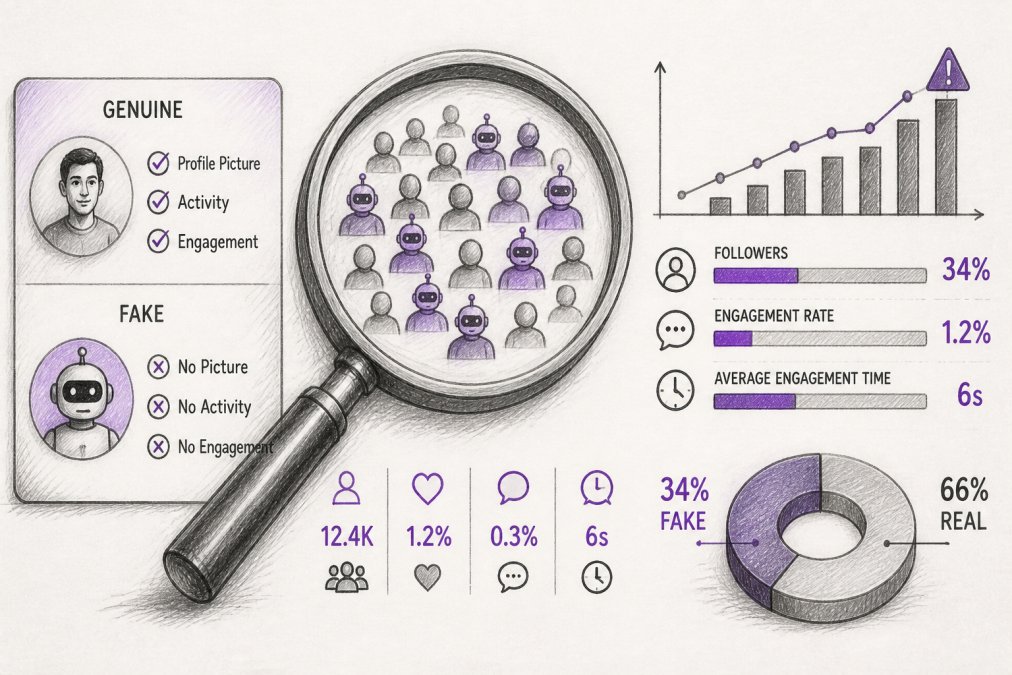
A fake follower check is an audit that identifies bot accounts, inactive users, and low-quality followers on a social media profile. At FeedGuardians, we provide an AI-powered comment moderation and response solution for brands across Instagram, Facebook, TikTok, and YouTube, ensuring a dominant online presence. Most brands skip this critical step, assuming high follower counts equal marketing value, an assumption that costs them money.
Fake followers don't convert. They don't click links, make purchases, or share content. A profile with 100K followers sounds impressive until you realize 40K are bots, leaving a real audience of 60K with engagement rates 67% lower than the vanity metrics suggest. Brands that audit influencer partnerships before committing budget see better ROI, lower cost-per-acquisition, and more predictable performance.
A fake follower check reveals account credibility through data-driven insights, exposing suspicious activity patterns, ghost followers, and bot traffic. Understanding your actual audience size and engagement quality is the foundation for any serious influencer marketing strategy.
How to Spot Bot Followers: Manual Verification Techniques
Manual verification catches patterns that algorithms sometimes miss. Start by examining the follower-to-following ratio, most legitimate accounts maintain ratios between 1:1 and 5:1. Ratios above 10:1 often indicate purchased followers; below 0.5:1 suggest indiscriminate following.
Review profile details carefully. Legitimate accounts have complete bios, profile pictures, and posting history. Suspicious accounts show generic profile pictures, minimal bio information, and randomly generated usernames. Check posting consistency. Real accounts maintain regular patterns; bot accounts post erratically or not at all.
Engagement patterns tell the real story. Examine the last 10-20 posts' comments. Legitimate engagement includes thoughtful replies and varied commenter profiles. Bot engagement looks identical across posts with generic comments like "Great post!" from accounts with no followers or posting history. Real humans reply within hours or days; bots reply within minutes to every post simultaneously.
Identify mass followers by checking recent follow dates. If 500 accounts followed within a single day, that's a red flag. Legitimate growth happens gradually. Ghost followers, accounts that exist but never engage, show up as silent names with zero posts and zero followers themselves.
Best Fake Follower Checker Tools for Account Audits
Automated audit tools save hours by analyzing thousands of data points in seconds. The best tools combine speed with accuracy, processing large datasets quickly while catching nuanced bot behaviors.
FeedGuardians provides AI-powered analysis that detects and categorizes low-quality followers with 98.7% accuracy across Instagram, Facebook, TikTok, and YouTube. Unlike basic follower counters, FeedGuardians analyzes engagement quality, posting patterns, and audience demographics to deliver actionable insights, not just how many fake followers exist, but which segments are most problematic and why.
Platform-specific nuances matter significantly. Instagram algorithms prioritize engagement rate and follower velocity. TikTok focuses heavily on watch time and completion rate, making bot followers even less valuable. YouTube prioritizes subscriber quality and watch-through rates. A tool that works for Instagram might miss TikTok bot patterns entirely.
When evaluating tools, look for: follower list analysis with individual quality scores, engagement rate calculations with benchmarking, bot detection algorithms flagging suspicious patterns, demographic breakdowns showing audience composition, and historical tracking showing how audience quality changes over time.
How to Spot Bot Followers and Suspicious Activity
Common low-quality follower types include spam accounts that promote products indiscriminately, ghost followers with profiles but zero engagement, bot traffic accounts using automation to like and comment in identical patterns, and inactive accounts from abandoned profiles. Mass-followed accounts indicate growth service usage, with hundreds of accounts following simultaneously.
Signs of artificial engagement reveal themselves through pattern analysis. Sudden engagement spikes without corresponding follower growth indicate bot activity. Comments repeating across multiple posts suggest automation. Engagement from accounts with zero followers points to bot networks. If every post receives 100 likes within 5 minutes then flatlines, bots likely inflated early metrics.
Bot traffic often appears as engagement from geographically irrelevant accounts. If you're US-based but receiving engagement from 500 accounts in countries where you don't sell, that's suspicious. Language mismatches and unrealistic engagement velocity, bots engaging with everything simultaneously, signal bot networks.
Influencer Fraud Detection: Reading Your Audit Results
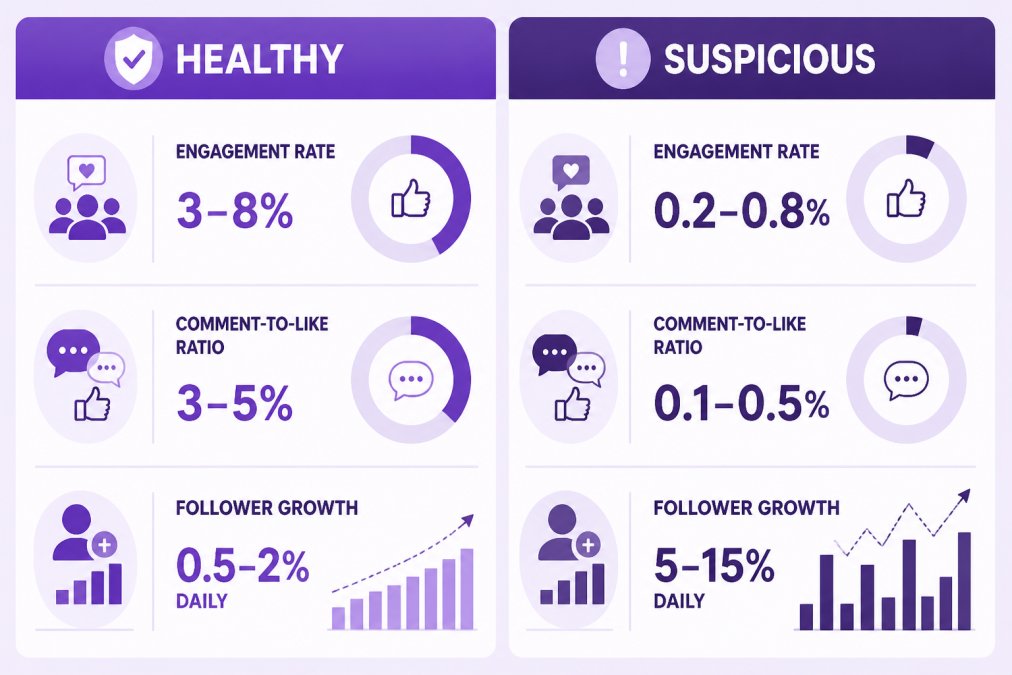
Engagement rate, calculated as total interactions divided by follower count, benchmarks account health. Rates above 3% indicate healthy audiences; 1-3% suggest moderate engagement; below 1% signal potential bot inflation. Context matters, mega-influencers (1M+ followers) show lower rates than micro-influencers (10K-100K followers).
Follower growth rate reveals whether accounts gain followers naturally or through purchased batches. Consistent daily growth of 0.5-2% indicates organic expansion; sudden spikes of 5-10% suggest purchased followers. Comment-to-like ratio reveals engagement quality. Healthy accounts show comment rates around 3-5% of total likes; low comment rates despite high likes indicate bot engagement.
Audience demographics should align with content and target market. An account targeting US consumers shouldn't have 60% of followers from countries with no business presence. Geographic and gender distribution mismatches signal fake followers.
Hashtag performance and posting frequency complete the analysis. Accounts using 20-30 relevant hashtags typically reach larger audiences. Instagram accounts posting 3-5 times weekly perform better than daily posting. TikTok benefits from daily posting. YouTube needs consistent schedules but not daily content.
Running Your First Fake Follower Check: Step-by-Step
Step 1: Gather your account baseline metrics takes about 10 minutes. Write down current follower count, following count, total posts, and engagement metrics. Calculate the follower-to-following ratio. Record average likes and comments per post from the last 10 posts. Note account creation date and last post date. Screenshot the profile for documentation. These baseline numbers become your reference point for comparing audit results.
Step 2: Analyze follower demographics and posting activity involves reviewing content and audience. Spend 15 minutes scrolling through the last 30 posts. Note posting frequency and consistency. Check captions for authenticity, real accounts write unique captions; bots generate generic ones. Read 20-30 comments across different posts. Real comments show variation; bot comments repeat identical phrases. Click 10-15 commenter profiles. Real accounts show followers and regular posting; bots show none.
Step 3: Flag suspicious patterns and ghost followers requires 20 minutes of focused analysis. Create a spreadsheet with columns for "Red Flag Type," "Evidence," and "Severity." List every suspicious pattern: sudden follower spikes, engagement mismatches, bot-like comments, geographic anomalies, language mismatches. For each flag, note specific evidence and assign severity levels: high (clear bot activity), medium (suspicious but not definitive), low (minor concerns).
Step 4: Document findings and create an action plan takes 15 minutes but determines next steps. Summarize findings in a brief report. Calculate estimated percentage of fake followers. State your confidence level. List top 3-5 most damaging red flags. Recommend specific actions: unfollow bot accounts, report suspicious followers, pause paid promotions if severe, or continue monitoring if minimal. Set timeline for follow-up audits, typically monthly for accounts under evaluation.
Common Mistakes to Avoid When Auditing Accounts
The biggest mistake is trusting follower count as a quality metric. Brands see 500K followers and assume immediate value without auditing. Always audit before committing budget, regardless of follower count.
Ignoring engagement rate leads to poor decisions. An account with 100K followers and 0.5% engagement is worse than one with 10K followers and 4% engagement. The smaller account reaches real people; the larger reaches mostly bots.
Overlooking geographic and demographic mismatches wastes money. An influencer with 50% of followers from countries where you don't sell is a poor choice. These mismatches appear obvious in audit data but get missed when brands focus only on follower count.
Assuming all engagement is equal destroys campaign performance. Comments from real accounts matter; comments from bots waste your ad spend. Brands that don't differentiate engagement quality often find campaigns reach audiences with zero purchase intent.
Skipping manual verification when automated tools flag concerns creates blind spots. Automated systems catch 95% of bot activity, but manual review catches sophisticated bots that mimic real accounts.
Not tracking changes over time prevents identifying trends. An account gaining 5K followers monthly shows consistent growth; one gaining 10K then 1K shows declining growth rate, possibly indicating a shift toward organic growth after a purchased batch.
Post-Audit Action Plan: What to Do With Your Results
Removing low-quality followers requires specific actions. Unfollow bot accounts that follow your target account. Report suspicious accounts to the platform for violating terms of service. If bot activity is severe (more than 30% of followers), consider a strategic reset by unfollowing thousands of bot accounts simultaneously. This temporarily reduces follower count but improves engagement rate and audience quality within 60 days.
Adjust your influencer strategy based on audit findings. Deprioritize candidates showing bot activity above 20%. Move budget toward accounts with cleaner audiences. If already working with an influencer showing bot activity, address it directly. Most legitimate influencers appreciate the heads-up and will audit their accounts.
Protect your own account credibility by auditing yourself regularly and addressing any bot activity. Transparency builds trust. Set up monthly monitoring for accounts you're actively working with using the same audit process. Create a dashboard showing engagement rate trends, follower growth patterns, and bot activity levels. Share this with stakeholders to prevent surprises and build confidence in influencer partnerships.
Spotting fake followers before they cost you money is non-negotiable in influencer marketing. Manual verification and automated audits work best together, automation catches patterns quickly; manual review catches sophisticated bots. The entire process takes about 90 minutes per account.
FeedGuardians automates this process with AI-powered analysis that identifies bot accounts, flags suspicious activity, and delivers audience quality scores across Instagram, Facebook, TikTok, and YouTube with 98.7% accuracy. Start for free and audit your first influencer account today, you'll likely find surprises that change how you evaluate partnerships.
Frequently Asked Questions
How do I know if my followers are real or fake?
Run a fake follower check by examining your follower-to-following ratio, engagement rate on recent posts, and profile details of accounts following you. Real followers typically engage consistently, have complete profiles, and show organic posting history. Fake followers often have generic names, no profile pictures, zero posts, and follow thousands of accounts. Automated audit tools scan your follower base and flag suspicious accounts, ghost followers, and bot traffic patterns to give you a complete picture of your audience quality.
What's the best fake follower checker tool for detecting bot accounts?
The best tool depends on your platform and needs. Most top fake follower checkers offer automated audits that analyze engagement rate, follower demographics, and posting patterns across Instagram, TikTok, and YouTube. Look for tools that provide detailed audience quality scores, identify spam accounts, and show you specific suspicious followers rather than just a percentage. Free trials let you test accuracy before committing. Compare options based on platform coverage, data-driven insights, and whether they offer human escalation for borderline cases.
What percentage of fake followers is normal for an Instagram account?
Most healthy Instagram accounts have 5-15% low-quality followers, though this varies by niche and follower acquisition method. Accounts with organic growth typically stay under 10%, while those with aggressive follower-buying campaigns may exceed 40-50%. A fake follower check helps you benchmark against your industry. If your percentage is unusually high, it signals bot traffic or mass follower purchases. Track this metric monthly to spot sudden spikes that indicate suspicious activity and adjust your influencer authenticity standards accordingly.
Can I remove fake followers, and will it hurt my engagement metrics?
Yes, you can remove fake followers manually or through platform tools. Most social platforms let you block or restrict accounts directly. Removing low-quality followers typically improves your engagement rate because your real audience's interactions now represent a smaller follower base, making your metrics look healthier. This also protects your account credibility and marketing ROI. After running a fake follower check and removing suspicious accounts, monitor your engagement rate and follower count over 2-4 weeks to see the impact on your overall account health and organic growth.
This article was written using GrandRanker
Tired of manually moderating comments?
FeedGuardians automates spam filtering, responds to customers, and protects your brand — setup in 3 minutes.
Frequently Asked Questions
How do I know if my followers are real or fake?
Run a fake follower check by examining your follower-to-following ratio, engagement rate on recent posts, and profile details of accounts following you. Real followers typically engage consistently, have complete profiles, and show organic posting history. Fake followers often have generic names, no profile pictures, zero posts, and follow thousands of accounts. Automated audit tools scan your follower base and flag suspicious accounts, ghost followers, and bot traffic patterns to give you a complete picture of your audience quality.
What's the best fake follower checker tool for detecting bot accounts?
The best tool depends on your platform and needs. Most top fake follower checkers offer automated audits that analyze engagement rate, follower demographics, and posting patterns across Instagram, TikTok, and YouTube. Look for tools that provide detailed audience quality scores, identify spam accounts, and show you specific suspicious followers rather than just a percentage. Free trials let you test accuracy before committing. Compare options based on platform coverage, data-driven insights, and whether they offer human escalation for borderline cases.
What percentage of fake followers is normal for an Instagram account?
Most healthy Instagram accounts have 5-15% low-quality followers, though this varies by niche and follower acquisition method. Accounts with organic growth typically stay under 10%, while those with aggressive follower-buying campaigns may exceed 40-50%. A fake follower check helps you benchmark against your industry. If your percentage is unusually high, it signals bot traffic or mass follower purchases. Track this metric monthly to spot sudden spikes that indicate suspicious activity and adjust your influencer authenticity standards accordingly.
Can I remove fake followers, and will it hurt my engagement metrics?
Yes, you can remove fake followers manually or through platform tools. Most social platforms let you block or restrict accounts directly. Removing low-quality followers typically improves your engagement rate because your real audience's interactions now represent a smaller follower base, making your metrics look healthier. This also protects your account credibility and marketing ROI. After running a fake follower check and removing suspicious accounts, monitor your engagement rate and follower count over 2-4 weeks to see the impact on your overall account health and organic growth.