
Quick Summary
| Key Insight | What You Need to Know |
|---|---|
| Why Toxic Comments Damage | Why Toxic Comments Damage Your Brand on TikTok |
| Step 1 | Identify What Counts as Toxic vs. Constructive Criticism |
| Step 2 | Use TikTok Comment Moderation Tools to Filter Harmful ContentBuilt-in TikTok moderation featuresThird-party AI moderation solutions |
| Built-in TikTok moderation features | Built-in TikTok moderation features |
| Third-party AI moderation solutions | Third-party AI moderation solutions |
| Step 3 | Develop a TikTok Comment Response StrategyWhen to respond, when to hide, when to deleteResponding with humor, kindness, or silence |
Table of Contents
- Why Toxic Comments Damage Your Brand on TikTok
- Step 1: Identify What Counts as Toxic vs. Constructive Criticism
- Step 2: Use TikTok Comment Moderation Tools to Filter Harmful Content
- Step 3: Develop a TikTok Comment Response Strategy
- Step 4: How to Deal with Hate Comments on Social Media
- Step 5: Protect Your Mental Health and Set Boundaries
- Step 6: Automate Your Comment Management for Scale
- Common Mistakes to Avoid When Handling Toxic Comments
- Frequently Asked Questions
Last Updated: October 1, 2026
Why Toxic Comments Damage Your Brand on TikTok
Toxic comments aren't just annoying. They tank your brand reputation, scare away potential customers, and drain your team's mental health. When harmful comments sit visible on your videos, they send a message: your brand doesn't care about its community.
The damage compounds fast. A single hateful comment can spawn 50 more. Negative engagement signals hurt your ad performance. TikTok's algorithm notices when comments drive people away, and it shows your content to fewer people. Meanwhile, your team spends hours each day reading abuse instead of creating content that actually converts.
This is where how to handle toxic comments becomes critical. The difference between brands that thrive and those that struggle often comes down to how they manage their comment section.
The good news? You don't need to hire a full moderation team. You just need a system.
Step 1: Identify What Counts as Toxic vs. Constructive Criticism
Not every negative comment deserves deletion. Toxic comments are those designed to harm, harass, or derail conversation. Constructive criticism is feedback that stings but helps you improve.
The difference matters. Delete actual criticism and you look defensive. Let real toxicity fester and you look careless.
Here's how to tell them apart:
Toxic comments typically include:
- Personal attacks on you or your team
- Hate speech or slurs
- Threats or doxxing attempts
- Spam or competitor links
- Repeated harassment from the same account
Constructive criticism usually:
- Questions your approach respectfully
- Offers a different perspective
- Points out a genuine flaw in your product or process
- Disagrees without attacking you personally
The key distinction: Is the commenter attacking the person, or questioning the idea?
A comment like "This product is overpriced for what it does" is fair game. Respond to it or ignore it, but don't delete it. A comment like "You're a scammer and everyone knows it" is toxic. Hide it.
Step 2: Use TikTok Comment Moderation Tools to Filter Harmful Content
TikTok gives you built-in moderation features. Most brands don't use them. That's a mistake.
Built-in TikTok moderation features
TikTok's native comment controls sit right in your account settings. You can filter comments by keywords, block specific users, and hide comments without deleting them. Hidden comments stay in the system but only the commenter sees them, a gentler approach than outright deletion.
Set up keyword filters by going to your Creator Fund settings and adding words or phrases you want automatically hidden. This catches spam instantly. Add competitor brand names, common scam language, and slurs specific to your industry.
Use the "Restrict" feature on accounts that frequently post toxic content. Restricted accounts can still comment, but only they see their own comments. They don't know they're restricted, so they often stop trying.
Enable "Filter Comments" in your settings to hide comments containing profanity or reported content. You can choose how strict the filter is.
The limitation? TikTok's built-in tools are basic. They catch obvious spam but miss nuanced toxicity. A comment that's technically clean but designed to harass won't get flagged by keyword filters alone.
Third-party AI moderation solutions
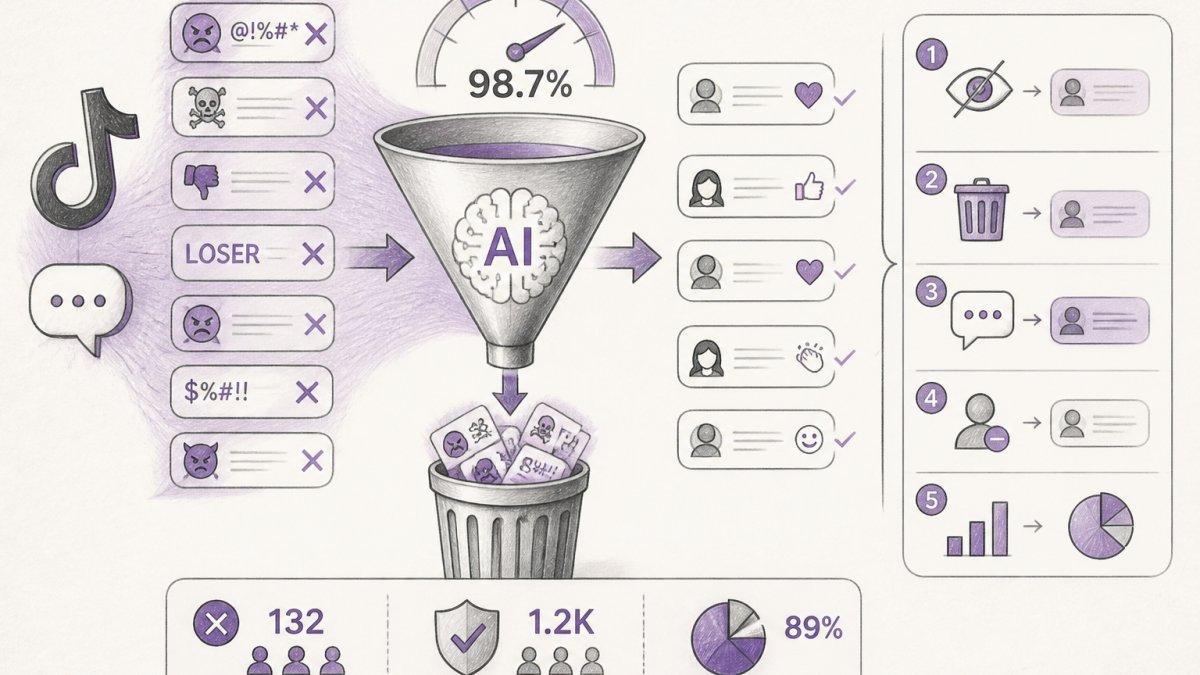
This is where AI-powered moderation becomes essential. Tools that use machine learning can detect context, sarcasm, and subtle harassment that keyword filters miss. They learn your brand's specific community guidelines and adapt over time.
The best third-party solutions integrate directly with TikTok and work across your other platforms too. They automatically hide or flag harmful comments in real time, 24/7. Some also offer human escalation, when the AI isn't sure, it flags the comment for your team to review rather than making a wrong call.
The 98.7% accuracy rate matters here. That means nearly all truly harmful content gets caught, and nearly all legitimate comments get through. When you're managing high comment volume, that reliability saves hours daily and protects your brand reputation automatically.
Step 3: Develop a TikTok Comment Response Strategy
Not every comment deserves a response. Not every toxic comment deserves deletion. You need a strategy that tells you which is which.
When to respond, when to hide, when to delete
Respond to these:
- Genuine questions about your product
- Compliments that build community
- Constructive criticism that reveals a real issue
- Comments from micro-influencers or engaged followers
Responding to these comments signals to TikTok's algorithm that your content drives real engagement. It also builds loyalty, people feel heard when you reply.
Hide these (don't delete):
- Mildly rude comments that aren't quite toxic
- Off-topic rants that don't attack you
- Comments that violate guidelines but aren't dangerous
- Spam that isn't obviously malicious
Hiding keeps your comment section clean without looking like you're silencing criticism. The commenter sees their own comment, so they don't feel censored. Everyone else sees a cleaner feed.
Delete these:
- Hate speech and slurs
- Threats or doxxing
- Explicit spam with links
- Repeated harassment from the same account
- Comments that violate TikTok's community guidelines
Deletion is your last resort. Use it only when the comment poses a real safety or legal risk.
Responding with humor, kindness, or silence
When you do respond, your tone matters. A defensive reply escalates conflict. A kind reply often defuses it.
Humor works when the criticism is light.
Step 4: How to Deal with Hate Comments on Social Media
Some comments cross the line from annoying to dangerous. Hate speech, threats, and targeted harassment need escalation.
Documenting and reporting abuse to platform moderators
Document everything. Screenshot the comment, the commenter's profile, and the date. Keep a record of repeated harassment from the same account. This creates a paper trail that helps when you report to TikTok.
Legal escalation and safety threats
If a comment includes specific threats ("I know where you live" or "I'm going to hurt you"), contact law enforcement immediately. Provide them with the screenshot, the commenter's account information, and any context about prior harassment.
Step 5: Protect Your Mental Health and Set Boundaries
Reading toxic comments all day breaks people. Burnout is real. Boundary setting isn't selfish, it's essential.
Step 6: Automate Your Comment Management for Scale
Manual moderation doesn't scale. When you're getting 500 comments per video, you can't read them all. Automation becomes your only option.
AI-powered comment management tools do the heavy lifting. They:
- Detect and hide spam instantly
- Flag hate speech for review
- Block competitor links automatically
- Respond to common questions in your brand voice
- Escalate urgent issues to your team
Common Mistakes to Avoid When Handling Toxic Comments
Mistake 1: Ignoring the problem. Toxic comments don't go away on their own. They multiply. Address them early before they become a crisis.
| Action | When to Use | Expected Result |
|---|---|---|
| Respond | Genuine questions, compliments, constructive feedback | Builds engagement, shows you care |
| Hide | Mild rudeness, off-topic rants, guideline violations | Clean comment section, no censorship perception |
| Delete | Hate speech, threats, doxxing, repeated spam | Protects brand safety and community |
| Block | Accounts with repeated harassment | Prevents future toxic comments from that user |
| Report | Hate speech, threats, coordinated harassment | Platform removes content, may suspend account |
| Escalate | Specific threats, doxxing, safety concerns | Law enforcement involvement, legal protection |
Frequently Asked Questions
How do you filter toxic comments on TikTok?
TikTok's built-in tools let you block keywords, filter comments by account age, and use the comment filter to hide or block comments automatically. Third-party TikTok comment moderation tools use AI to detect hate speech, spam, and harassment with higher accuracy. You can also manually hide comments without deleting them, which removes them from your feed while keeping the creator's ability to see it. Most brands combine platform filters with AI moderation solutions to catch toxic content in real time.
Should brands respond to negative comments on TikTok?
It depends on the comment's intent. Constructive criticism deserves a thoughtful response that shows you listen. Trolling or hate speech should be hidden or reported, not engaged with. Responding to genuine complaints with solutions builds trust and shows other viewers your brand cares. However, feeding trolls by arguing or defending yourself publicly often backfires. Use your TikTok comment response strategy to decide: respond to criticism, ignore trolls, and escalate threats to platform moderators or legal authorities.
What is the best way to handle online trolls as a business?
Don't engage directly with trolls. Instead, hide their comments, block them if needed, and report severe harassment to TikTok. Document the behavior in case you need to escalate legally. Focus your energy on responding to real customers and building community with genuine followers. Use automated moderation to catch trolls before they derail conversations. Set clear community guidelines in your bio so followers know what behavior is acceptable. This approach protects your mental health and prevents trolls from dominating your comment section.
How can AI moderation help manage TikTok comment sections?
AI moderation tools automatically detect spam, hate speech, competitor links, and harassment with high accuracy, hiding or flagging them instantly without human review. They learn your brand voice and community guidelines over time, making smarter decisions about borderline comments. AI also enables 24/7 responses in your unique voice, answering common questions automatically while escalating complex issues to your team. This saves hours daily and ensures toxic content doesn't stay visible long enough to damage your brand reputation or suppress engagement metrics.
Tired of manually moderating comments?
FeedGuardians automates spam filtering, responds to customers, and protects your brand — setup in 3 minutes.
Frequently Asked Questions
How do you filter toxic comments on TikTok?
TikTok's built-in tools let you block keywords, filter comments by account age, and use the comment filter to hide or block comments automatically. Third-party TikTok comment moderation tools use AI to detect hate speech, spam, and harassment with higher accuracy. You can also manually hide comments without deleting them, which removes them from your feed while keeping the creator's ability to see it. Most brands combine platform filters with AI moderation solutions to catch toxic content in real time.
Should brands respond to negative comments on TikTok?
It depends on the comment's intent. Constructive criticism deserves a thoughtful response that shows you listen. Trolling or hate speech should be hidden or reported, not engaged with. Responding to genuine complaints with solutions builds trust and shows other viewers your brand cares. However, feeding trolls by arguing or defending yourself publicly often backfires. Use your TikTok comment response strategy to decide: respond to criticism, ignore trolls, and escalate threats to platform moderators or legal authorities.
What is the best way to handle online trolls as a business?
Don't engage directly with trolls. Instead, hide their comments, block them if needed, and report severe harassment to TikTok. Document the behavior in case you need to escalate legally. Focus your energy on responding to real customers and building community with genuine followers. Use automated moderation to catch trolls before they derail conversations. Set clear community guidelines in your bio so followers know what behavior is acceptable. This approach protects your mental health and prevents trolls from dominating your comment section.
How can AI moderation help manage TikTok comment sections?
AI moderation tools automatically detect spam, hate speech, competitor links, and harassment with high accuracy, hiding or flagging them instantly without human review. They learn your brand voice and community guidelines over time, making smarter decisions about borderline comments. AI also enables 24/7 responses in your unique voice, answering common questions automatically while escalating complex issues to your team. This saves hours daily and ensures toxic content doesn't stay visible long enough to damage your brand reputation or suppress engagement metrics.