
Quick Summary
| Key Insight | What You Need to Know |
|---|---|
| Protects Brand Reputation | You get to control the narrative by handling negative feedback before it spirals out of control. |
| Influences Sales | Positive public support conversations build trust with potential customers who are lurking and watching how you treat people. |
| What Is a Social Media Customer Service Platform? | Picture your brand’s social media pages as a massive, bustling town square. You've got thousands of people talking at once—asking questions, shout... |
| What Really Powers Modern Social Support | A true social media customer service platform does more than just gather messages in one place. It’s a complete system, powered by a handful of core... |
| How Social Support Directly Boosts Your Bottom Line | Investing in a social media customer service platform goes way beyond just managing comments or making your support team’s life easier. It's a hard-... |
| Frequently Asked Questions | Jumping into the world of social customer care tools can definitely raise a few questions. Let's tackle some of the most common ones to help you figur... |
At its core, a social media customer service platform is a tool that pulls all your customer comments, DMs, and brand mentions from channels like Facebook, Instagram, and TikTok into one unified dashboard. It takes what can feel like a chaotic flood of public chatter and turns it into an orderly queue, letting your team respond fast and keep your brand's reputation intact.
Why Your Customers Demand Social Media Support
Let's face it: the days of customers patiently waiting for an email reply are long gone. Your audience lives on social media, and that’s exactly where they expect to find you. When they have a question about an order, a problem with a product, or even just some praise to share, their first impulse is to drop a public comment or fire off a quick DM.
This creates a huge disconnect for most brands. Old-school support channels like email and phone are slow, private, and completely separate from the public conversation. Social media, on the other hand, is instant, public, and incredibly visible. A single unhappy comment left unanswered on a popular post can completely derail a marketing campaign and scare off would-be buyers.
Bridging the Expectation Gap
This is where a dedicated social media customer service platform becomes a must-have. It’s the bridge between what your customers expect and what your brand can realistically deliver. Instead of your social media manager manually scrolling through feeds, hunting for comments that need a reply, the platform automatically flags and funnels them right to your support team.
Think of it as turning a megaphone into a telephone. The platform cuts through all the noise, pinpoints the conversations that actually matter, and gets them to the right person. Suddenly, social media isn't just a marketing channel anymore—it’s a powerful, integrated part of your business.
By not answering a customer complaint on social media, brands risk lowering customer loyalty by as much as 50%. Ignoring these conversations isn't just poor service; it's a direct threat to customer retention and brand reputation.
More Than Just a Marketing Tool
Treating social media support as a simple marketing task is a massive mistake. It’s a core business function that directly impacts your bottom line. Customers are flocking to social channels for support because it's convenient and fast, a trend that's only growing with the help of tools like an AI chatbot for customer service enhancing the user experience.
When you manage these interactions well, you hit several key business goals at once:
- Protects Brand Reputation: You get to control the narrative by handling negative feedback before it spirals out of control.
- Influences Sales: Positive public support conversations build trust with potential customers who are lurking and watching how you treat people.
- Gathers Valuable Insights: You get raw, unfiltered feedback about your products and services. For more on this, check out our guide explaining what is social listening and how it provides crucial market intelligence.
This guide will walk you through how to use a social media customer service platform to transform your social channels into a customer retention engine.
What Is a Social Media Customer Service Platform?
Picture your brand’s social media pages as a massive, bustling town square. You've got thousands of people talking at once—asking questions, shouting complaints, and sharing compliments. Trying to keep up by manually switching between Facebook, Instagram, and TikTok is like sending one person into that square with a notepad, hoping they can catch every single conversation. It’s a recipe for disaster.
A social media customer service platform is your command center in the middle of that chaotic square. It’s a specialized tool that pulls every single comment, direct message, and brand mention from all your channels into one streamlined, organized dashboard.
This isn't just another content scheduling app. It’s a system designed specifically for real-time customer engagement and solving problems at scale. Its main job is to turn that deafening noise into a clear, manageable queue of customer conversations.
From Public Noise to a Clear Queue
The biggest problem these platforms solve is chaos. Without one, your team is stuck in a constant state of reaction, inevitably missing critical comments. A single angry post can go viral in minutes, negative comments on your ads can destroy their ROI, and slow responses can do serious damage to your brand’s reputation.
Let's be clear: this isn't optional anymore. Social media has completely changed how people expect to interact with businesses. A huge 70% of customers have used social media for support, and 76% of them expect you to reply within a single day. A dedicated platform is what makes meeting these expectations not just possible, but efficient.
This software brings order to the chaos by:
- Centralizing every conversation into one unified social inbox.
- Flagging urgent issues that need your team's immediate attention.
- Filtering out spam and irrelevant noise automatically.
Why It's More Than a Simple Inbox
At first glance, it’s easy to think of these platforms as just a fancy, combined inbox. But their real power is the intelligent layer working behind the scenes. They don't just collect messages; they help your team understand and manage them with incredible efficiency.
A social customer service platform transforms your social media from a potential liability into a powerful asset. It lets you protect your brand, engage with customers, and solve problems before they blow up—all from one place.
For example, many of these tools use AI to figure out the intent behind a message. Is someone just asking a simple question about shipping times, or are they furious about a broken product? The platform can tell the difference, pushing the most critical issues to the top of the queue. For brands that want to grow, this is an absolute game-changer. Learn more in our complete guide to customer service automation for 2025.
Ultimately, a tool like this lets your team stop putting out fires and start building relationships. Instead of frantically digging for problems, they have an organized workflow that makes every customer feel heard. That’s how you protect your brand and build real loyalty.
What Really Powers Modern Social Support
A true social media customer service platform does more than just gather messages in one place. It’s a complete system, powered by a handful of core features that work together to bring order to the chaos of social media. These aren’t just shiny bells and whistles; they are the engine that makes your support more efficient, protects your brand’s reputation, and ultimately delivers a much better customer experience.
Each of these features is designed to solve a very real problem that e-commerce brands are all too familiar with. This visual shows exactly how a platform transforms that tangled mess of DMs, comments, and mentions into a clean, organized support system.
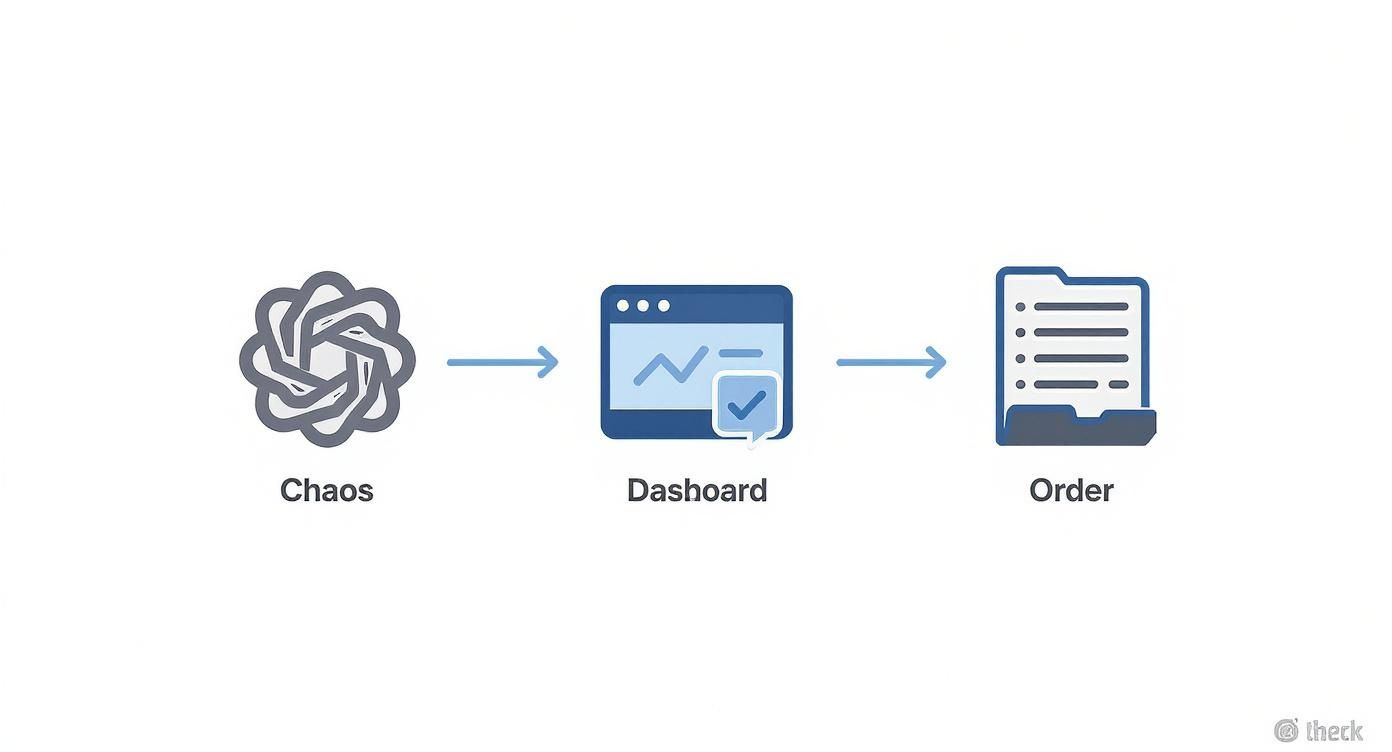
As you can see, the platform’s role is to create a structured, manageable workflow right where the disorganization used to be. Let's break down the key features that make this happen.
The Unified Social Inbox: Your Command Center
Picture this: your support team is frantically switching between browser tabs—one for Facebook DMs, another for Instagram comments, and yet another for brand mentions on X. It's a recipe for missed messages and frustrated agents.
A unified social inbox puts an end to that nightmare. It pulls every single interaction from all your channels into one centralized dashboard. This single stream of conversation is the bedrock of efficient social support, ensuring nothing falls through the cracks. It also gives your team a complete history of every conversation with a customer, no matter which platform they last used to reach out.
AI-Powered Automation: The Ultimate Time-Saver
Let's be honest, not every customer question needs a human response. A huge chunk of your incoming messages are the same repetitive questions: "Where's my order?" or "What's your return policy?" This is where AI-powered automation changes the game for your team.
An intelligent platform can spot these common questions and instantly fire back a pre-approved, accurate answer. This frees up your human agents to focus on the tricky or sensitive issues that really do need a personal touch. The result? Response times drop dramatically.
A social media customer service platform uses automation not to replace agents, but to empower them. By handling the routine tasks, it allows your team to dedicate their skills to high-value interactions that build customer loyalty.
By offloading the simple stuff, you can handle more customer inquiries without having to hire more people. For a growing e-commerce brand, that's a massive win.
Sentiment and Intent Analysis: Reading Between the Lines
Understanding what a customer is saying is one thing. Understanding how they feel while saying it is another entirely. Is that comment sarcastic or genuinely angry? Sentiment analysis is the tech that deciphers the emotional tone behind the words.
This amazing capability allows the platform to automatically flag messages from truly upset customers and bump them to the top of the queue. Think of it as an emotional filter, making sure your team responds with the right level of empathy and urgency every time.
Taking it a step further, intent detection figures out what the customer is trying to do. Are they asking for help? Showing interest in a product? Or just sharing feedback? Platforms like FeedGuardians use this to pinpoint purchase intent, turning a casual comment into a potential sale. You can see more on how this works by exploring the top social media monitoring tools of 2025.
Automated Moderation and Spam Removal: Your 24/7 Brand Guardian
Your social media pages are your digital storefront, but they can quickly get cluttered with spam, scams, and nasty comments. This kind of toxic environment doesn't just look bad; it can scare away potential customers and tarnish your brand's reputation.
Automated moderation acts like a round-the-clock security guard for your comment sections. It works by:
- Filtering by Rules: You set up rules to automatically hide comments with specific keywords, sketchy links, or phrases that violate your community guidelines.
- Catching Spam: The AI is trained to recognize spammy behavior—like repetitive posts or links to shady websites—and removes it on the spot.
- Protecting Your Reputation: By keeping your comment threads clean and professional, this feature makes sure your brand always looks trustworthy and positive.
This ensures your social channels remain a safe and welcoming place for your actual customers, protecting both your audience and your ad spend from negativity.
To see how these features come together, let's look at their direct impact on your business.
Essential Platform Features and Their Business Impact
This table breaks down the core features of a social media customer service platform and illustrates the direct business value each one provides.
| Core Feature | What It Does | Business Impact Example |
|---|---|---|
| Unified Social Inbox | Consolidates all social media messages, comments, and mentions from every channel into a single, organized dashboard. | A support agent sees a customer’s entire conversation history across Instagram and Facebook, providing faster, more personalized help. |
| AI-Powered Automation | Identifies and responds to common, repetitive questions (e.g., "Where is my order?") without human intervention. | Instantly answers 40% of incoming queries, freeing up agents to handle complex issues and reducing first-response time. |
| Sentiment & Intent Analysis | Deciphers the emotional tone (positive, negative, neutral) and underlying goal (e.g., purchase intent, complaint) of a message. | Automatically flags an angry customer's comment for immediate follow-up, preventing a public complaint from escalating. |
| Automated Moderation | Automatically hides or deletes spam, scams, and comments containing harmful keywords or links based on pre-set rules. | Prevents scam links from appearing on your Facebook ads, protecting customers and improving your ad campaign's ROI. |
In short, each feature is a building block for a more efficient, brand-safe, and customer-focused support operation. They work in tandem to turn a chaotic social feed into a powerful business asset.
How Social Support Directly Boosts Your Bottom Line
Investing in a social media customer service platform goes way beyond just managing comments or making your support team’s life easier. It's a hard-nosed business decision that directly pumps up revenue, improves profitability, and builds real brand value. This isn't just another expense on the balance sheet; it's a growth engine that turns customer chats and complaints into cash.
Think about it: every single interaction on your social channels is a moment of truth. It can either strengthen your brand or start to chip away at it. When you manage these moments well, you’re not just putting out fires—you’re protecting your marketing budget and opening up new ways to make money.
Let’s break down exactly how this translates into real dollars and cents.
Protecting Your Ad Spend
You’re spending good money on social media ads to bring in new customers. But what happens when those polished ads get flooded with negative comments? A single, unanswered "My order never showed up!" can scare away hundreds of potential buyers, completely tanking your ad's conversion rate and wasting every dollar you spent.
A dedicated platform acts like a 24/7 guard for your ad comments. It can automatically hide toxic comments or flag urgent customer problems for an agent to jump on immediately. By keeping your ad space clean and positive, you make sure your marketing dollars are actually spent winning over new customers, not broadcasting public grievances.
Increasing Customer Lifetime Value
Turning a customer’s bad day into a great experience is one of the most reliable ways to create a fiercely loyal fan. When someone has a problem and gets a quick, helpful, and human response on social media, it can completely change how they see your brand. They feel seen and appreciated, which is the bedrock of any lasting customer relationship.
When you turn a frustrating public complaint into a stellar resolution, you don't just save that one customer. You show everyone watching that you care. That public display of great service builds an incredible amount of trust.
The financial payoff is huge. Research shows customers are willing to spend 21% more with a brand after a positive service interaction on social media. Better yet, actively engaging with customers on these channels can pull in 20% to 40% more revenue per customer. You can dig into more stats in this insightful report about social media customer support.
Reducing Operational Support Costs
Profitability is all about efficiency, and automation is your best friend here. A social media customer service platform handles the most mind-numbing, repetitive support tasks for you, letting your team manage way more inquiries without having to hire more people.
Here’s how it slashes costs:
- Automated Replies: Instantly handles common questions like "Do you ship to Canada?"
- Intelligent Routing: Zips complex issues straight to the agent who knows how to solve them best.
- Spam Filtering: Keeps your team from wasting time deleting junk comments all day.
This frees up your agents to focus on the tricky, high-value conversations that actually need a human touch. The end result is a leaner, more effective support team that costs a lot less to run.
Gaining a Competitive Edge
In a packed market, amazing customer service is how you stand out. While your competitors are drowning in a sea of DMs and comments, a platform lets you be quicker, more organized, and more personal. That speed and consistency create a customer experience that people notice and remember.
When it comes down to it, customers stick with the brand that makes them feel important and solves their problems without a fuss. By delivering top-notch social support, you not only keep your current customers happy but also start pulling in new ones from competitors who just can't keep up. This improved engagement is a cornerstone of building a real community. For more on this, check out our guide on how to improve social media engagement and turn your followers into true advocates.
How to Choose the Right Platform for Your Brand
Picking the right social media customer service platform is a big deal. The choice you make will directly impact your support team's day-to-day work and, just as importantly, how your customers see your brand. With a sea of options out there, it's easy to get bogged down by endless feature lists and confusing pricing.
The secret is to tune out the noise and zero in on what your brand actually needs to win.
Think of it like buying a car. A flashy two-seater sports car looks great, but it’s totally impractical if you need to haul supplies for your business. You have to match the tool to the job. The best platform isn't the one with the most bells and whistles; it's the one that fits your customers, your current software, and your business goals like a glove.
Evaluate Your Channel Coverage First
Before you even glance at other features, confirm the platform supports the channels where your customers actually hang out. This is your non-negotiable first step. A tool could have the most amazing AI on the planet, but it's worthless if it can't see your TikTok comments or manage your Instagram DMs.
Your customers lead the way here. For e-commerce today, Instagram and Facebook are the heavyweights. In fact, a surprising 35% of U.S. consumers now use Instagram for customer service queries, turning it into a major touchpoint. Millions of conversations are happening in DMs, so strong support for Meta’s platforms is an absolute must.
Your evaluation should start with one simple question: Does this tool cover the top two or three social channels where our customers live? If not, cross it off the list and move on.
Check for Key Integrations
A great social support tool can't operate in a silo. It has to talk to the other software that powers your business, which is what makes it truly valuable. Without the right connections, your team will be stuck manually copying and pasting data between systems—and that completely defeats the purpose of investing in a platform in the first place.
Keep an eye out for these critical connections:
- E-commerce Platforms: A direct link to something like Shopify is a game-changer. It lets your agents see a customer’s full order history right in the support dashboard, which means they can solve problems in a fraction of the time.
- Helpdesk Software: If you're already using a tool like Zendesk or Gorgias, the platform needs to sync tickets and conversation history seamlessly. This creates a single, unified view of every customer, no matter how they reach out.
- CRM Systems: Connecting to your CRM feeds valuable insights from social media directly to your sales and marketing teams.
Assess Scalability and Usability
Finally, think about where your business is headed. You’re planning to grow, right? Your platform needs to be able to keep up. Take a look at the pricing tiers and make sure there’s a clear path to add more users, connect more social accounts, or unlock advanced features without getting hit by a massive price hike. For a peek at what an enterprise-level tool can do, a Sprinklr platform review can show you the scope of a full-scale solution.
Just as crucial is how easy the platform is for your team to actually use. A tool overloaded with features is useless if your agents find it clunky or confusing. The interface should be clean, intuitive, and quick to learn. Always, always get your support team involved in the demo process. Their buy-in is the key to making it all work.
Putting Your Platform into Action
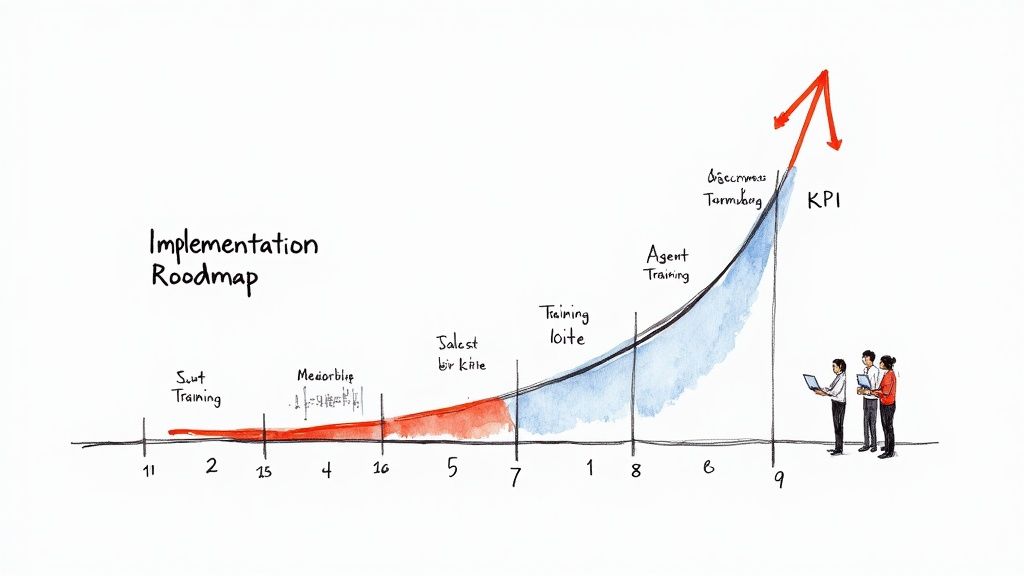
Picking the right social media customer service platform is a huge step, but the real magic happens when you bring it to life. Getting your new tool up and running isn't just about flipping a switch; it's about methodically building a smarter support system that works for your team and your customers. A smooth rollout means your team can start delivering better service from day one.
The best place to start is by mapping out your most common customer questions. Think about the easy ones, the ones that pop up over and over again. Set up automated workflows for simple queries like, "Where's my order?" or "Do you ship to Canada?" This simple step can immediately free up your agents to focus on the tricky, sensitive, or high-value conversations that really need a human touch.
From there, turn your attention to your team. Great training is about more than just showing them which buttons to click; it’s about making them feel confident with the new technology. This is also the perfect moment to nail down your brand’s voice on social media. Are you witty and informal? Professional and empathetic? Getting this consistent is what builds a memorable brand personality.
Defining and Measuring Real Success
Once you're live, the game shifts from setup to measurement. To really show the platform's worth, you have to track metrics that matter—and I don't mean likes or follower counts. You need to connect your social media support efforts to real business goals that the whole company understands.
The right key performance indicators (KPIs) tell the true story of your platform's impact. They show exactly how great social support makes customers happier, improves your brand’s reputation, and even helps your bottom line.
Moving beyond vanity metrics is a must. The right KPIs prove that a social media customer service platform isn't just another expense—it's a powerful tool for keeping customers and growing revenue.
Your measurement plan should zero in on a few high-impact metrics that give you the full picture.
Key Metrics That Demonstrate Value
Tracking the right data separates the good social support strategies from the great ones. These are the numbers that give you clear, actionable insights into how well your team is doing and how your customers feel about it.
Here are the essential KPIs you should have on your dashboard:
- Average Response Time: How fast are you getting back to people? On social media, speed is everything. A quick response time is a powerful signal that you’re on top of things.
- First Contact Resolution (FCR): What percentage of issues do you solve in a single reply? A high FCR means your team is efficient and your customers aren't getting bounced around in frustrating loops.
- Customer Satisfaction (CSAT): After a conversation, a simple survey asking customers to rate their experience is pure gold. This direct feedback is the ultimate report card on your service quality.
- Brand Sentiment Score: Use your platform’s tools to keep a finger on the pulse of how people are talking about your brand. A rising positive sentiment shows your efforts are paying off and building a stronger reputation.
By keeping a close eye on these concrete metrics, you can clearly show the ROI of your investment and make smart, data-backed decisions to keep getting better.
Frequently Asked Questions
Jumping into the world of social customer care tools can definitely raise a few questions. Let's tackle some of the most common ones to help you figure out the best path for your brand.
Social Management Tool vs. Customer Service Platform
So, what’s the real difference between a regular social media management tool and a platform built specifically for customer service?
Think of it like this: A standard social media management tool (like Hootsuite or Buffer) is basically a megaphone. Its main job is to push your content out there—scheduling posts, planning campaigns, and broadcasting your message. It's built for marketing.
A social media customer service platform, on the other hand, is more like a walkie-talkie connected to a command center. It's all about listening and responding. It pulls in every comment, DM, and mention from all your channels and organizes them into support tickets your team can actually work on. While some might have posting features, their real strength is in handling a flood of customer conversations without letting anyone slip through the cracks.
What Is the Typical Cost of These Platforms?
Alright, let's talk budget. How much should you expect to set aside for one of these platforms?
There's no single price tag, as costs can swing quite a bit based on the features you need, how many people on your team will use it (often called "seats"), and the sheer volume of customer messages you handle. But generally, the pricing falls into a few tiers:
- For Starters: You can find entry-level plans from about $50 to $150 per month. These are perfect for small teams just getting started, usually offering a unified inbox for a couple of social accounts and some basic automation.
- Growing Businesses: Mid-tier plans typically run from $200 to $600 per month. This is where you start seeing more powerful tools like sentiment analysis, detailed reporting, and slick integrations with e-commerce platforms like Shopify.
- Enterprise Scale: For large companies with massive social engagement, custom-priced plans can easily climb into the thousands each month. These offer everything under the sun, from unlimited channels and top-tier security to a dedicated account manager.
The most important thing is to look for a platform with flexible, scalable pricing. You want a tool that can grow with your business, so you're not hit with a huge price hike the moment you need to add another team member.
Can Small E-commerce Stores Benefit?
Is a dedicated platform just too much for a small e-commerce shop?
Not at all. In fact, you could argue that small stores get the most bang for their buck. When you're a small team, every minute is precious. A good platform takes the soul-crushing work of manually checking DMs and comments on every single post off your plate. That frees you up to focus on what really matters—packing orders and making sales.
Plus, a small brand’s reputation is everything. It only takes a few angry, unanswered comments to cause real damage. A platform acts as your safety net, making sure every customer gets an answer and problems are solved long before they turn into a public firestorm. It really helps a small shop punch above its weight, delivering professional, speedy service that builds the kind of loyalty big brands envy.
Ready to protect your brand and turn social media comments into sales? With FeedGuardians, you can automatically hide spam, reply to customers in real time, and uncover valuable purchase intent. See how FeedGuardians can transform your social media engagement today!
Tired of manually moderating comments?
FeedGuardians automates spam filtering, responds to customers, and protects your brand — setup in 3 minutes.