
Quick Summary
| Key Insight | What You Need to Know |
|---|---|
| Leverage AI to automatically | Leverage AI to automatically analyze customer sentiment and intent. |
| Establish clear Service Level | Establish clear Service Level Agreements (SLAs) to guarantee timely responses. |
| Implement proactive moderation to | Implement proactive moderation to filter spam and protect your brand’s image. |
| Use data to identify | Use data to identify trends and continuously optimize your support workflows. |
| If your problem is inconsistency | Focus on creating Automated Response Templates (#3). Develop a library of pre-approved, on-brand responses for your most common inquiries. |
In the fast-paced world of e-commerce, your help desk is far more than just a support channel; it's a critical revenue engine. Customers now demand instant, personalized responses on every platform, from Instagram comments to live chat, and every unresolved query represents a potential lost sale. When your team is bogged down by spam, repetitive questions, and the constant flood of notifications, opportunities are missed, and brand reputation suffers. This isn't just about answering tickets faster; it's about building a system that converts inquiries into loyalty.
This guide moves beyond generic advice to deliver 10 of the best help desk practices you can implement immediately to transform your support operations. We will provide actionable strategies designed specifically for e-commerce and social media teams who need to manage high-volume interactions effectively. Forget vague theories; we’re focused on practical steps that yield measurable results.
You will learn how to:
- Leverage AI to automatically analyze customer sentiment and intent.
- Establish clear Service Level Agreements (SLAs) to guarantee timely responses.
- Implement proactive moderation to filter spam and protect your brand’s image.
- Use data to identify trends and continuously optimize your support workflows.
It's time to stop simply reacting to customer issues. This article will show you how to build a proactive, efficient help desk that not only solves problems but also delights customers, drives conversions, and turns your comment section from a chaotic liability into your most valuable business asset. Let's get started.
1. Implement a Multi-Channel Support System
Today’s customers expect to get help wherever they are, whether it’s through an email, a direct message on Instagram, or a comment on a TikTok video. A multi-channel support system consolidates all these conversations into a single, unified dashboard. This approach prevents inquiries from falling through the cracks and stops agents from juggling multiple tabs and logins, which is one of the most crucial best help desk practices for modern e-commerce.
Implementing a robust multichannel customer support platform is fundamental to offering comprehensive customer service across various touchpoints. Instead of treating each platform as a separate silo, this system creates a single source of truth for all customer interactions, providing agents with complete context and history.
Why This Practice Is Essential
For e-commerce and social media teams, comment and DM volume can be overwhelming. A unified system like Gorgias, which integrates Shopify with Facebook and Instagram, or Zendesk’s omnichannel suite, allows agents to manage high-volume interactions efficiently. This centralization is key to maintaining consistent brand voice and service quality across all platforms.
How to Implement It Effectively
Getting started doesn't have to be complex. Follow these actionable steps to set up your multi-channel system:
- Start Small: Begin by integrating your top 2-3 highest-volume channels first. This usually includes email, Facebook, and Instagram. Once your team is comfortable, you can expand to other platforms like TikTok or live chat.
- Automate Routing: Use automated rules to assign tickets based on keywords, channel, or urgency. For example, messages containing "return" or "broken" can be routed directly to the returns department.
- Prioritize Sales: Create priority tags for purchase-intent questions. Queries like "Do you ship to Canada?" or "Is this available in blue?" should be flagged for immediate response to capture potential sales.
- Set Channel-Specific SLAs: Define unique Service Level Agreements (SLAs) for each channel. A customer on live chat expects a response in minutes, while an email inquiry might have a 24-hour response window.
2. Leverage AI-Powered Sentiment and Intent Analysis
Manually sifting through hundreds of comments and messages to find urgent issues or sales opportunities is inefficient and prone to error. AI-powered sentiment and intent analysis automates this process by instantly categorizing customer communications based on emotion (positive, negative, neutral) and purpose (purchase question, complaint, feedback). This technology is one of the most impactful best help desk practices for teams needing to prioritize effectively at scale.
Using artificial intelligence to interpret customer language allows support teams to automatically route and prioritize incoming tickets. Instead of treating every message equally, this system identifies high-value inquiries and potential crises, ensuring agents address the most critical conversations first. This proactive approach transforms a reactive help desk into a strategic business asset.
Why This Practice Is Essential
For social media and e-commerce teams, the volume of public comments can be overwhelming. Tools like FeedGuardians use AI to analyze sentiment and intent, automatically hiding harmful comments while flagging purchase questions for immediate follow-up. This not only protects brand reputation but also directly drives revenue by ensuring sales leads are never missed in the noise of a busy comment section.
How to Implement It Effectively
Integrating AI analysis into your workflow is more accessible than ever. Here’s how to get started:
- Define Key Categories: Start by focusing on high-confidence intent categories that matter most to your business, such as "purchase intent," "shipping issue," "negative feedback," and "spam."
- Automate Triage Workflows: Create rules that automatically tag and route tickets based on their AI-detected category. For example, all messages with "negative" sentiment and "shipping" intent can be immediately escalated to a support manager.
- Audit and Refine: Regularly review how the AI classifies messages. Most platforms allow you to correct misclassifications, which helps retrain and improve the model's accuracy over time.
- Measure Business Impact: Track key metrics like response times for high-intent inquiries and conversion rates from AI-prioritized leads. This helps demonstrate the clear ROI of implementing these powerful social media sentiment analysis tools.
3. Create Automated Response Templates and Workflows
Repetitive questions about shipping, returns, and product details can consume a significant portion of your support team's time. Creating a library of pre-approved response templates and automated workflows solves this by delivering instant, consistent answers to common inquiries, which is one of the most effective best help desk practices for scaling customer engagement. This allows agents to focus on more complex issues that require a human touch.
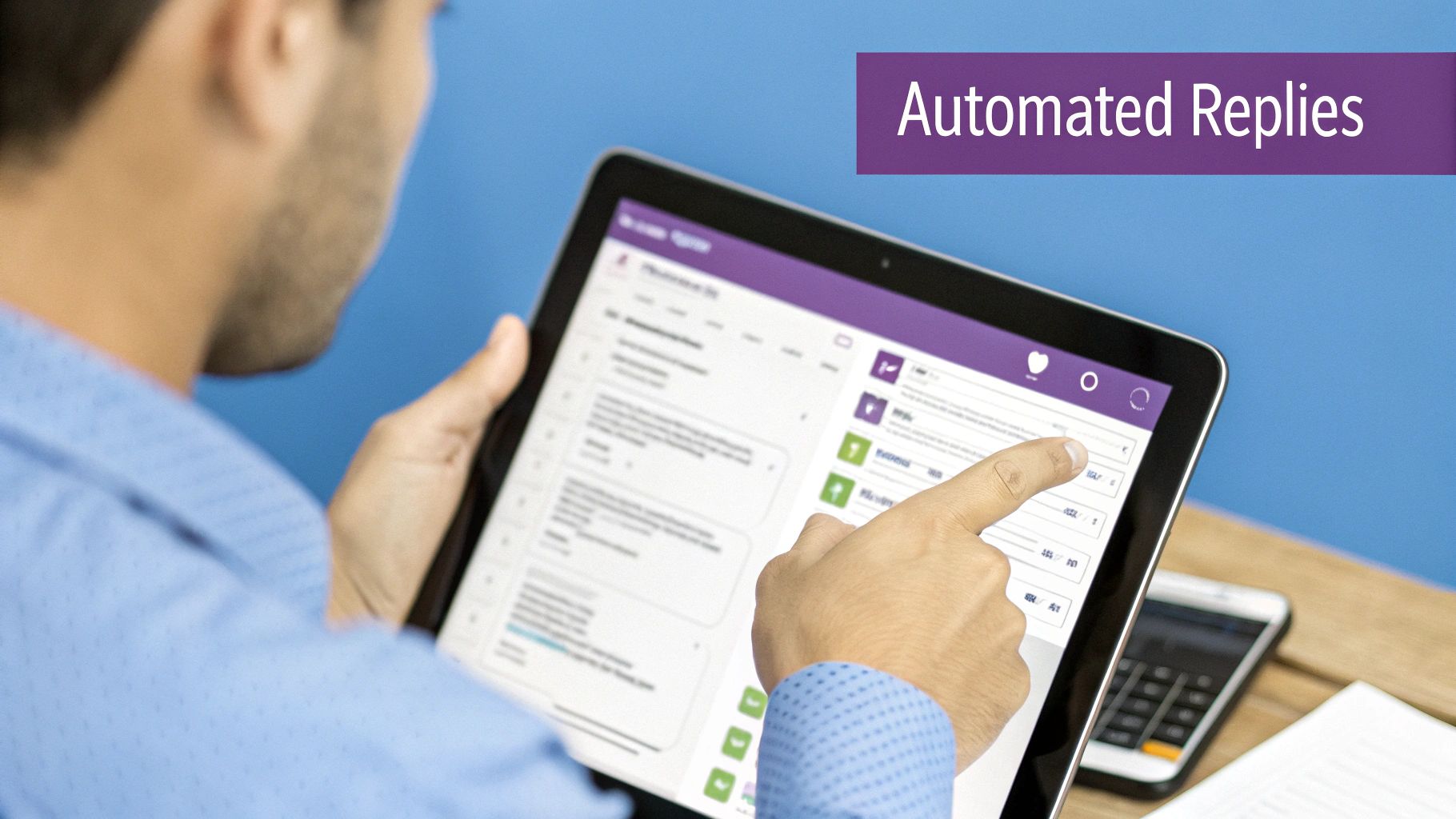
Automated workflows go beyond simple templates by using triggers and rules to manage conversations without manual intervention. For instance, a comment asking "How much is shipping?" can trigger an automated reply with a link to your shipping policy page. To dive deeper into this topic, you can learn more about the complete guide to customer service automation. This frees up your team while ensuring customers get the information they need immediately.
Why This Practice Is Essential
For brands with high comment volume on social media, manually replying to every question is unsustainable. Automation tools like FeedGuardians and Gorgias use AI to detect common questions and deploy instant, brand-aligned responses. This not only improves response times but also ensures accuracy and consistency in the information provided, directly impacting customer satisfaction and trust.
How to Implement It Effectively
Building an effective automation system is a strategic process. Here are four steps to get started:
- Identify Common Questions: Analyze your support tickets and social media comments to identify the top 5-10 most frequently asked questions. These are your primary candidates for automation.
- Segment Your Templates: Create different versions of your templates for various customer segments. A new customer asking about a first-time purchase discount should receive a different message than a loyal customer inquiring about reward points.
- Establish Clear Escalation Rules: Program your system to escalate conversations to a human agent when necessary. For example, if a comment contains negative sentiment (e.g., "disappointed," "angry") or a complex keyword ("defective item"), the workflow should automatically flag it for manual review.
- Review and Refine: Automation is not a "set it and forget it" solution. Review your template performance quarterly. A/B test different response phrasings to see what drives higher engagement and update templates based on new products, policies, or recurring customer questions.
4. Establish Clear Response Time SLAs and Tracking
A Service Level Agreement (SLA) is a commitment you make to your customers about response and resolution times. Establishing clear SLAs transforms customer support from a reactive function into a proactive, measurable operation. This practice ensures every customer inquiry is handled within a specific timeframe, which is a cornerstone of effective help desk management and a key differentiator in a competitive e-commerce landscape.
Defining and tracking SLAs helps manage customer expectations and provides your team with clear performance targets. Instead of guessing when to reply, agents have precise goals for different types of inquiries, ensuring that urgent, sales-related questions get the immediate attention they deserve. This structured approach is one of the most impactful best help desk practices for maintaining service quality and driving customer loyalty.
Why This Practice Is Essential
In e-commerce, speed matters. A customer asking about product availability is a potential sale, and a slow response could mean they buy from a competitor. Setting aggressive SLAs for high-intent queries, like Shopify’s goal of under one hour for high-priority tickets, directly impacts revenue. It creates a framework for accountability and allows managers to spot bottlenecks, reallocate resources, and justify staffing decisions based on real performance data.
How to Implement It Effectively
You can roll out a structured SLA system by following these steps:
- Define SLAs by Channel and Urgency: Don't use a one-size-fits-all approach. Set a tight SLA of under 30 minutes for live chat and Instagram DMs with purchase intent, while allowing up to 24 hours for general email inquiries.
- Automate SLA Monitoring: Use your help desk software (like Zendesk or Freshdesk) to automatically track time-to-first-response and resolution times. Configure alerts to notify managers when a ticket is at risk of breaching its SLA.
- Prioritize High-Value Interactions: Use keyword-based rules to flag high-urgency tickets. Queries containing terms like "checkout issue," "can't pay," or "discount code" should trigger a shorter SLA to prioritize conversion-blocking problems.
- Communicate and Review Performance: Make SLA performance visible to the entire team through weekly dashboards. Review and adjust your SLAs quarterly to account for seasonal peaks, team growth, or changes in customer behavior.
5. Implement Proactive Comment Moderation and Spam Filtering
For brands on social media, comment sections are a double-edged sword. While they foster community and drive engagement, they can also become breeding grounds for spam, harassment, and brand-unsafe content. Proactive comment moderation uses rules-based and AI-powered filtering to automatically detect and hide these harmful comments before they can damage your reputation or distract agents from legitimate customer inquiries.
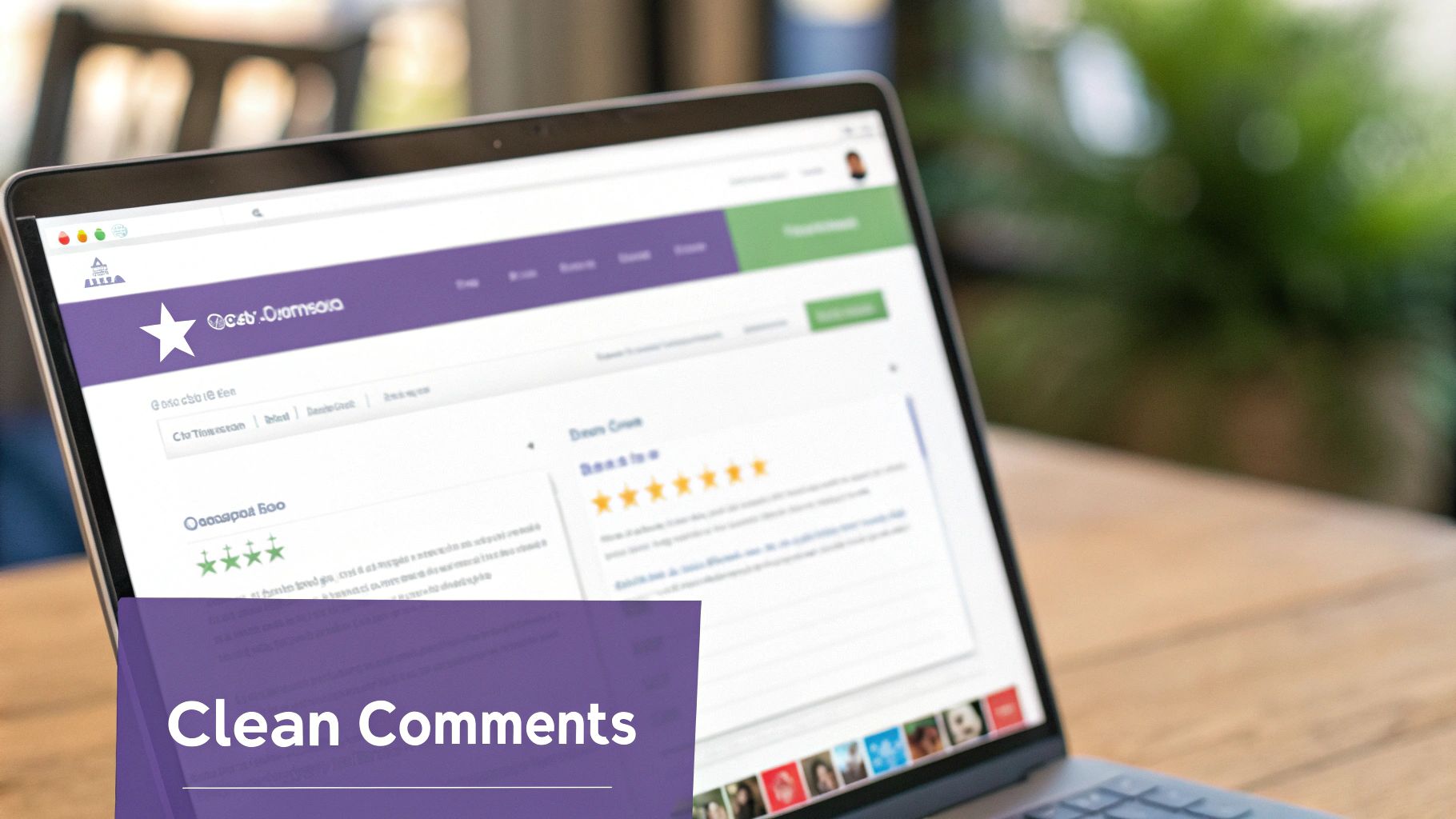
This approach is one of the most vital best help desk practices for maintaining a clean, professional, and trustworthy online presence. By filtering out noise, you ensure that real customer questions and positive feedback remain visible, which builds customer trust and keeps conversion-focused conversations at the forefront. Tools like FeedGuardians and Sprout Social automate this process, saving your team countless hours of manual work.
Why This Practice Is Essential
Unmoderated comment sections can quickly devolve, creating a negative environment that deters potential customers and overwhelms your support team. Automated systems can instantly hide comments containing spam links, profanity, or competitor promotions, allowing your agents to focus their energy on genuine service requests. This protects your brand image and ensures the customer experience remains positive and secure.
How to Implement It Effectively
Setting up an effective moderation system is straightforward with the right strategy. Follow these steps to protect your social channels:
- Start with Obvious Spam: Begin by implementing high-confidence filters that target clear spam, such as repetitive comments or posts with suspicious links. This delivers immediate results with a low risk of error.
- Create Custom Keyword Lists: Develop whitelists (approved terms) and blacklists (banned terms) specific to your industry and brand. For instance, a fashion brand might blacklist keywords related to counterfeit goods.
- Regularly Audit Filtered Comments: Schedule weekly or bi-weekly reviews of hidden comments to identify any "false positives." This helps refine your filter accuracy and ensures legitimate customer feedback isn't accidentally silenced. For a deeper dive, explore various strategies for social media content moderation.
- Use Community Feedback: Pay attention to what your audience reports. If users frequently flag a certain type of comment, add its characteristics to your filtering rules to improve automation over time.
6. Use Data Analytics to Identify Support Trends and Optimize Processes
Instead of simply resolving tickets as they come in, one of the most transformative help desk practices is to treat your support data as a source of business intelligence. Analyzing ticket trends, customer inquiries, and social media comment data allows you to identify recurring issues, common questions, and friction points in the customer journey. This proactive approach turns your reactive support function into a powerful engine for improvement.
By leveraging the analytics features in platforms like Gorgias or Zendesk, you can move beyond anecdotal feedback and make data-driven decisions. These insights help you refine product descriptions, update your FAQ page, and create more effective response templates, ultimately reducing support volume and improving the customer experience.
Why This Practice Is Essential
For e-commerce and social media teams, support data is a goldmine. It reveals exactly what confuses or frustrates your customers. For example, Gorgias analytics might show that 20% of all tickets in a given month are related to shipping policies for a specific country. This is a clear signal to make that information more prominent on your website, which can prevent future tickets and lost sales.
This data-driven strategy allows you to fix the root cause of problems instead of just treating the symptoms. It’s the key to scaling your support operations efficiently and making continuous, impactful improvements to your business.
How to Implement It Effectively
Transforming data into action doesn't require a dedicated analyst. You can start by implementing these simple, high-impact steps:
- Schedule Automated Reports: Set up weekly or monthly automated reports in your help desk software to track key metrics like ticket volume by topic, first response time, and customer satisfaction scores.
- Share Insights Across Teams: Create a monthly ritual of sharing a summary of support trends with your product, marketing, and operations teams. Highlighting common questions can inform marketing messaging or lead to product improvements.
- Proactively Update Your Site: Use customer inquiry data to regularly update your FAQ page, product descriptions, and shipping policy pages. If a question is asked frequently, the answer should be easy to find.
- Track the Impact of Changes: When you update an FAQ or product page based on support data, tag related tickets to monitor if the volume on that topic decreases over time. This closes the feedback loop and proves the ROI of your efforts.
7. Train and Empower Your Support Team with Product and Brand Knowledge
Your help desk software is only as good as the agents using it. Investing in comprehensive training is one of the most impactful best help desk practices you can adopt. An empowered team, equipped with deep product knowledge and a clear understanding of your brand voice, can resolve issues faster and create memorable customer experiences that build loyalty.
This practice moves beyond basic software onboarding. It involves creating a culture of continuous learning where agents are experts not just in solving problems, but in representing your brand. When an agent can confidently answer complex product questions or handle a difficult customer with the brand's specific tone, they become a powerful asset for retention and growth.
Why This Practice Is Essential
In e-commerce, customers often contact support with detailed product questions or frustrating issues. An agent who has to constantly ask for help or gives generic answers creates friction and erodes trust. Companies like Zappos and Amazon built their reputations on legendary customer service, which stems directly from rigorous, ongoing training programs that empower agents to make decisions and provide exceptional support.
How to Implement It Effectively
Empowering your team requires a structured approach to training and professional development. Here are a few actionable steps to get started:
- Develop Scenario-Based Training: Create a library of real-world scenarios your agents might face. This could include handling an angry customer on social media, troubleshooting a complex product issue, or upselling a customer who is on the fence.
- Create a "Support Hero" Culture: Publicly recognize and reward top-performing agents. This gamifies performance, motivates the team, and highlights what excellent service looks like within your organization.
- Hold Bi-Weekly Product Sessions: Schedule regular, short training sessions whenever a new product is launched or a feature is updated. Give agents hands-on time with the products so they can speak from experience.
- Implement Peer Mentoring: Pair new hires with experienced agents. This creates a supportive learning environment and accelerates the onboarding process, ensuring new team members absorb both technical skills and cultural nuances.
8. Create a Self-Service Knowledge Base and FAQ Section
Empowering customers to find answers on their own is one of the most effective ways to reduce ticket volume and improve efficiency. A comprehensive knowledge base and FAQ section serves as a 24/7 self-service portal where customers can resolve common issues, learn about products, and understand policies without ever needing to contact an agent. This not only frees up your team to handle more complex inquiries but also meets the expectations of modern customers who prefer immediate solutions.
A robust self-service portal is built upon solid essential knowledge management best practices, ensuring information is accessible, accurate, and up-to-date. By investing in this resource, you create a scalable support solution that reduces repetitive questions and enhances the overall customer experience, making it a cornerstone of best help desk practices.
Why This Practice Is Essential
For growing e-commerce and social media-driven brands, common questions about shipping, returns, and product usage can quickly overwhelm support teams. A well-organized knowledge base, like Shopify's extensive help center or Asana's detailed product guides, deflects a significant percentage of these routine inquiries. This allows customers to get instant answers at any time, boosting satisfaction while simultaneously lowering operational costs for the support team.
How to Implement It Effectively
Building a useful knowledge base is an ongoing process, but you can get started with a strategic approach. Follow these steps to create a resource that truly helps your customers:
- Analyze Ticket Data First: Review your support tickets and identify the top 15-20 most frequently asked questions. These should be the first articles you write, as they will have the biggest immediate impact on reducing ticket volume.
- Use Visuals for Clarity: For complex processes like product assembly or navigating a returns portal, create short video tutorials or use annotated screenshots. Visual aids are often more effective than text-only explanations.
- Incorporate a Feedback Mechanism: Add simple "Was this article helpful?" buttons (Yes/No) at the end of each article. This feedback helps you identify which content is effective and which articles need improvement.
- Schedule Regular Updates: Set a reminder to review and update your knowledge base content quarterly. This ensures all information, especially regarding policies and product features, remains accurate and relevant.
9. Monitor and Measure Customer Satisfaction and NPS
You can’t improve what you don’t measure. Regularly collecting and analyzing customer satisfaction metrics like CSAT (Customer Satisfaction Score), NPS (Net Promoter Score), and CES (Customer Effort Score) is essential for understanding your support team's performance. This data-driven approach transforms vague feelings into actionable insights, showing you exactly where to focus your improvement efforts.
Tracking these metrics is one of the most fundamental best help desk practices because it creates a direct feedback loop with your customers. Instead of guessing, you can pinpoint issues in your processes, identify agent training needs, and validate the impact of new tools. Platforms like Delighted or Zendesk Surveys make it simple to automatically trigger feedback requests after an interaction is resolved.
Why This Practice Is Essential
For e-commerce and social media teams, customer sentiment can make or break your brand. A negative support experience can quickly spiral into a viral complaint. By proactively measuring satisfaction, you can identify unhappy customers and intervene before they churn or share negative feedback publicly. Companies like Amazon use this continuous feedback loop to drive relentless improvements in their customer experience.
How to Implement It Effectively
Integrating customer feedback into your daily workflow is straightforward with a clear plan. Follow these actionable steps to get started:
- Keep Surveys Short: To maximize completion rates, limit surveys to 2-3 essential questions. A simple "How satisfied were you with our support?" (CSAT) followed by an optional open-ended question is highly effective.
- Send Surveys Immediately: Trigger feedback requests right after a ticket is closed. The experience is still fresh in the customer's mind, leading to more accurate and detailed responses.
- Segment Your Data: Analyze feedback by channel, agent, and customer type (e.g., new vs. repeat). This helps you spot trends, like a specific agent needing more training or a channel causing consistent frustration.
- Set and Celebrate Goals: Establish team-wide goals for CSAT or NPS scores. Recognizing and celebrating improvements keeps your team motivated and focused on delivering exceptional service. For a deeper understanding of customer sentiment, you can also learn more about social listening.
10. Build Personalization and Customer Context into Every Interaction
Generic, one-size-fits-all support responses no longer cut it. Building personalization and customer context into every interaction means treating customers as individuals, not ticket numbers. This involves using integrated customer profiles that show purchase history, past conversations, and even their lifetime value, allowing agents to tailor their support for maximum impact.
This approach transforms a standard support query into a personalized experience that builds loyalty. When an agent can see a customer's entire history, they can offer relevant solutions, make smart product recommendations, and acknowledge the customer's value to the brand. This is one of the most effective best help desk practices for driving repeat purchases and increasing customer satisfaction.
Why This Practice Is Essential
In a competitive e-commerce landscape, personalization is a key differentiator. A customer who feels understood and valued is more likely to return. For example, a high-value customer with a history of large purchases should receive a different level of service than a first-time inquirer. Help desk platforms like Gorgias excel at this by pulling customer data directly from Shopify, giving agents immediate access to order history and lifetime value.
How to Implement It Effectively
Integrating customer context into your workflow is a powerful way to enhance service quality. Here’s how to do it:
- Segment Customers into Tiers: Create customer tiers like Bronze, Silver, and Gold based on their lifetime value or purchase frequency. Use these tiers to define different service levels, such as priority routing for Gold members.
- Flag VIPs for Priority Handling: Automatically tag high-value customers as "VIP" in your help desk. This ensures agents immediately recognize their importance and can provide expedited, white-glove service.
- Use Purchase History for Proactive Support: When a customer asks about a product, use their purchase history to suggest complementary items. For instance, if they bought a skincare set last month, an agent can ask if they're ready to restock their favorite serum.
- Create Tier-Specific Response Templates: Develop unique macros or templates for each customer segment. A response to a VIP might include more personalized language or exclusive offers, reinforcing their valued status.
Top 10 Help Desk Practices Comparison
| Practice | Complexity 🔄 | Resource requirements ⚡ | Expected outcomes 📊 | Ideal use cases 💡 | Key advantages ⭐ |
|---|---|---|---|---|---|
| Implement a Multi-Channel Support System | High — multiple platform integrations and onboarding | Medium–High — help-desk platform, connectors, training | Fewer missed inquiries; faster cross-channel responses; higher CSAT | E‑commerce brands with high comment volume across platforms | Centralized tickets, unified history, consistent messaging |
| Leverage AI-Powered Sentiment and Intent Analysis | Medium–High — model selection, training, tuning | Medium — labeled data, API/compute, monitoring | Prioritized high‑value interactions; reduced manual review | Brands needing real‑time prioritization and reputation monitoring | Automated intent detection, faster routing, early issue alerts |
| Create Automated Response Templates and Workflows | Medium — design triggers, personalization, testing | Low–Medium — template library, automation rules, QA | Seconds‑level replies; lower agent workload; 24/7 coverage | High‑volume repetitive inquiries (shipping, order status) | Consistent brand voice, faster replies, scalable engagement |
| Establish Clear Response Time SLAs and Tracking | Medium — define SLAs, implement alerts and dashboards | Medium — monitoring tools, reporting, staffing adjustments | Improved response speed; accountability; performance insights | Teams focused on speed-to-response and SLA compliance | Measurable targets, reduced bottlenecks, data‑driven staffing |
| Implement Proactive Comment Moderation and Spam Filtering | Low–Medium — rules + AI tuning and audits | Low–Medium — filtering tools, regular reviews | Cleaner comment sections; less fraud; lower moderation load | Brands plagued by spam, scams, harassment in comments | Protects reputation, keeps conversations conversion‑focused |
| Use Data Analytics to Identify Support Trends and Optimize Processes | Medium–High — data pipelines, tagging, governance | Medium–High — analytics tools, analysts, reporting | Actionable insights; fewer repeat issues; product improvements | Scaling operations; teams wanting proactive product feedback | Identifies root causes, improves FAQs and staffing decisions |
| Train and Empower Your Support Team with Product and Brand Knowledge | Medium — develop curriculum, role play, coaching | High — time, trainers, certification, ongoing refreshers | Higher first‑contact resolution; faster escalations; retention gains | Complex products or high‑touch customer support operations | Better resolutions, empowered agents, fewer escalations |
| Create a Self-Service Knowledge Base and FAQ Section | Medium — content strategy, CMS setup, indexing | Medium — writers, CMS, analytics, media assets | Reduced ticket volume; faster self‑service; SEO benefits | High‑volume common questions, repetitive support topics | 24/7 answers, lower support costs, improved time‑to‑resolution |
| Monitor and Measure Customer Satisfaction and NPS | Low–Medium — survey flow, integrations, analysis | Low–Medium — survey tools, reporting, segmentation | Direct feedback; targeted coaching; benchmarked performance | Teams tracking quality, retention, and agent performance | Actionable customer feedback, measurable improvement signals |
| Build Personalization and Customer Context into Every Interaction | High — unify profiles, integrate systems, privacy controls | High — CRM, data engineering, identity resolution | Higher satisfaction and repeat purchases; better conversions | Businesses with high LTV customers or repeat purchases | Context‑aware responses, targeted upsell, VIP prioritization |
Turn Your Help Desk into a Growth-Driven Powerhouse
Throughout this guide, we've unpacked the essential components of a high-performing help desk. From establishing clear SLAs and routing guidelines to implementing AI-powered moderation and detailed reporting, the path to exceptional customer service is built on a foundation of strategy, technology, and a deep understanding of your customer. We've seen how a multi-channel approach meets customers where they are, how automated templates create consistency, and how proactive comment filtering protects your brand's reputation.
Adopting these best help desk practices is not about simply closing tickets faster. It's a fundamental business transformation. It's about shifting your support function from a reactive, often-overlooked cost center into a proactive, data-rich engine for growth. Each interaction, whether it's a simple question or a complex complaint, becomes an opportunity to learn, adapt, and strengthen customer relationships.
Synthesizing Strategy: From Individual Tactics to a Cohesive System
The true power of these practices is unlocked when they work together as a cohesive system. Imagine this: an AI-powered tool automatically flags a negative comment on your social media ad (Item #2 and #5). This triggers an automated workflow (Item #3) that routes the issue to a specialized agent and simultaneously creates a ticket. The agent, armed with the customer's interaction history and context (Item #10), uses an approved response template to address the issue within the predefined SLA (Item #4).
The customer is satisfied, and the entire interaction is logged. Later, your team analyzes this data alongside thousands of other interactions to spot a recurring product issue (Item #6), leading to a product improvement that reduces future support tickets. This is the cycle of excellence you're aiming for: a system where technology, process, and human expertise converge to create a seamless and intelligent customer experience.
Your Actionable Roadmap to Help Desk Excellence
The journey to implementing these best help desk practices can feel overwhelming, but it doesn't have to be. The key is to start with focused, incremental improvements that deliver the biggest impact for your team.
Here is a practical, step-by-step plan to get started:
- Conduct a Baseline Audit: Before you change anything, understand where you are now. Use your existing tools to measure your current average response time, customer satisfaction scores (Item #9), and ticket volume by channel. This data is your starting point.
- Prioritize Your Biggest Pain Point: What is causing the most friction for your team and customers? Is it an overwhelming volume of spam comments? Are response times lagging on a specific channel? Pick the one area where improvement will have the most significant and immediate positive effect.
- Implement One Foundational Practice:
- If your problem is volume and spam: Start with Proactive Comment Moderation (#5). Implementing a tool to automatically hide harmful comments and filter out spam can instantly reduce noise and team stress.
- If your problem is inconsistency: Focus on creating Automated Response Templates (#3). Develop a library of pre-approved, on-brand responses for your most common inquiries.
- If your problem is repeat questions: Begin building a Self-Service Knowledge Base (#8). Document the answers to your top 10 most frequently asked questions and make them easily accessible to your customers.
- Measure, Iterate, and Expand: After implementing your first practice, measure its impact for 30 days. Did response times improve? Did spam-related complaints decrease? Use the insights to refine your approach, then move on to the next practice on your list. This iterative cycle of implementation and analysis is the core of continuous improvement.
By following this approach, you create momentum. Each small win builds confidence and demonstrates the value of investing in your support operations. Your help desk will evolve from a simple problem-solving unit into an invaluable source of business intelligence and a cornerstone of your brand’s reputation and long-term success.
Ready to eliminate comment spam and automate your social media moderation? FeedGuardians integrates directly with your ad campaigns, using AI to automatically hide harmful comments, filter spam, and analyze sentiment in real-time. Start turning your comment sections into conversion opportunities by visiting FeedGuardians to see how it works.
Tired of manually moderating comments?
FeedGuardians automates spam filtering, responds to customers, and protects your brand — setup in 3 minutes.