
Quick Summary
| Key Insight | What You Need to Know |
|---|---|
| Mandate Kindness | A simple "be respectful" rule is your permission slip to remove trolls and anyone poisoning the well for others. It sets the tone for a positive, welcoming space. |
| Define Content Boundaries | Be explicit about what's off-limits. This could mean no political debates, no unsolicited DMs to other members, or a strict policy on keeping posts on-topic. |
| Why Facebook Groups Are a Modern Marketing Powerhouse | It's time to stop thinking of Facebook Groups as a side project. For brands that know how to use them, they've become high-conversion engines. Your st... |
| Laying the Foundation for a Successful Group | A great Facebook group feels like it runs itself, but that’s an illusion. The reality is that a thriving, engaged community is built on a rock-solid... |
| Crafting Content That Sparks Real Engagement | So, you’ve built the foundation of your group. Now for the fun part: creating the kind of content that turns lurkers into active, vocal members. A g... |
| Scaling Growth and Automating Moderation | As your community starts to take off, you’ll quickly find yourself buried in manual tasks. Approving members, moderating comments, and trying to kee... |
Marketing with Facebook Groups isn't just another item on your social media checklist. It's about building a branded community—a dedicated space where you can nurture leads, foster genuine connection, and drive sales. This strategy goes way beyond simply posting updates to a page; you're creating a high-engagement ecosystem that turns followers into loyal customers and vocal brand advocates.
Why Facebook Groups Are a Modern Marketing Powerhouse
It's time to stop thinking of Facebook Groups as a side project. For brands that know how to use them, they've become high-conversion engines. Your standard Facebook Page post is fighting an uphill battle for organic reach, but a Group is a different beast entirely. It’s a semi-private, trusted environment where conversations flow freely and peer-to-peer recommendations carry real weight.
This feeling of exclusivity and shared purpose is a massive marketing asset. When members feel like they're part of something special, they become far more receptive to your message and much more likely to interact with your content.
The Trust and Engagement Advantage
The real magic of marketing with Facebook Groups is in the quality of the engagement. Brands doing this well can hit engagement rates as high as 1.76%—a figure that absolutely dwarfs the platform average of 0.06% for a standard page post.
So, why the massive gap? Groups cultivate authentic trust. They become a hub for user-generated content (UGC) and organic reviews, which can influence up to 45% of purchases in social commerce.
In a group, your brand isn't just broadcasting a message; you're facilitating a conversation. This shift turns passive followers into active participants and, eventually, your best customers.
This is where members ask for real-world advice, share their wins, and essentially sell your product for you by validating its value to others. In many ways, it's a potent, focused form of social listening, giving you a direct line to unfiltered customer feedback and conversations.
From Community to Conversion Engine
Your group is the ultimate middle-of-the-funnel asset. It's the perfect place to nurture interest and build relationships on a massive scale.
By consistently delivering value—think exclusive content, live Q&As, or early access to new products—you forge a direct connection with your most qualified leads. This approach primes them for a purchase far more effectively than any ad campaign ever could on its own. The most successful e-commerce brands have cracked this code, using their groups as a primary channel for driving sales and building unshakeable brand loyalty.
Laying the Foundation for a Successful Group
A great Facebook group feels like it runs itself, but that’s an illusion. The reality is that a thriving, engaged community is built on a rock-solid foundation, meticulously planned before the first member ever clicks "Join." Getting these early steps right is the single most important thing you can do for your group's long-term health and growth. It saves you from massive headaches down the road.

First things first: you need a crystal-clear purpose. Why should this group even exist? Is it a VIP lounge for your best customers? A technical support hub for your software users? Or a gathering place for enthusiasts who share an interest related to your industry? Your answer to this question will dictate every single decision that follows.
Choosing a Name and Setting the Rules
Your group’s name is your digital handshake. It’s the first thing people see and a crucial factor in how they find you. The best names are both memorable and searchable. Put yourself in your ideal member's shoes—what would they type into the Facebook search bar? Weave in relevant keywords but don’t sacrifice punchiness.
Once the name is set, it's time to establish your ground rules. Don't treat this as an afterthought; clear, firm guidelines are the backbone of good moderation and a healthy community culture.
- Tackle Self-Promotion Head-On: Decide your policy on members sharing their own links or businesses. Is it a hard no, or are there designated threads for it? Defining this upfront prevents your group from turning into a spam-fest.
- Mandate Kindness: A simple "be respectful" rule is your permission slip to remove trolls and anyone poisoning the well for others. It sets the tone for a positive, welcoming space.
- Define Content Boundaries: Be explicit about what's off-limits. This could mean no political debates, no unsolicited DMs to other members, or a strict policy on keeping posts on-topic.
Writing these rules on day one is non-negotiable. For a deeper dive into this, our guide on https://feedguardians.com/blog/social-media-content-moderation has some great frameworks for keeping online spaces productive and safe.
The Power of Smart Membership Questions
Think of your membership questions as more than just a gatekeeper—they are your secret weapon for market intelligence. Yes, they screen out bots and spammers, but their real value is in the data they provide. Knowing how to create a thriving online community starts with understanding who is walking through the door.
Pro Tip: Use your membership questions to gather intel. Ask about their biggest challenges, what they're struggling with, or what they hope to get out of the group. This is pure gold for your content and marketing strategy.
Imagine a brand selling high-end coffee beans. They could ask new members, "What's the one thing holding you back from brewing the perfect cup of coffee at home?" The answers—be it confusion over grind size, trouble with water temperature, or the cost of equipment—give the brand a direct line into their audience's pain points.
This simple step transforms your onboarding process from a passive filter into an active customer discovery engine. You're not just building a group; you're building a direct feedback loop with your most engaged prospects.
Crafting Content That Sparks Real Engagement
So, you’ve built the foundation of your group. Now for the fun part: creating the kind of content that turns lurkers into active, vocal members. A group without a solid content plan can go silent fast. The real secret is hitting that sweet spot between delivering genuine value and sparking fun interactions, making your group a place people want to check every day.
Forget what you know about rigid, corporate-style posting. In a Facebook Group, your content needs to feel like a real conversation. You're not just broadcasting; you're starting discussions that people are actually interested in. That means you need to get strategic and mix things up.
The Value-First Content Mix
To keep your members hooked, you have to consistently solve their problems and give them insider knowledge they can't find on Google. This is the "value" that underpins your entire content strategy.
Here’s what that can look like:
- Exclusive How-Tos: Post a quick video tutorial showing a cool feature of your product. If you run a SaaS company, a short screen-share video on a little-known shortcut can be pure gold. A skincare brand could do a quick reel on the "right way to layer serums."
- Behind-the-Scenes Glimpses: Take people behind the curtain. Show them a new feature in development or introduce them to the team. It makes members feel like they're part of an inner circle.
- AMA Sessions: Host a live "Ask Me Anything" with a product expert or even your founder. It’s a direct line for members to get answers and shows you’re listening.
Of course, it can't be all business. You need to balance these value-packed posts with lighter, interaction-focused prompts. Think simple, fun weekly threads like "Show Us Your WFH Setup" or a poll asking, "What's the one tool you can't live without?" These are low-stakes, easy ways for people to jump in and connect. For more ideas, our guide on the best practices for social media engagement is packed with them.
To keep everything organized and ensure a consistent flow of fresh content, a simple weekly calendar is a lifesaver. It helps you plan your mix of value, engagement, and promotional content without feeling overwhelmed.
Sample Weekly Facebook Group Content Calendar
Here’s a basic template you can adapt. The goal is to create a predictable rhythm that members can look forward to.
| Day | Theme | Content Idea | Goal |
|---|---|---|---|
| Monday | Motivation Monday | Ask members to share their biggest goal for the week. | Start the week with high engagement. |
| Tuesday | Tech Tip Tuesday | Share a quick tutorial or a 'how-to' post related to your product/niche. | Provide direct, actionable value. |
| Wednesday | Community Spotlight | Feature a member's success story or a great post from the week. | Encourage user-generated content (UGC). |
| Thursday | Think Tank Thursday | Pose a thought-provoking question or ask for feedback on a new idea. | Generate discussion and gather insights. |
| Friday | Fun Friday / AMA | Post a fun poll, GIF thread, or host a live Q&A session. | Build relationships and end the week on a high note. |
| Saturday | Success Story | Share a case study or a customer win (with permission). | Reinforce the value of your product/service. |
| Sunday | Weekly Roundup | Recap the best posts and discussions from the past week. | Drive traffic to missed content and prepare for Monday. |
This structure ensures you're consistently hitting all the right notes—educating, entertaining, and engaging your community throughout the week.
Encouraging User-Generated Content
Ultimately, your best content will come from the members themselves. Fostering user-generated content (UGC) is the holy grail because it provides powerful social proof and positions your members as the heroes.
Start by celebrating every single member contribution. Someone shared a win using your product? Pin their post to the top! Create a unique hashtag and encourage people to share their results for a chance to be featured on your main brand pages.
The key to amazing UGC is making it incredibly easy and rewarding for people to share. Don't just ask them to create content for you. Build a space where they're genuinely excited to share their wins with others who get it.
A smart tactic for keeping your own content pipeline full is repurposing what you already have. Learning how to make Reels with existing video, for instance, lets you quickly turn longer-form content into bite-sized, engaging clips perfect for a group feed. You don’t need to reinvent the wheel every day. By blending valuable tutorials, fun prompts, and member-driven stories, you'll create a vibrant community that thrives.
Scaling Growth and Automating Moderation
As your community starts to take off, you’ll quickly find yourself buried in manual tasks. Approving members, moderating comments, and trying to keep the growth engine running can easily become a full-time job. It's a classic catch-22: the success you've been working for can lead straight to burnout if you don't have a plan to scale your efforts.
Sustainable growth for a Facebook Group isn't just about adding more members; it’s about having the systems in place to handle that growth without losing your mind or the quality of the community.
The foundation for this is a solid content rhythm—one that consistently delivers value, prompts genuine interaction, and, when the time is right, promotes your brand. It’s a simple, three-part flow that keeps a group healthy and moving forward.
This is the core content strategy that fuels a thriving group.
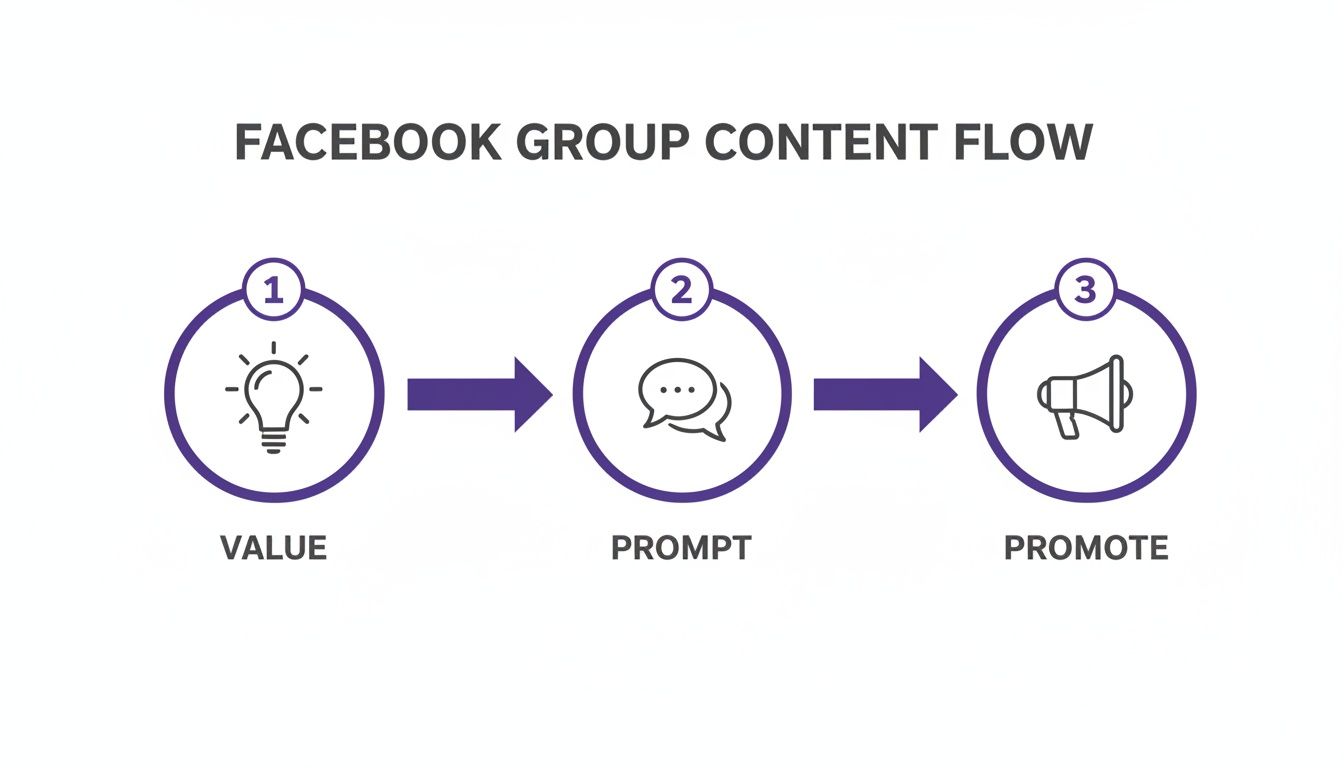
Sticking to this cycle ensures you're always nurturing the community first, which makes your promotional posts feel natural and welcome rather than aggressive.
Smart Organic Growth Tactics
Before you even touch paid ads, make sure you’ve squeezed every last drop out of your organic channels. These are powerful, free ways to attract high-quality members who already have a connection to your brand.
- Integrate With Your Website: Add a clear, can't-miss call-to-action on your website inviting visitors to join. Think beyond the homepage—place it on your blog sidebar or, even better, on the thank-you pages people see after they buy something or download a resource.
- Leverage Your Email Signature: This is such an easy win. Every single email you send can be a new member invitation. Just add a simple line like, "Join our exclusive community for [Benefit]" with a direct link.
- Cross-Promote on Other Socials: Regularly talk about your group on your other social media accounts. But don't just drop a link and run. Tease an interesting discussion happening inside or share a member's success story to create a bit of FOMO (fear of missing out).
- Use the Post-Purchase Window: The moment a customer buys from you is a peak engagement opportunity. They’re excited about their purchase. Capitalize on it by including an invitation to the group right on the order confirmation page and in their confirmation email.
These are low-effort, high-impact tactics that create a steady funnel of warm leads, filling your group with people who are already customers or strong prospects.
Embracing Intelligent Automation
Let's be real: manual moderation doesn't scale. Once your group grows beyond a few hundred members, it becomes physically impossible to catch every spam comment, troll, or inappropriate post in real time. This is where automation shifts from a "nice-to-have" to a necessity for keeping your community safe and positive.
Automation isn't about replacing the human touch. It's about freeing you up to focus on it. By handling the repetitive, soul-crushing tasks, it allows you to invest your time in meaningful conversations and building real relationships.
This is where sophisticated tools can completely change the game for marketing with Facebook groups. FeedGuardians, for example, is built for this. It automatically hides spam in your group comments, keeping your discussions clean and brand-safe. At the same time, it can detect purchase intent and trigger real-time replies, which can absolutely skyrocket your conversions. When your group's comment feeds are clean and responsive, browsers quickly turn into buyers. If you're curious, you can explore a deeper comparison of AI comment moderation tools to see what's out there.
By automating your first line of defense, you're protecting your community culture and your brand's reputation. But more than that, this kind of technology can spot commercial opportunities you’d otherwise miss entirely. When a member asks, "Does anyone have a discount code?" or "I'm thinking of buying X, any advice?" the right AI can flag that comment for immediate follow-up. This lets you jump in at the perfect moment, answer their question, and guide them toward a purchase—transforming your group into a highly responsive and efficient sales channel.
Measuring What Matters for Group Performance
To really grasp what your Facebook Group is doing for your business, you have to look past the big, flashy numbers. A huge member count might look great on a report, but it doesn't pay the bills. The true measure of success for marketing facebook groups boils down to tracking the key performance indicators (KPIs) that connect your community efforts to real business results.
It's tempting to chase member growth, but think about it: a group of 10,000 silent members is far less valuable than a tight-knit community of 500 people who are actively posting, commenting, and buying from you. It's time to shift your focus from vanity metrics to the data that actually tells you what's working.
Moving Beyond Vanity Metrics
The first thing you need to do is redefine what "performance" actually means. Stop fixating on the total member count and start digging into Facebook's native Group Insights. This dashboard is your command center for understanding the health of your community.
Here are the metrics you should be watching like a hawk:
- Engagement Rate: This is the pulse of your group. Keep an eye on the total number of posts, comments, and reactions over the last 28 days. Divide that by your total member count, and you get a clear picture of how lively your community really is.
- Top Contributors: Insights conveniently points out your most active members. These are your superfans, your power users, and your future brand ambassadors. In a healthy group, this list should change and feature a variety of people, not just you and your team.
- Peak Activity Times: Timing is everything. Knowing when your members are online and most active is gold. Dropping your most important posts during these peak hours can massively boost their reach and impact.
For a wider view of your social media performance, you can also explore some of the best tools for social media analytics to get even deeper insights than Facebook alone provides.
Tying Group Activity to Revenue
Ultimately, this is all about proving ROI. How do you draw a straight line from a conversation happening inside your group to a sale on your website? It takes a little bit of strategic setup, but it’s absolutely critical for proving that your community is a worthwhile investment.
Simply put, if you can't measure it, you can't manage it. Tracking conversions from your group is non-negotiable for proving its value as a powerful marketing channel.
Here are a few practical ways to attribute sales directly back to your group:
- Unique Coupon Codes: This is the simplest method. Create a discount code that is only available to your Facebook Group members. Every time that code is used at checkout, you know with 100% certainty that the sale came from your community.
- Dedicated Landing Pages: When you're promoting a new product or a special offer, don't just send people to your generic homepage. Build a unique, unlisted landing page with a specific URL that you only share inside the group. All the traffic and conversions from that page? That’s your group at work.
- UTM Parameters: For the most granular tracking, get comfortable with UTM parameters. By adding these tags to the links you share in the group (e.g.,
utm_source=facebook&utm_medium=community&utm_campaign=group_promo), you can see in Google Analytics exactly how many clicks, sessions, and sales originated from your group posts.
When you start implementing these tracking methods, your group stops being just a community hub and becomes a measurable sales funnel. This data gives you the power to see exactly what kind of content and offers your members respond to, allowing you to fine-tune your strategy and drive even better results.
A Few Common Questions About Facebook Group Marketing
As you get your hands dirty running a group, you'll run into all sorts of practical questions and unique situations. Here are some quick answers to the things I see group admins asking about the most. Think of this as your field guide for making the right call when you're in the moment.
Let's dive into some of the most common questions that come up.
How Often Should I Be Posting in My Group?
Don't mistake a busy feed for an engaged one. The biggest mistake people make is posting so often that members just tune them out. The key is consistency, not volume.
A great place to start is with one high-quality post per day.
This keeps your group active enough to show up in feeds without annoying everyone with constant notifications. Focus your energy on creating one genuinely valuable post each day instead of churning out a bunch of low-effort fluff.
Your goal is to be a welcome and expected part of your members' day, not just another notification they swipe away. Quality and a predictable rhythm will always beat sheer quantity.
Is It Okay to Sell Directly in My Group?
Absolutely, but you have to be smart about it. If your group feels like one long, aggressive sales pitch, people will leave. Fast.
The best way to handle this is with the 80/20 rule. Make sure 80% of what you post is pure value—helpful tips, interesting discussions, fun content—and only 20% is promotional.
When you do post something for sale, position it as a perk for being in the community. Think exclusive discounts for group members, early bird access to a new launch, or special product bundles nobody else can get. That way, your sales posts feel like a genuine benefit, not just another ad.
What’s the Best Way to Handle Negative Comments or Trolls?
You have to deal with negativity quickly and professionally. Ignoring it is never the answer, as it signals to everyone else that this kind of behavior is acceptable.
- Move Fast: The second you see a comment that breaks the rules, address it or delete it. This stops the toxicity from spreading and poisoning the atmosphere for your good members.
- Lean on Your Rules: This is why you have group rules in the first place. When you remove a comment or a member, you can simply and calmly point to the specific rule they violated. It removes the emotion from the situation.
- Take It Private: If it's a legitimate customer service issue, don't hash it out in the comments. Post a public reply like, "I'm sorry you're running into this, and I want to help. I'm sending you a PM right now so we can get it sorted out." This shows everyone you’re on top of it while keeping the details private.
Doing this all by hand is fine at first, but it quickly becomes a massive time sink as your group gets bigger. This is where automation really becomes a lifesaver.
Ready to protect your community and scale your marketing efforts without all the manual work? FeedGuardians uses AI to automatically hide spam, spot members who are ready to buy, and keep your group a safe, profitable space. Find out how it works.
Tired of manually moderating comments?
FeedGuardians automates spam filtering, responds to customers, and protects your brand — setup in 3 minutes.